


-
A drawing workshop that encourages people of all skill-levels and backgrounds to take creative risks in a safe and supportive environment.
Participants engage in solo and group activities that inhibit their abilities to fully control the outcome of their drawings...producing revoltingly beautiful “failures”.
With “failure” guaranteed, we can enjoy the process of drawing and goofing off together!
-
In a product-oriented society, we learn from a very young age that we must always be working towards some goal or product. We often measure success (and sometimes our self-worth) by this type of productive accomplishment; buying a house, getting the black belt, graduating, having a healthy 401k, making a giant paper mache worm, etc.
This emphasis on product causes many of us to lose sight of something equally (if not more) important: process.
All of the things we consider to be concrete objects (even ourselves) exist in a state of perpetual change brought about by a collection of processes…some constructive and some destructive. (erosion, digestion, neurogenesis, etc.)
Most of life happens in process. Days go by, plants grow, food rots, caterpillars turn to butterflies, babies turn into teenagers, buildings fall apart, teenagers use the wood and cinder-blocks from old buildings to build launch-ramps for their bikes, etc.
I believe that art-making, when done in a mindful way, exists almost entirely as process. Your art changes you as you change it. You make constructive and destructive changes to the medium of your choice while temporarily losing sense of time and self in the process.
One might feel a great sense of pride and accomplishment when looking at a finished piece of art, but I would argue that the most valuable part of the art-making experience comes from the art-making process itself.
Art Therapists and Neuroscientists agree!
Process involves experimentation…and as any scientist, inventor, or artist will tell you “most experiments end up as failures” at least in regards to producing a satisfying final product…However, these failed experiments often lead to new discoveries or unexpectedly teach us something new about the world (or ourselves).
One must be willing to make themselves vulnerable to failure if they hope to learn anything at all.
When the subject of art-making comes up, many adults exclaim “I can’t even draw a stick figure!” but when I press them on the issue, they usually reveal that they haven’t allowed themselves to seriously attempt drawing, sometimes since childhood…typically due to fear of failure, embarrassment, or disappointing themselves. Every time I hear this it breaks my heart.
Art-making (expertly done or not) provides therapeutic benefits to the individual in a myriad of ways. It can help with stress reduction, practicing mindfulness, processing psychological issues, etc.
All a person needs is a pencil, paper, and a little bit of confidence.
For this reason, I developed “Playing With Failure.”
-
That’s great, because these workshops won’t be teaching you any drawing skills…they’ll be teaching you creativity skills.
Can you remember the last time you made a “bad” drawing for your (or someone else’s entertainment) on purpose?
If you answered “recently” great!
If you can’t remember…it might be time to creatively cut-loose for a bit.
I believe well-practiced artists can benefit from this workshop as it provides permission and space to goof-around creatively. Many professional creatives often find themselves bogged down by product-oriented deadlines since their livelihood depends on it…leaving very little room for the playfulness of the creative process to unfold.
I speak from personal experience.
I came up with many of these activities to shake-up my creative life when I felt stuck in a rut…but to be honest, I often forget or avoid doing them because I still struggle with the product-oriented gotta-have-it-done-by-the-deadline mentality…So in a funny way, doing these workshops with other people helps me as much as it helps them (I hope).
-
These workshops often create an air of collective vulnerable silliness. Participants are gently guided to the conclusion that the failure to render an image accurately can seem inconsequential in comparison to the joy generated from a room full of people laughing with one another.
The goal of the workshop is to have participants come-away having reevaluated their relationship to concepts like “success” and “failure” while recognizing the therapeutic value in trying something new. It’s also a really sneaky way to trick people into practicing mindfulness without realizing it!
Below you can find some examples of activities that might occur during a workshop.

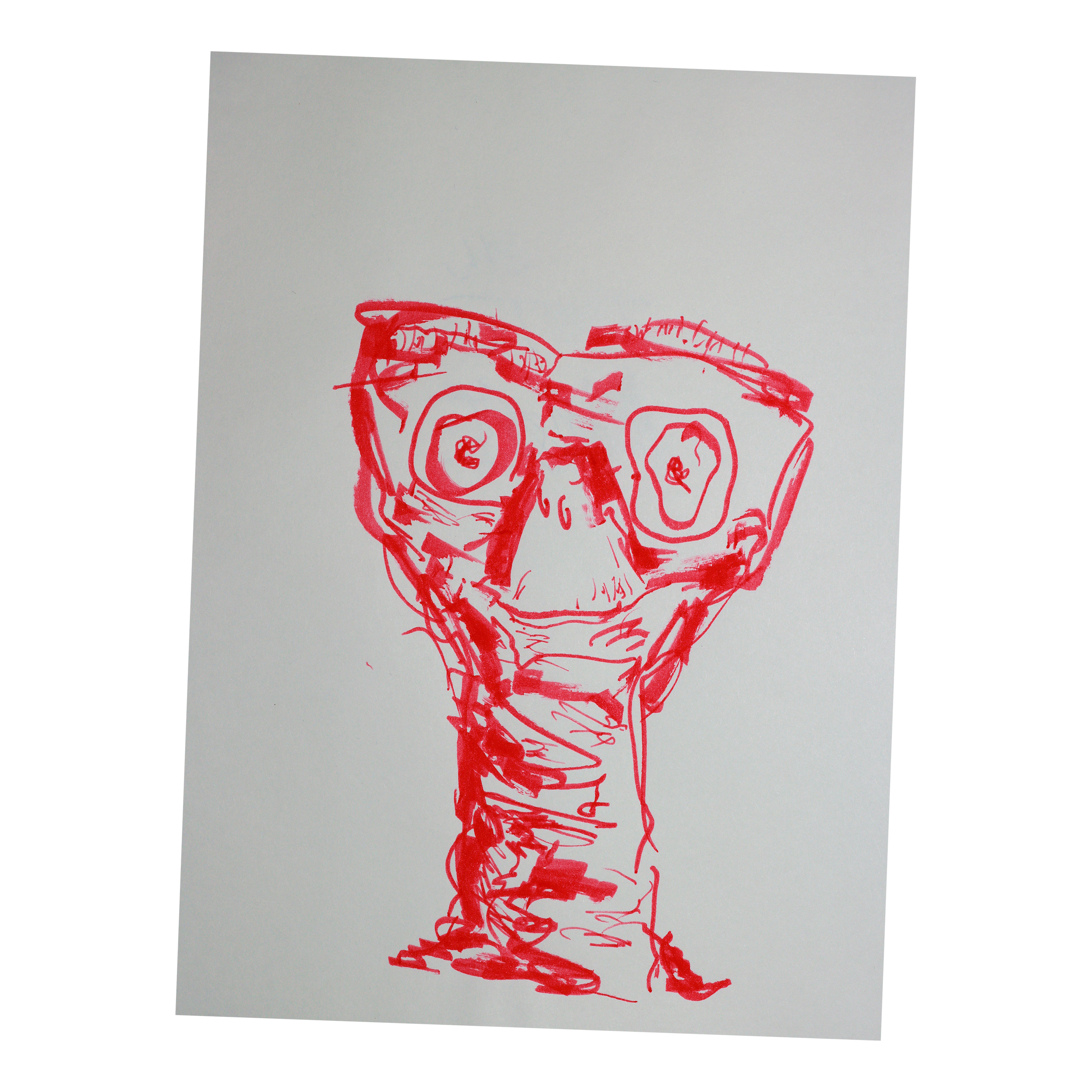
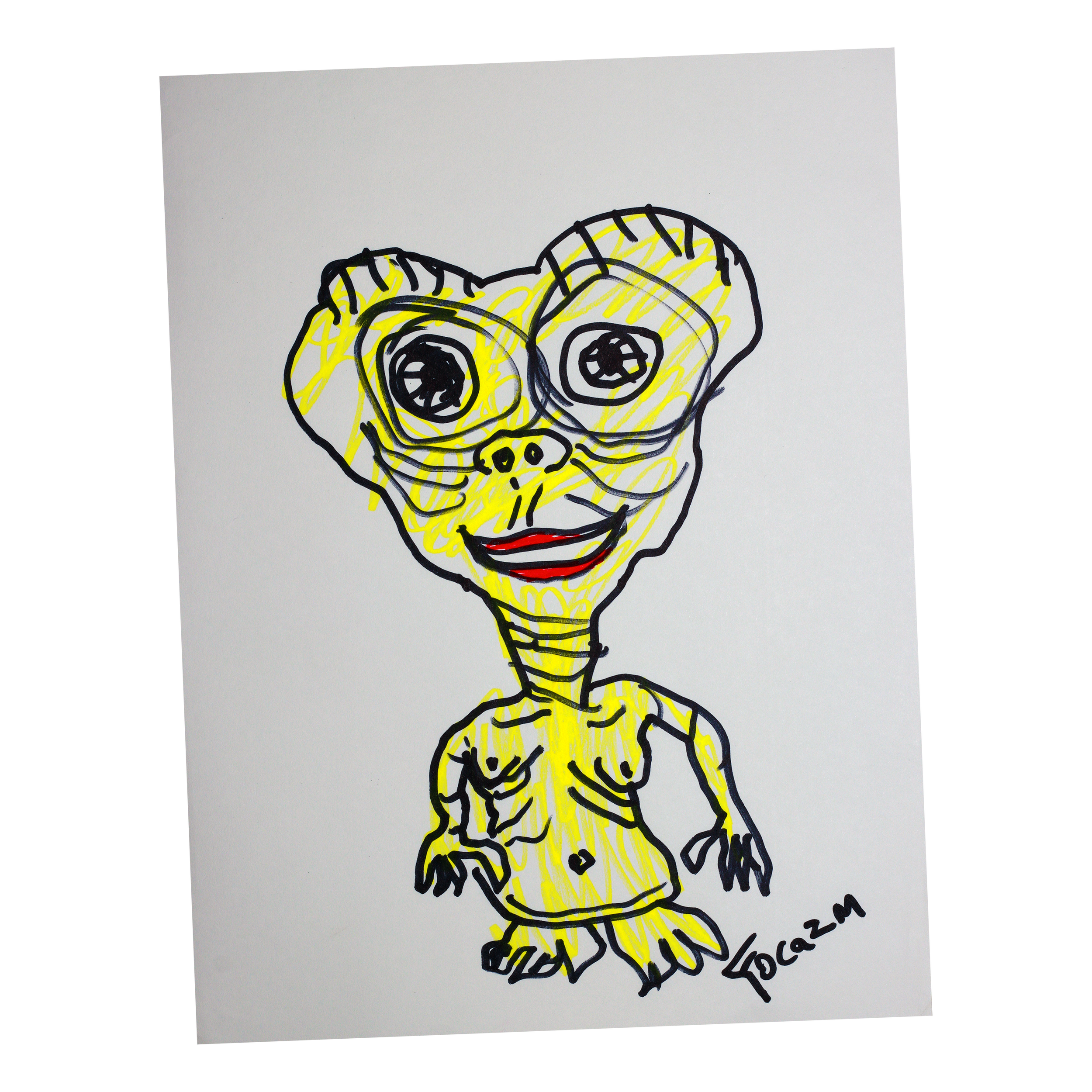
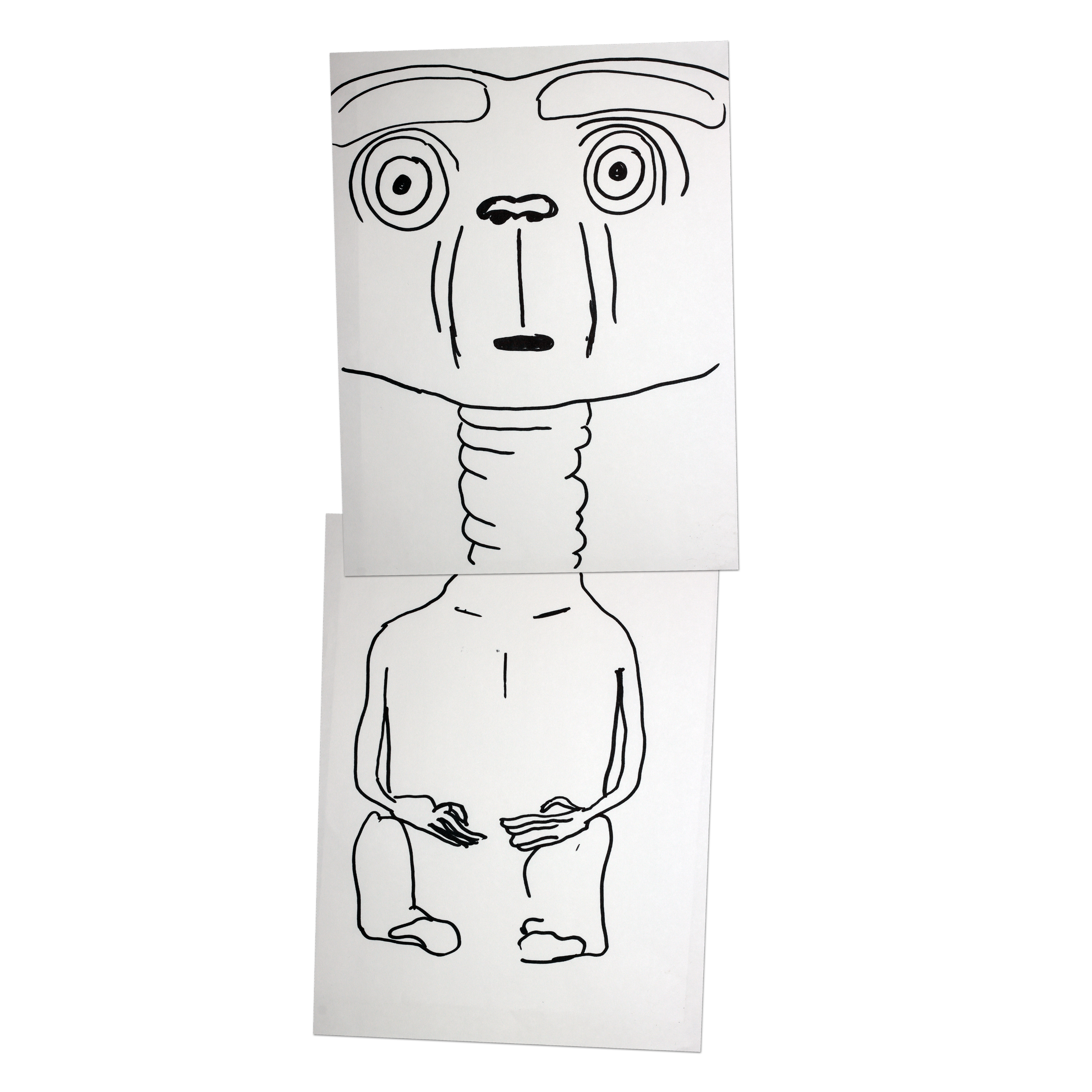
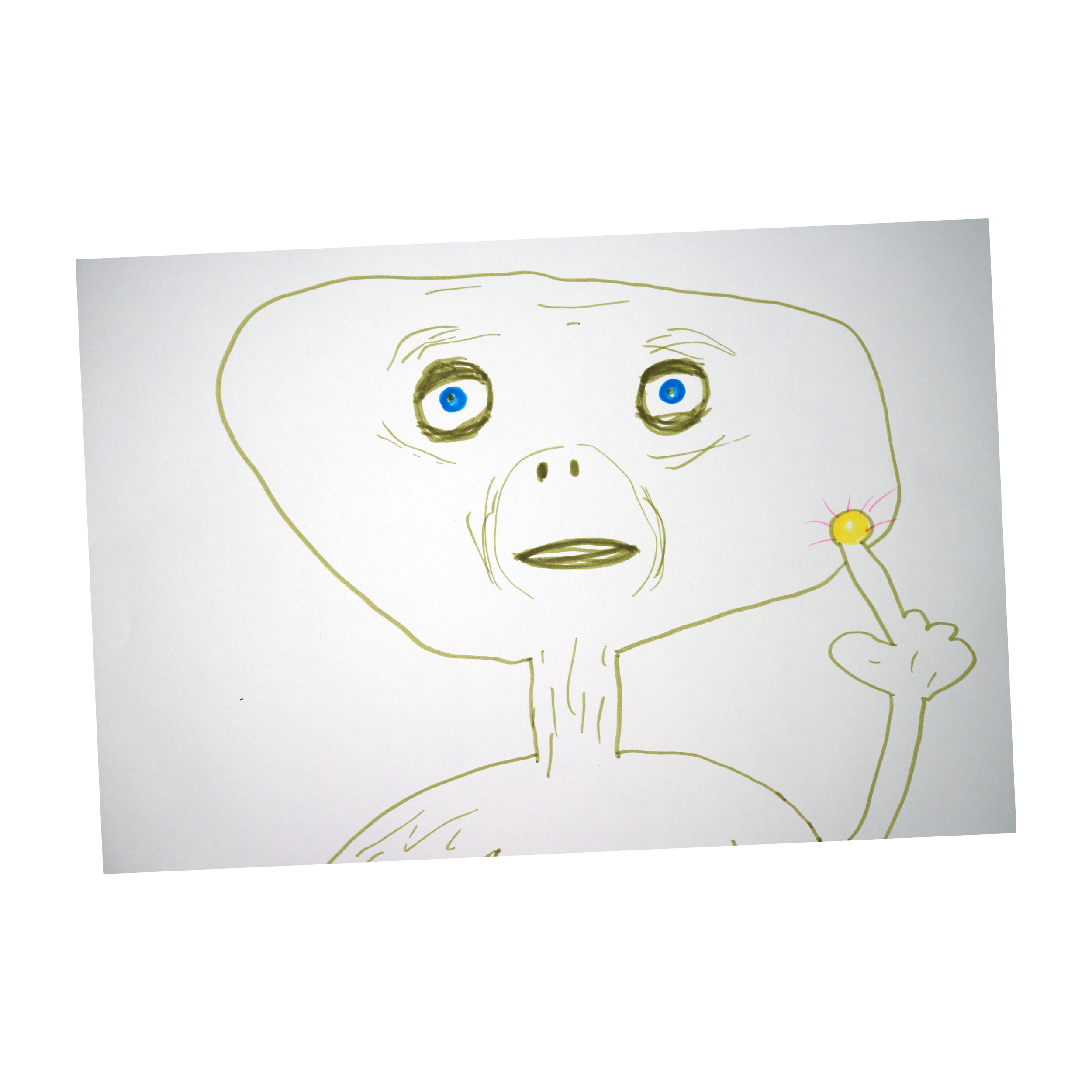
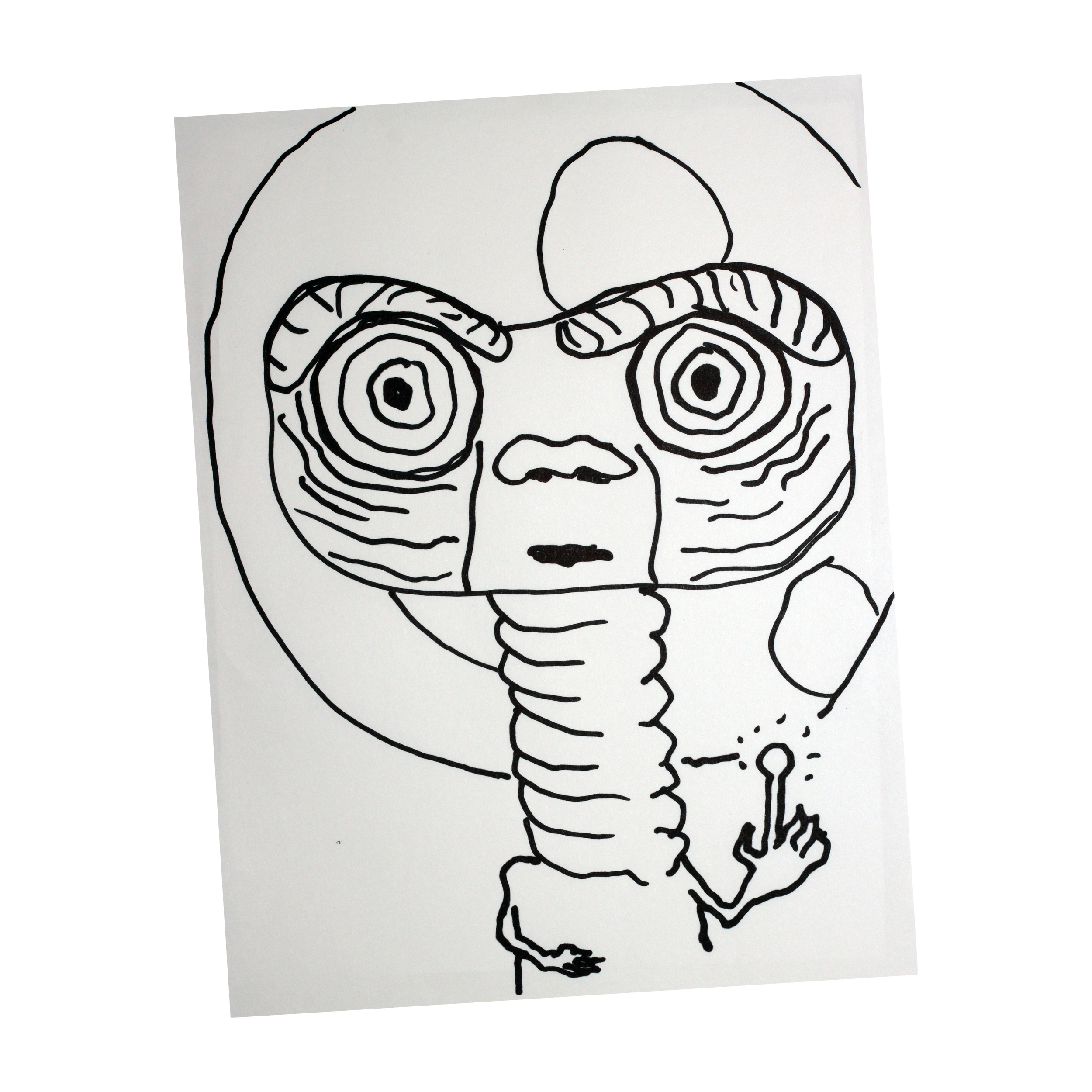
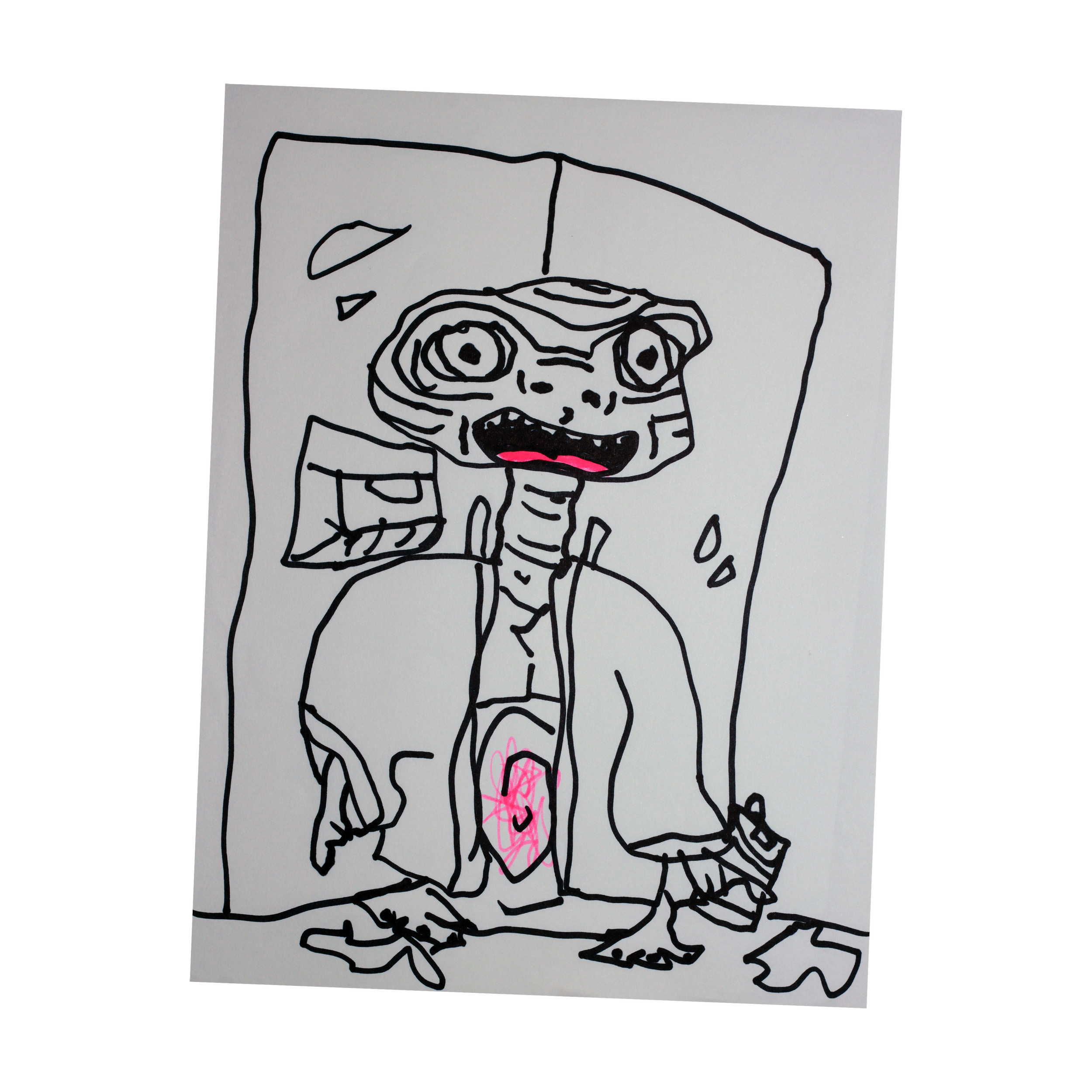
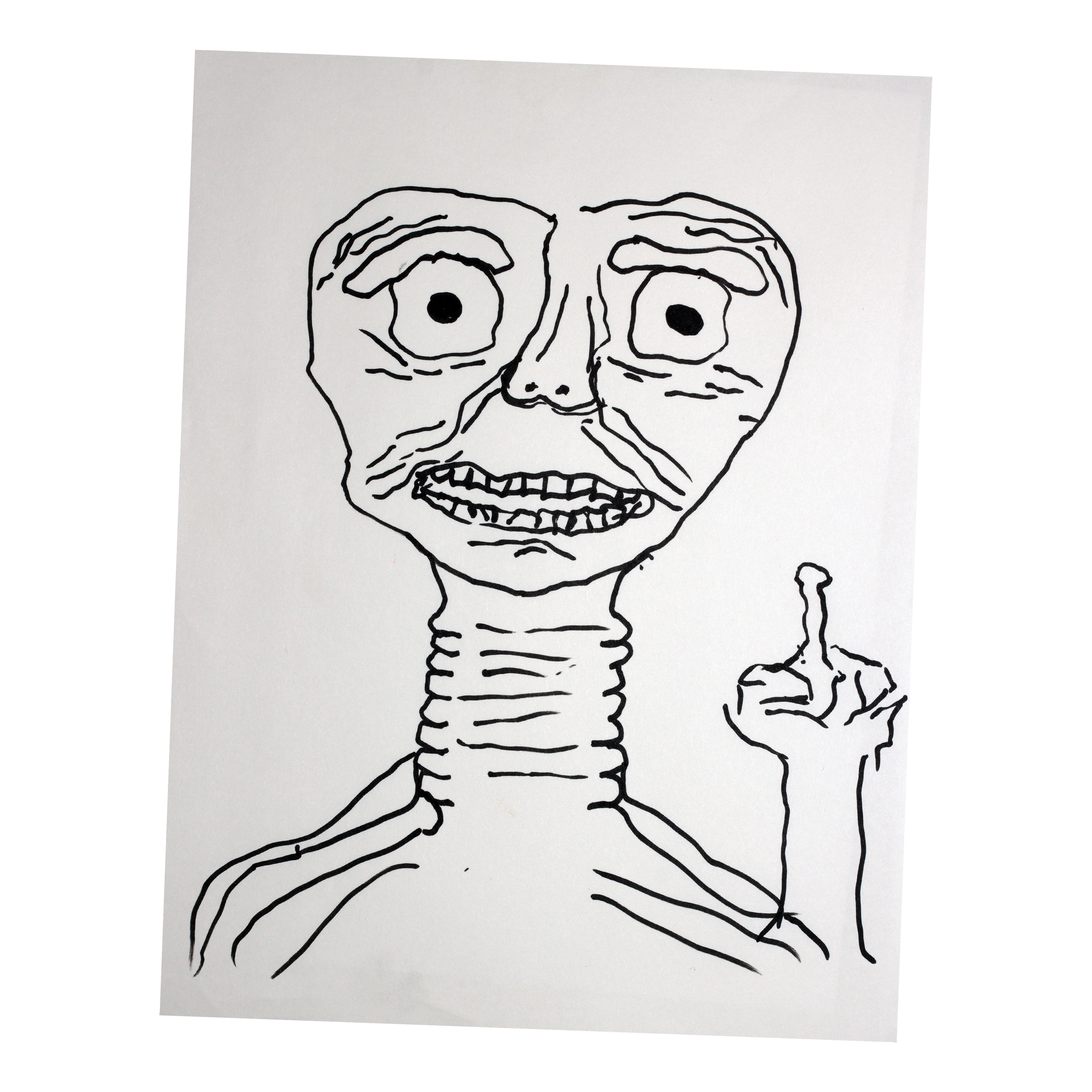
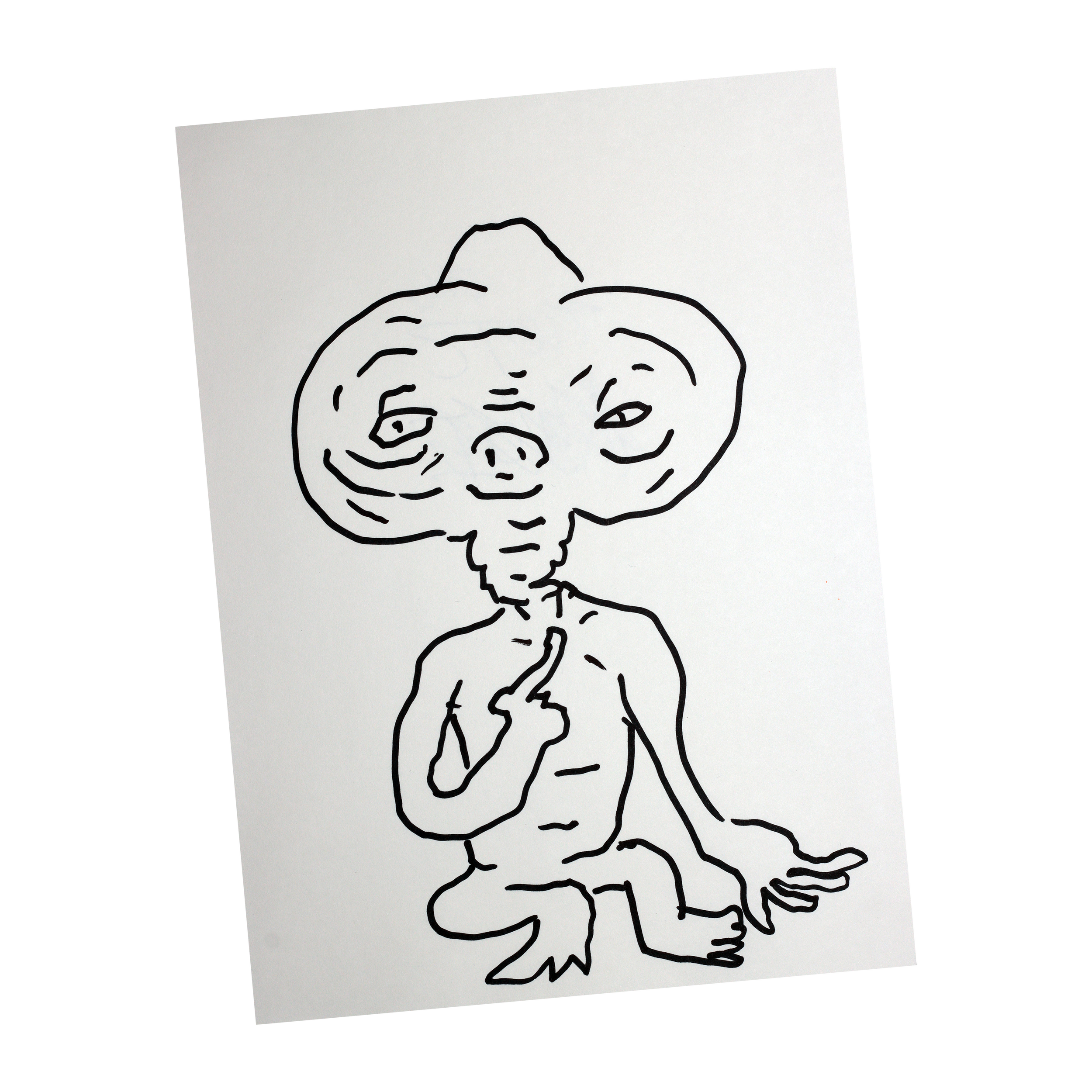
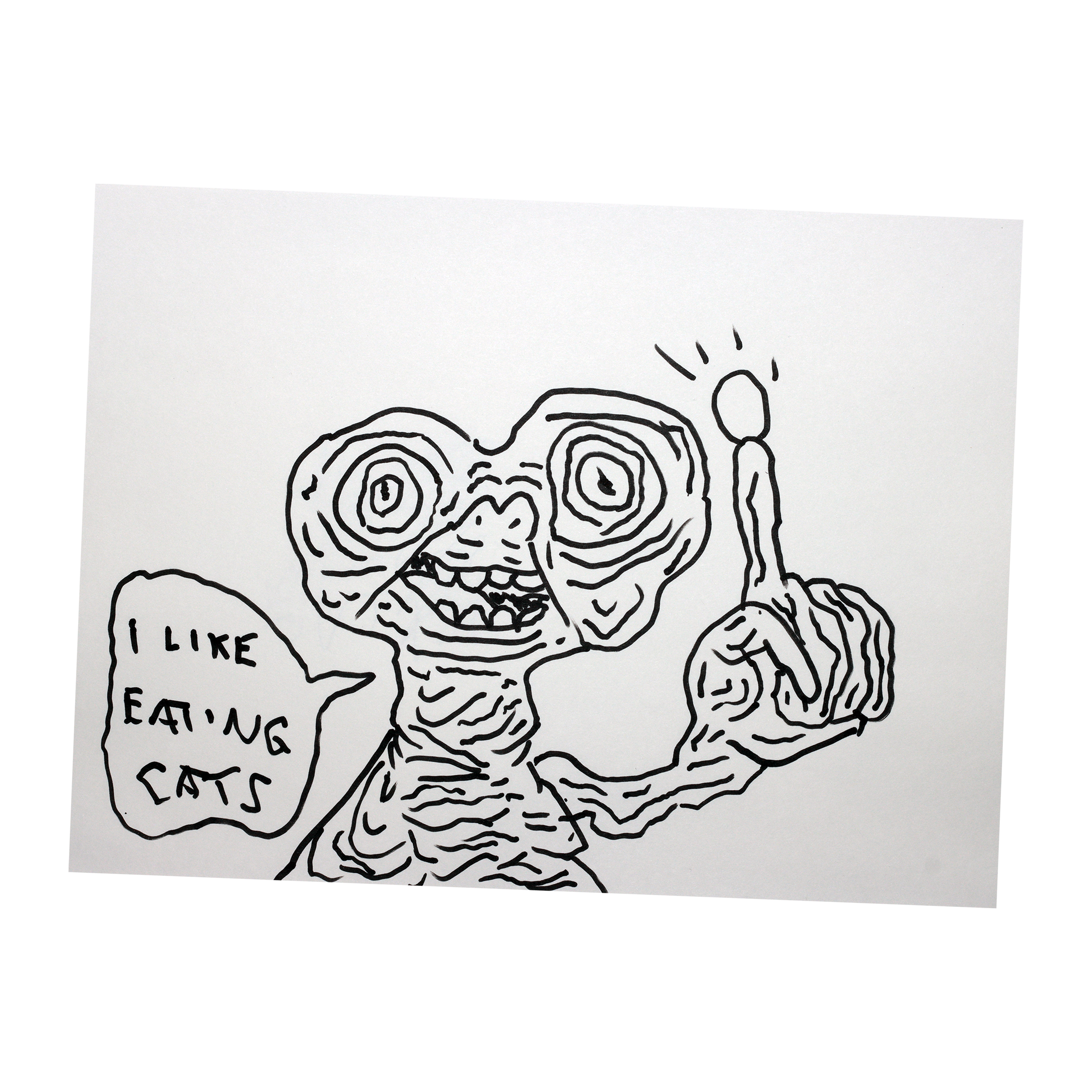
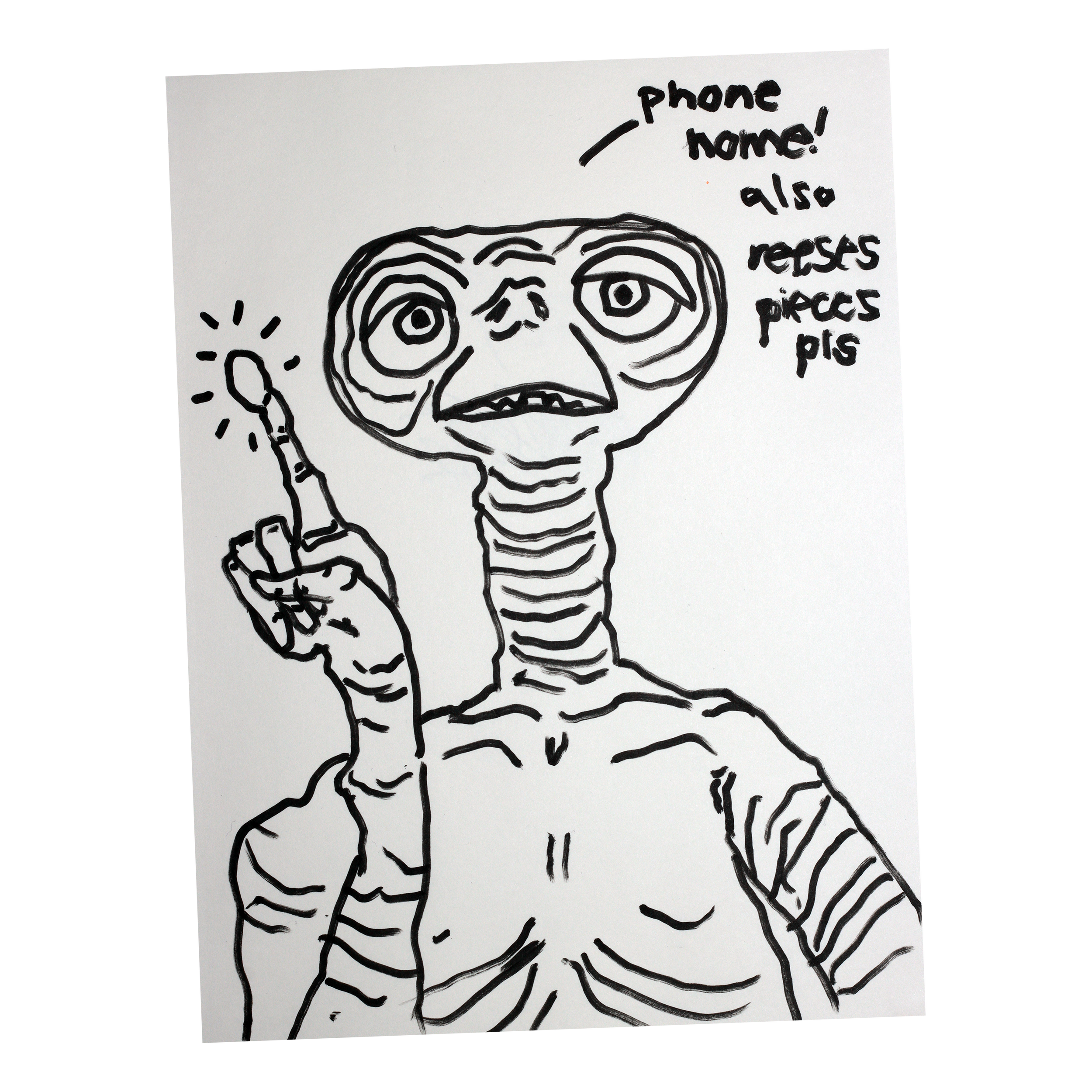
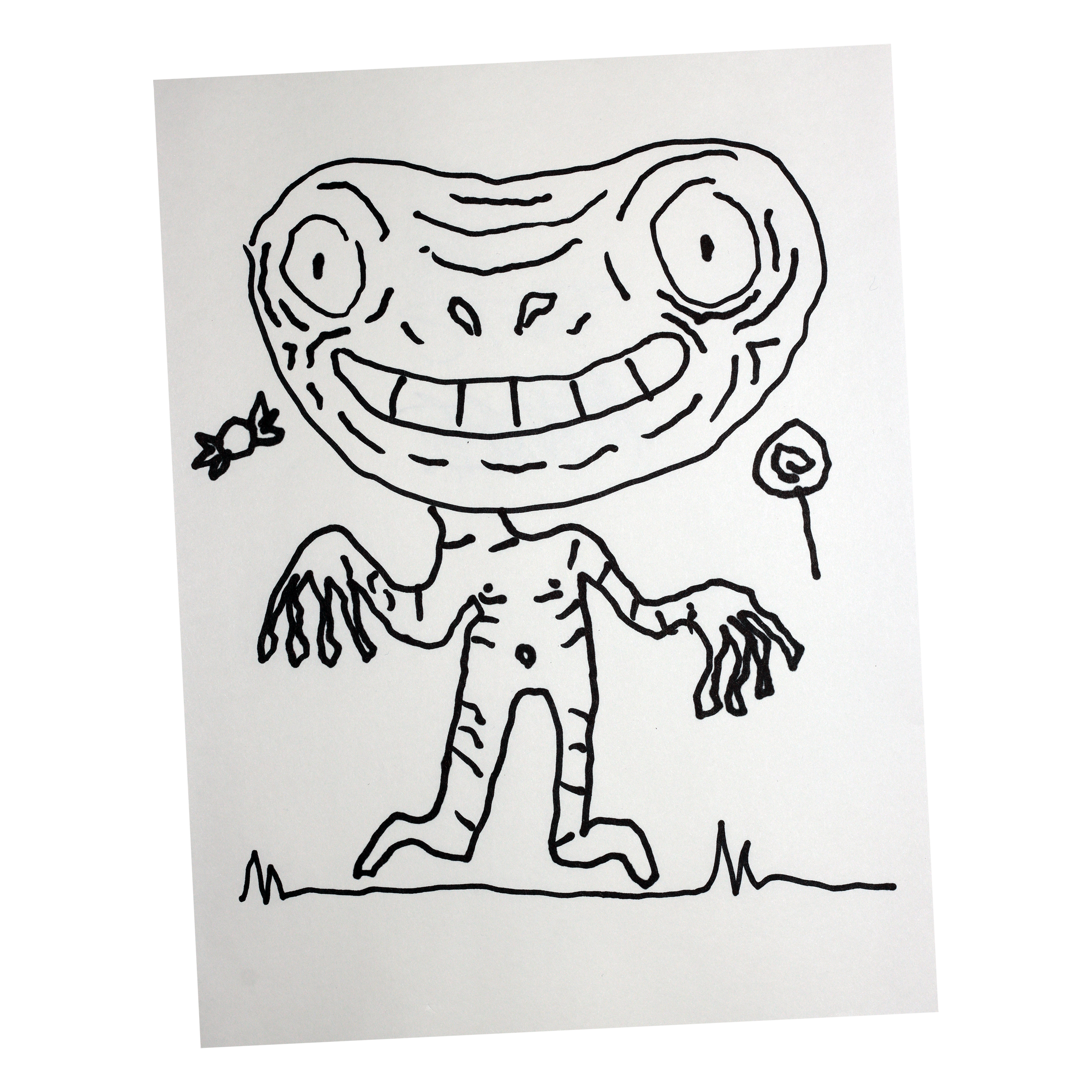
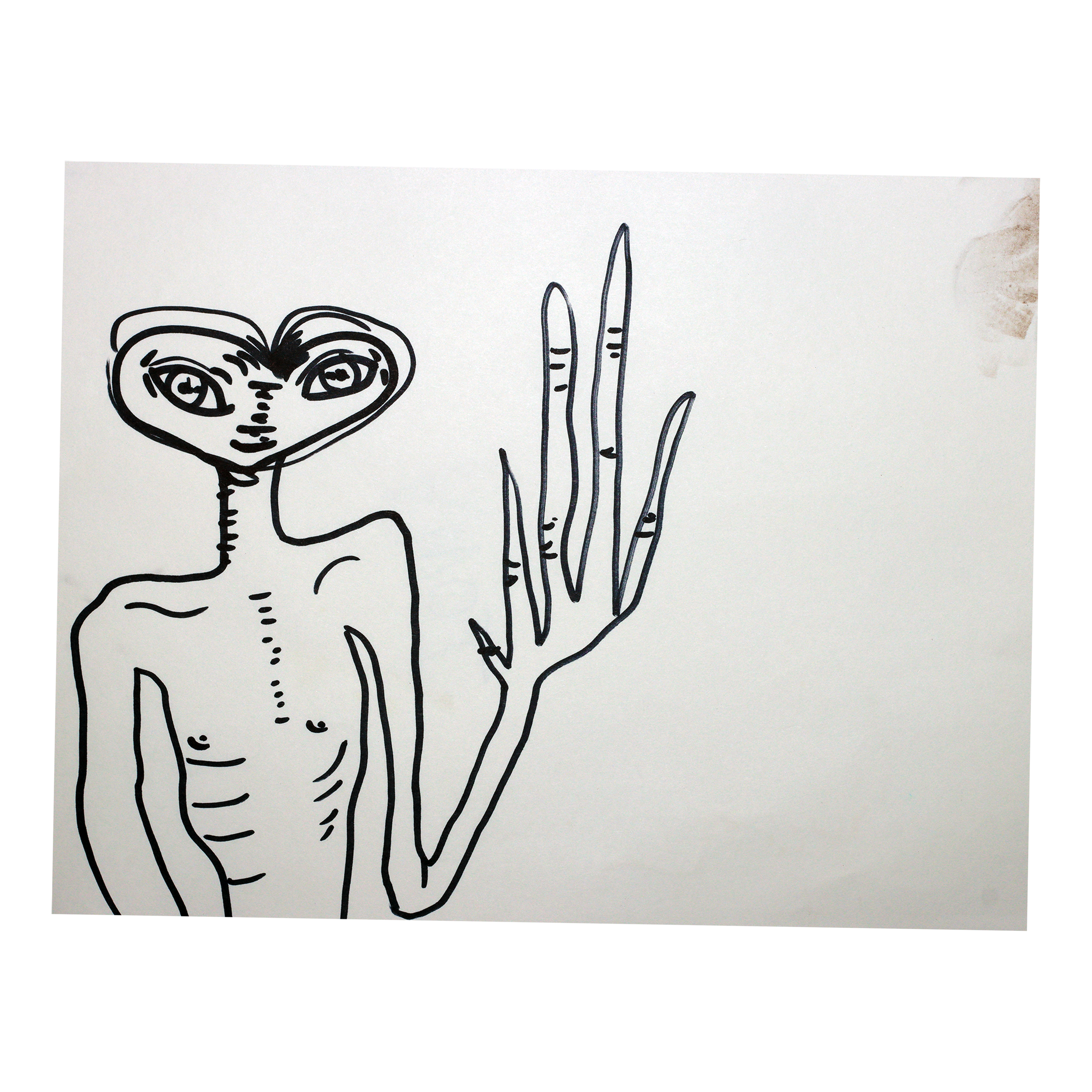
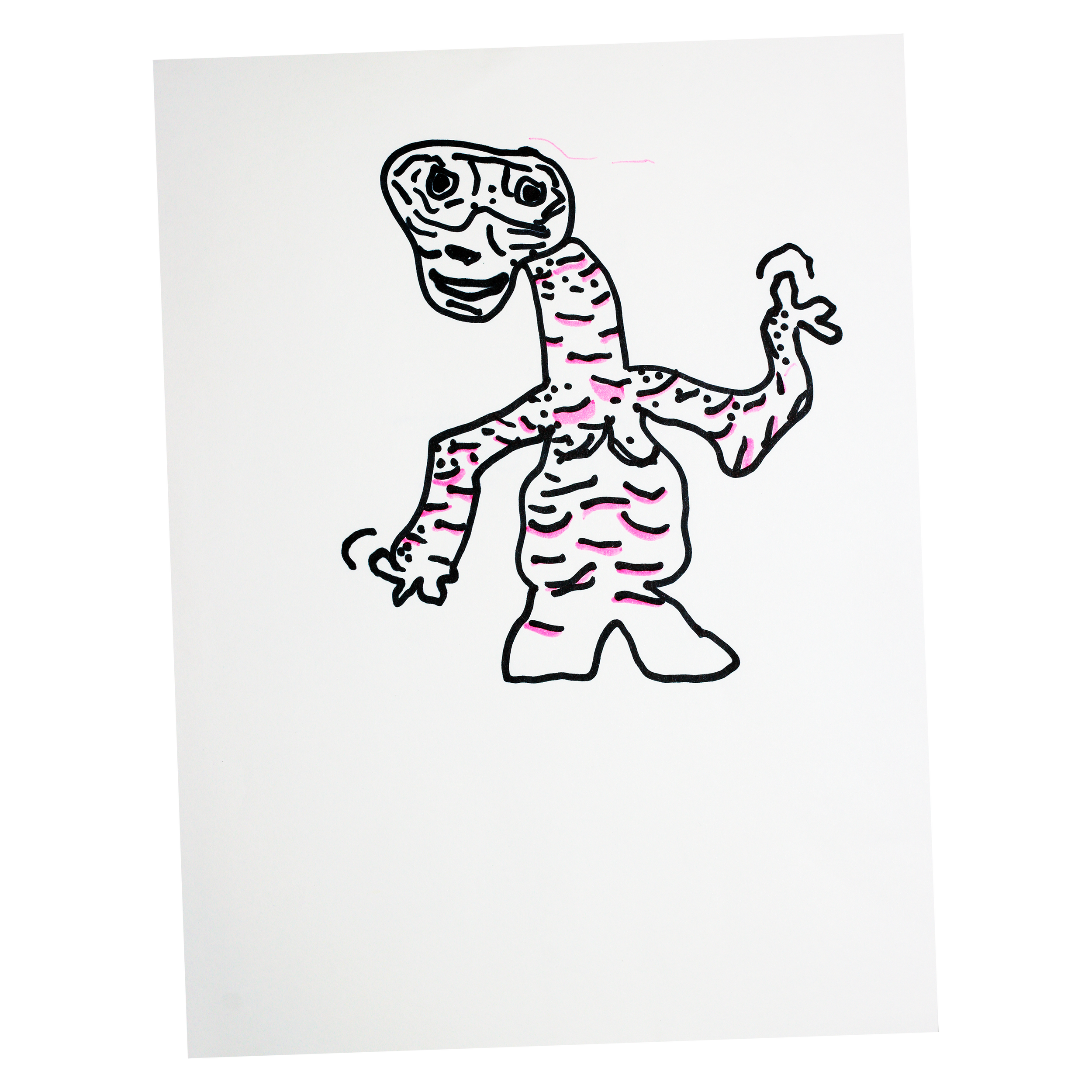
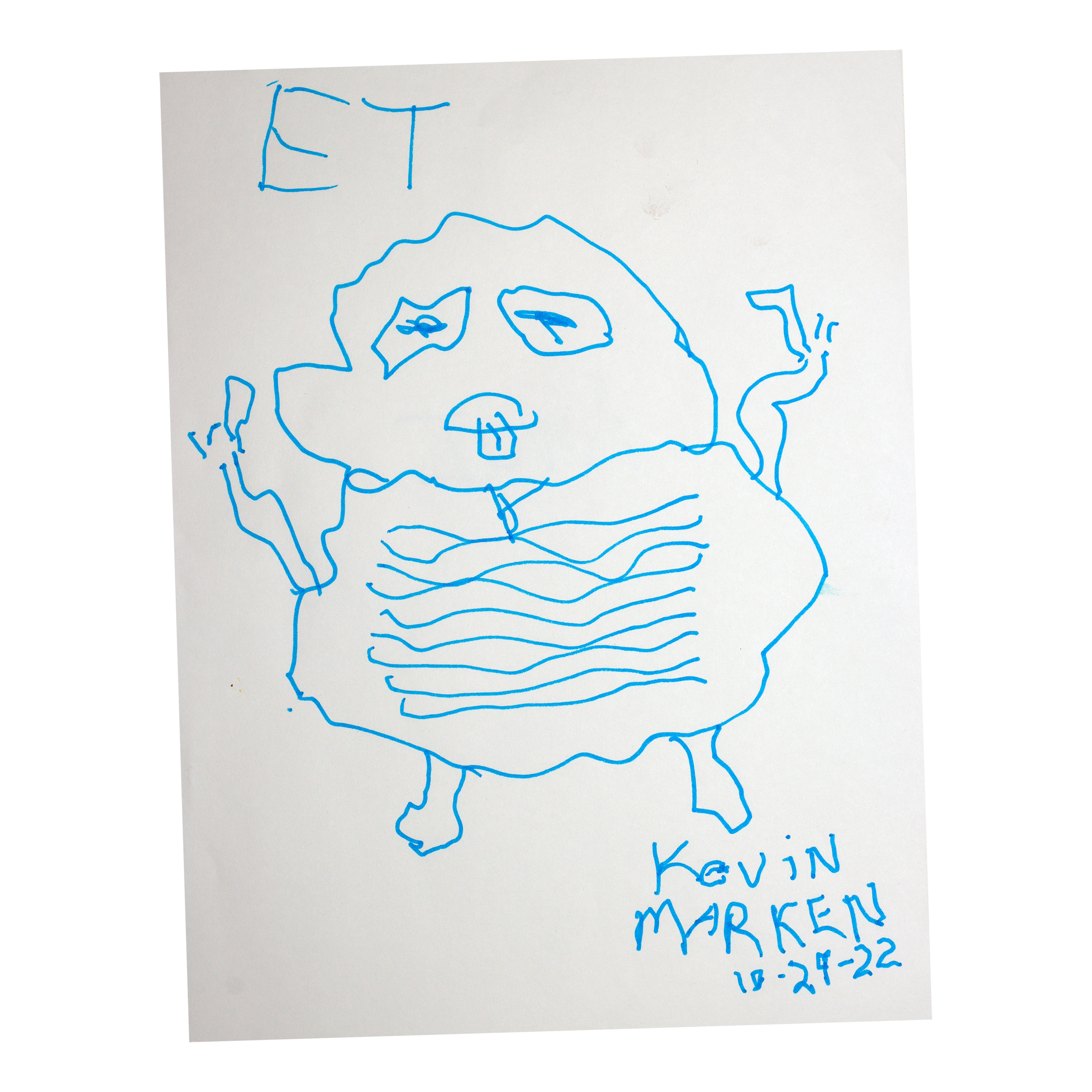
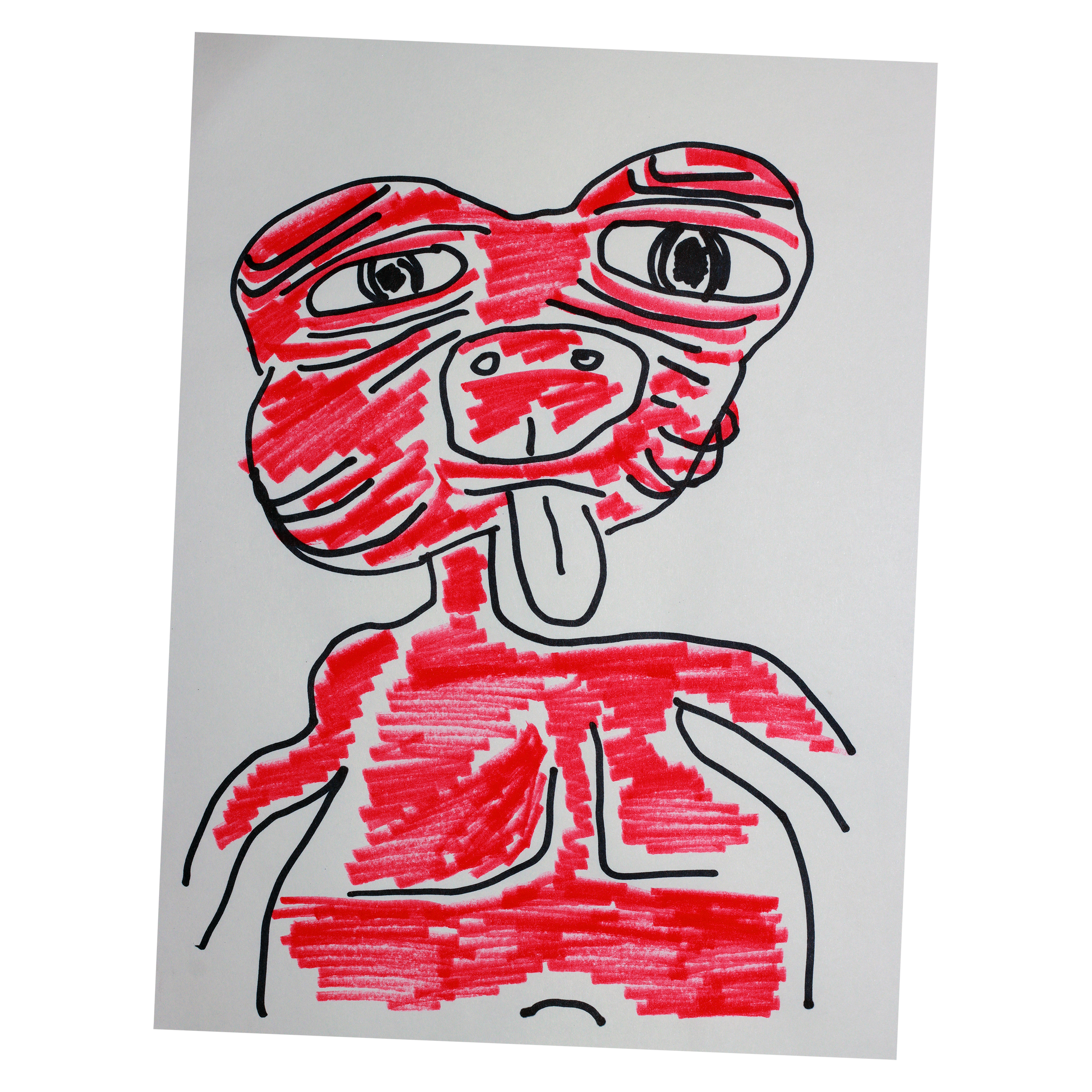
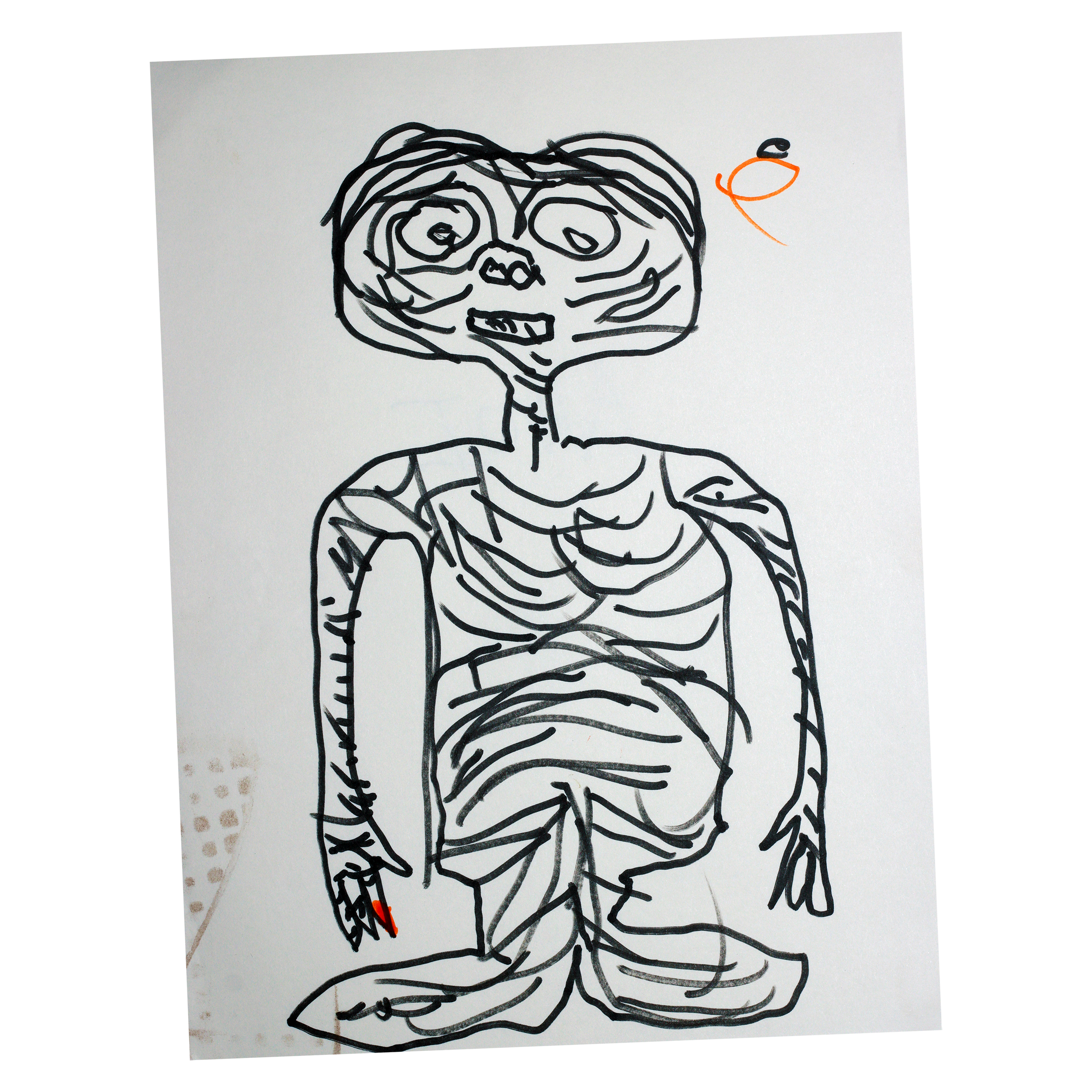
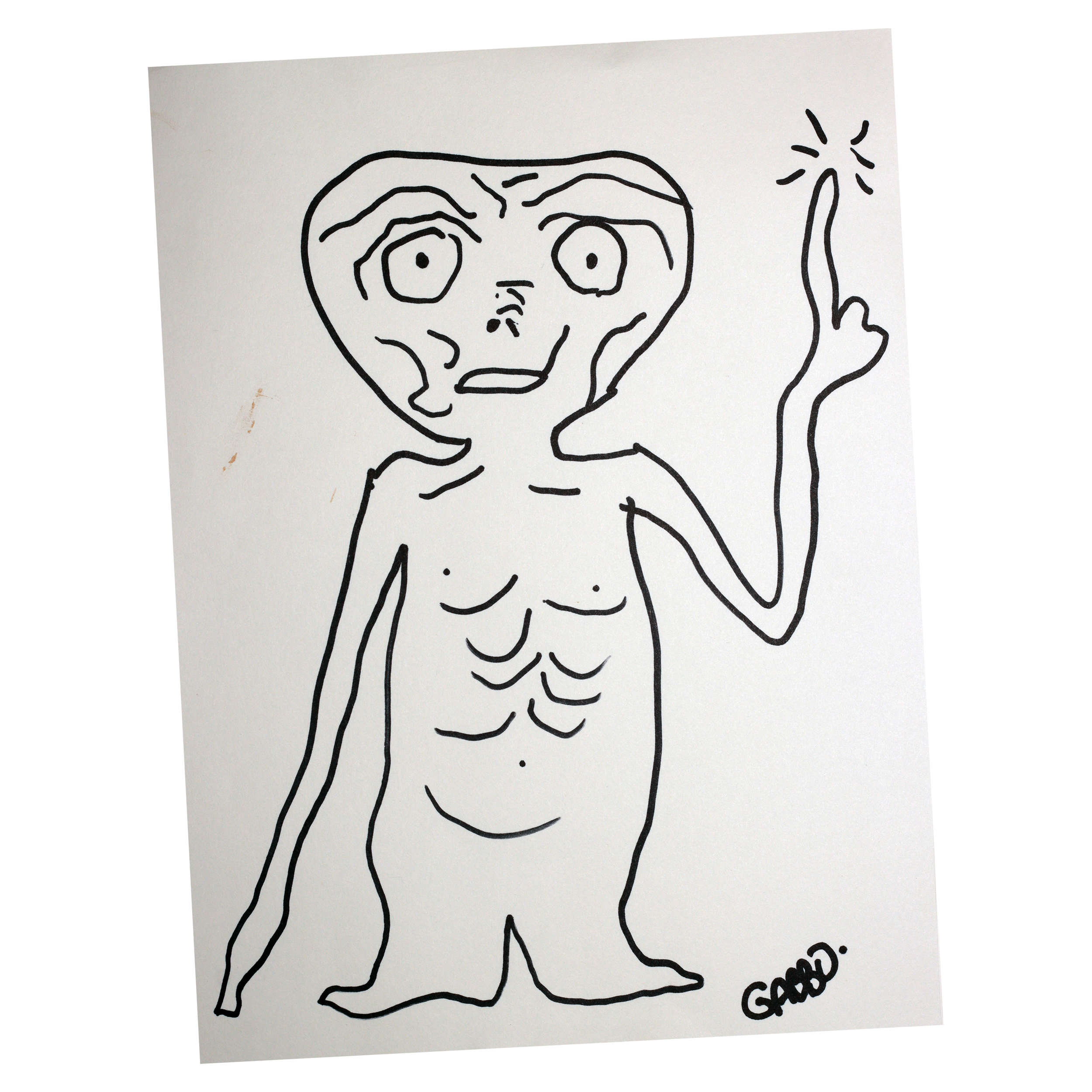
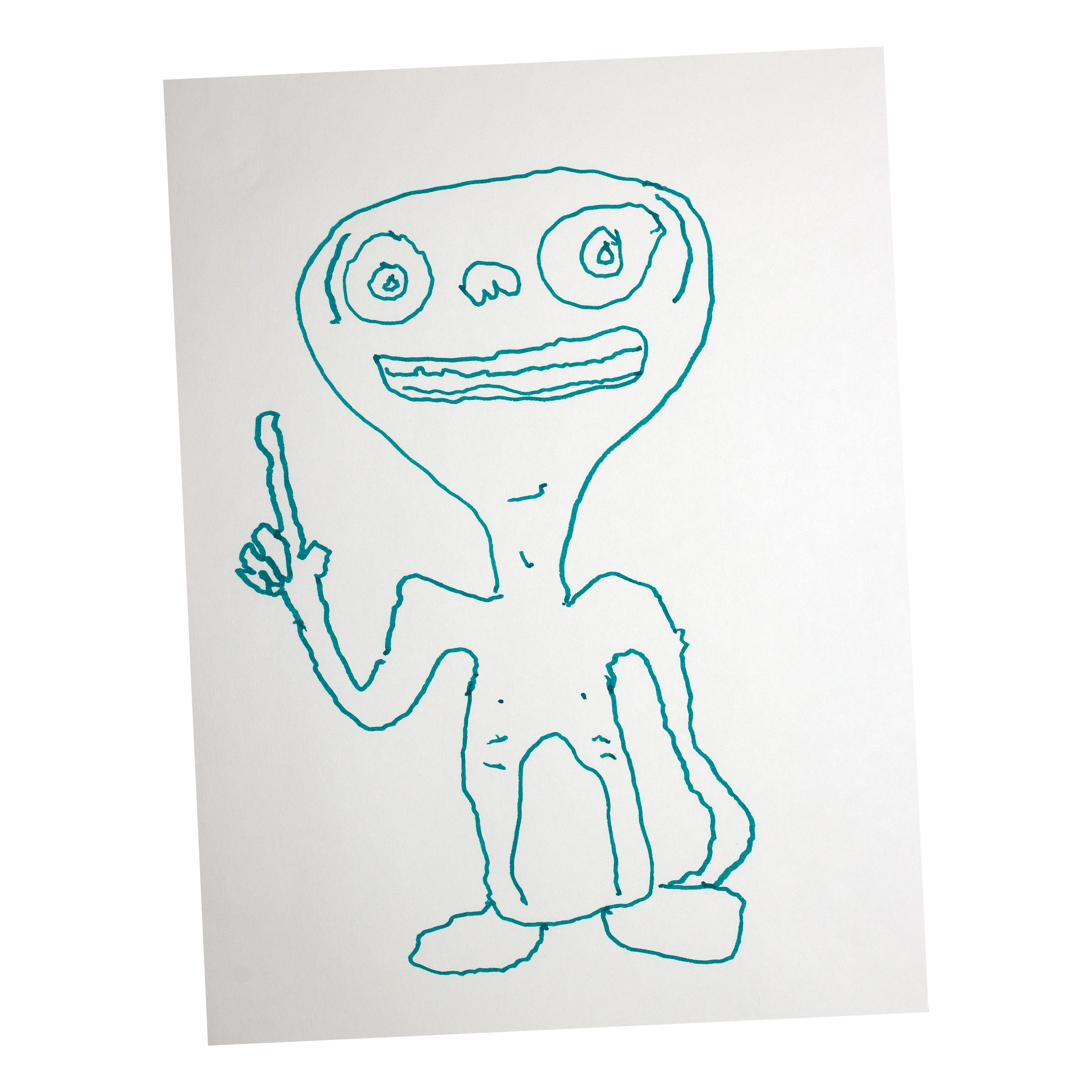
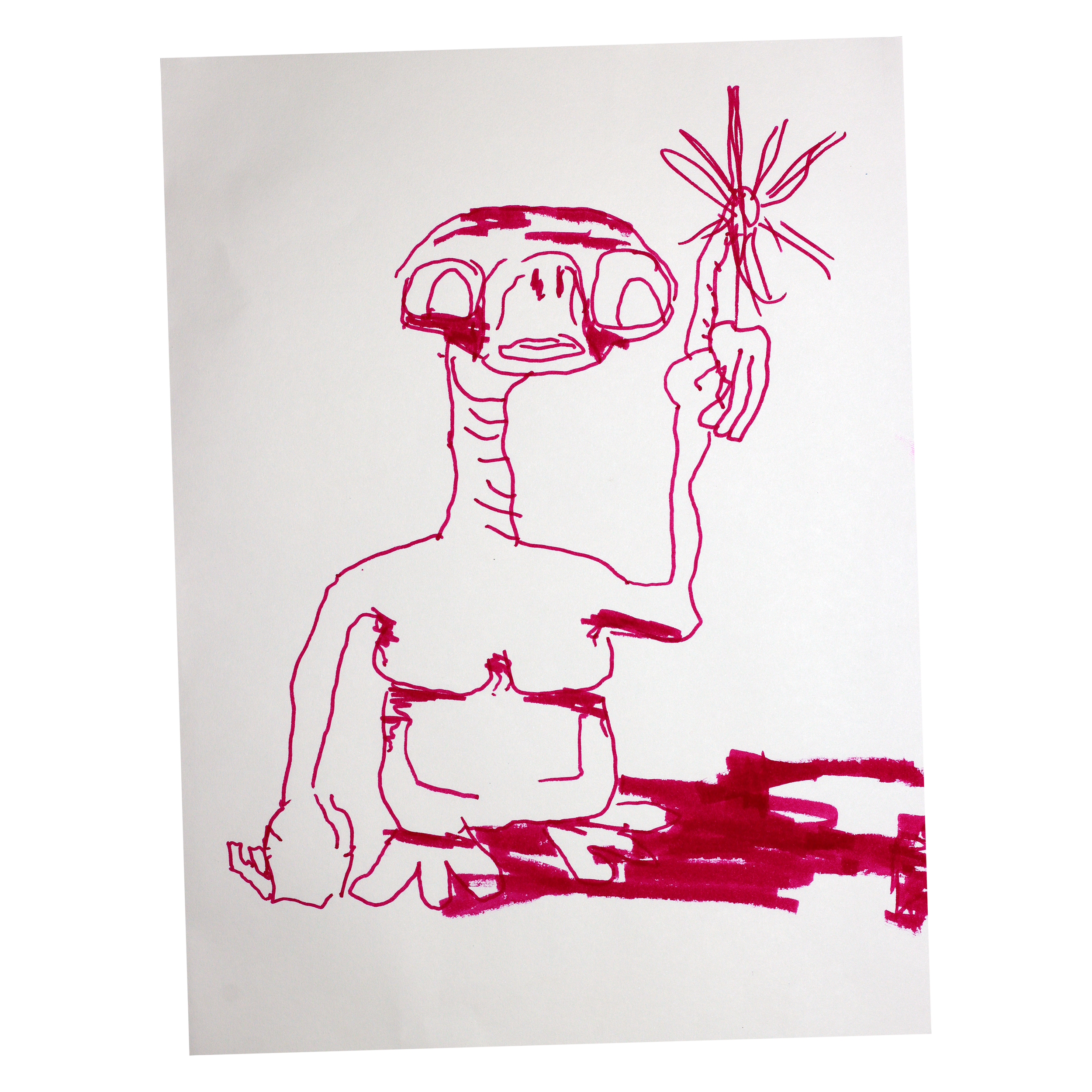
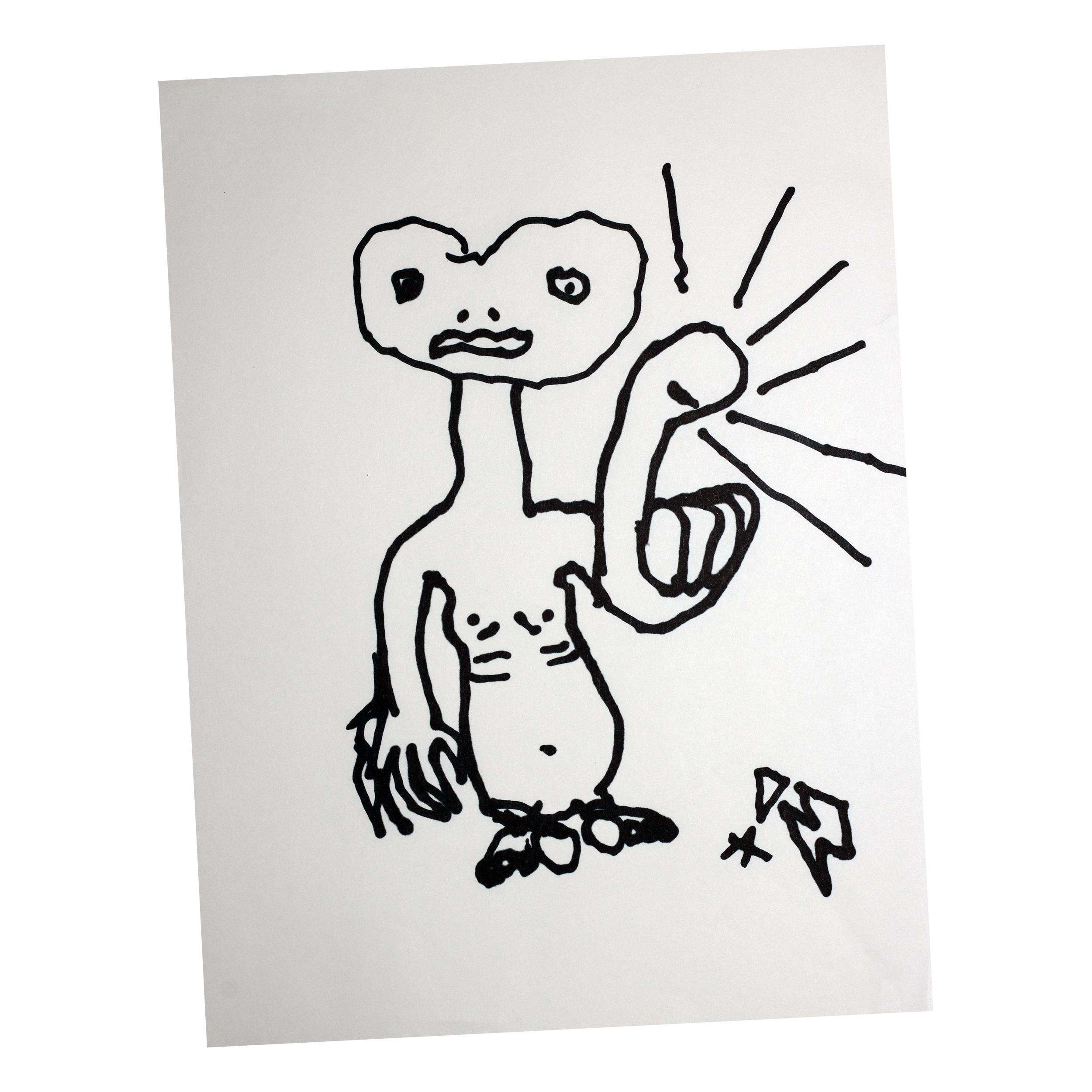
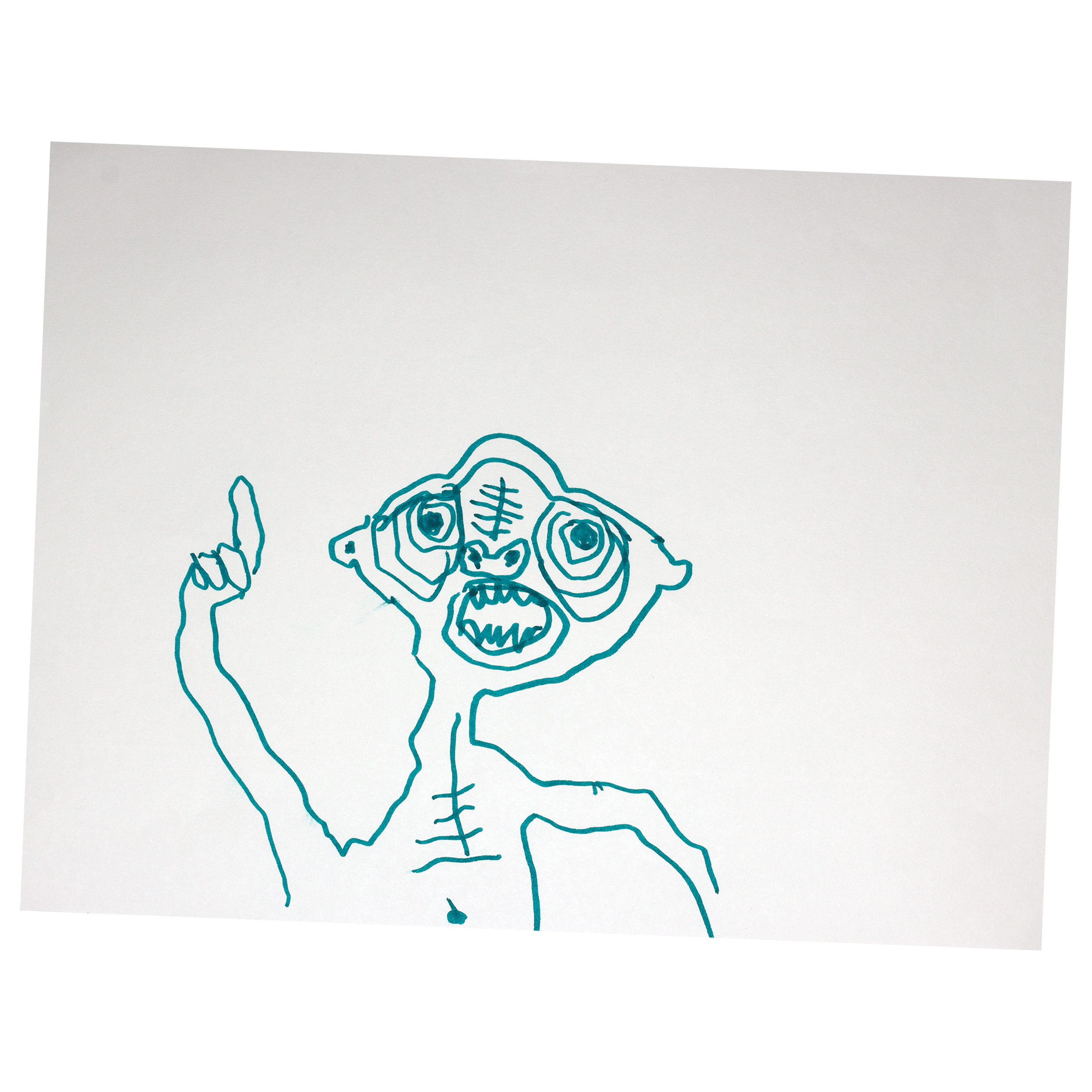
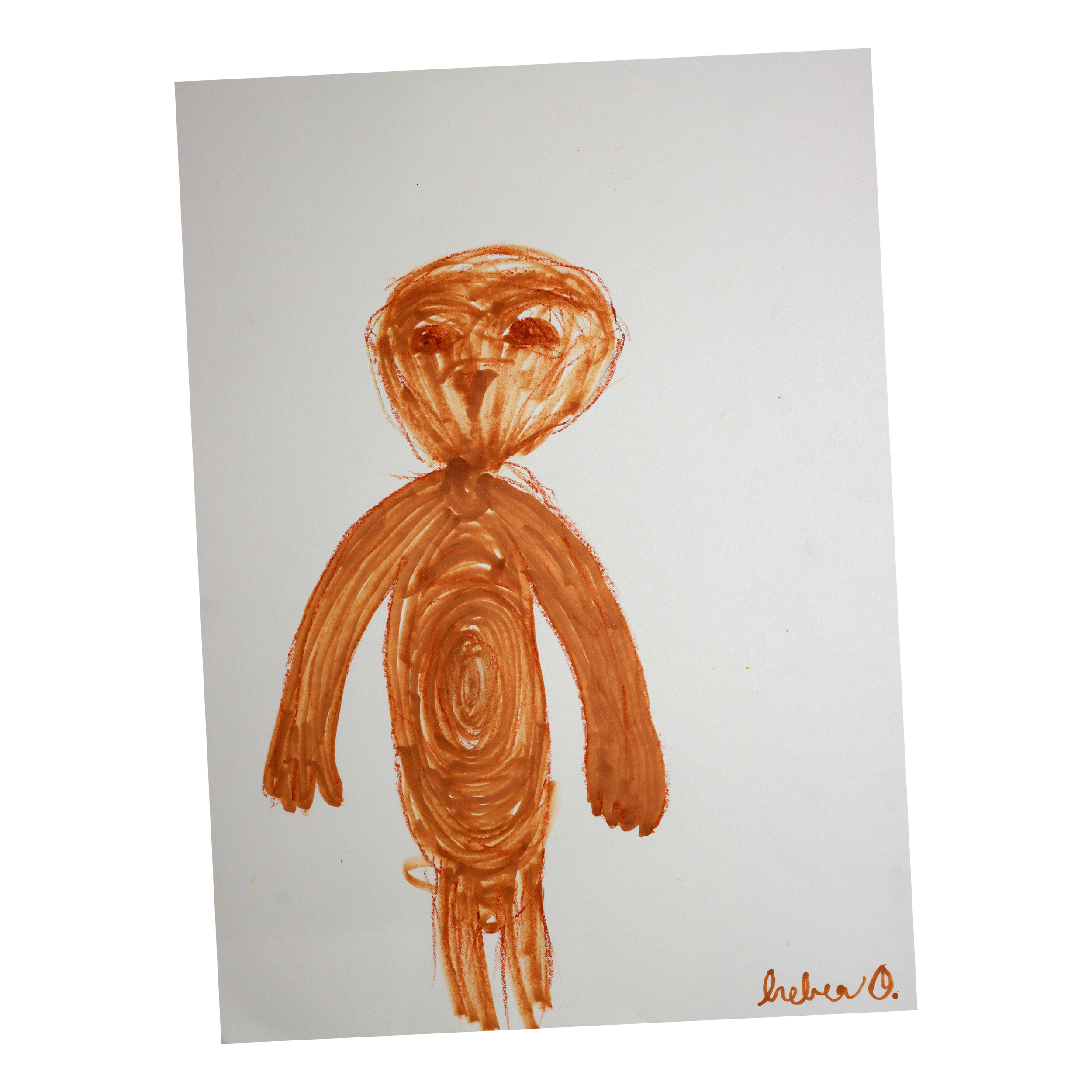
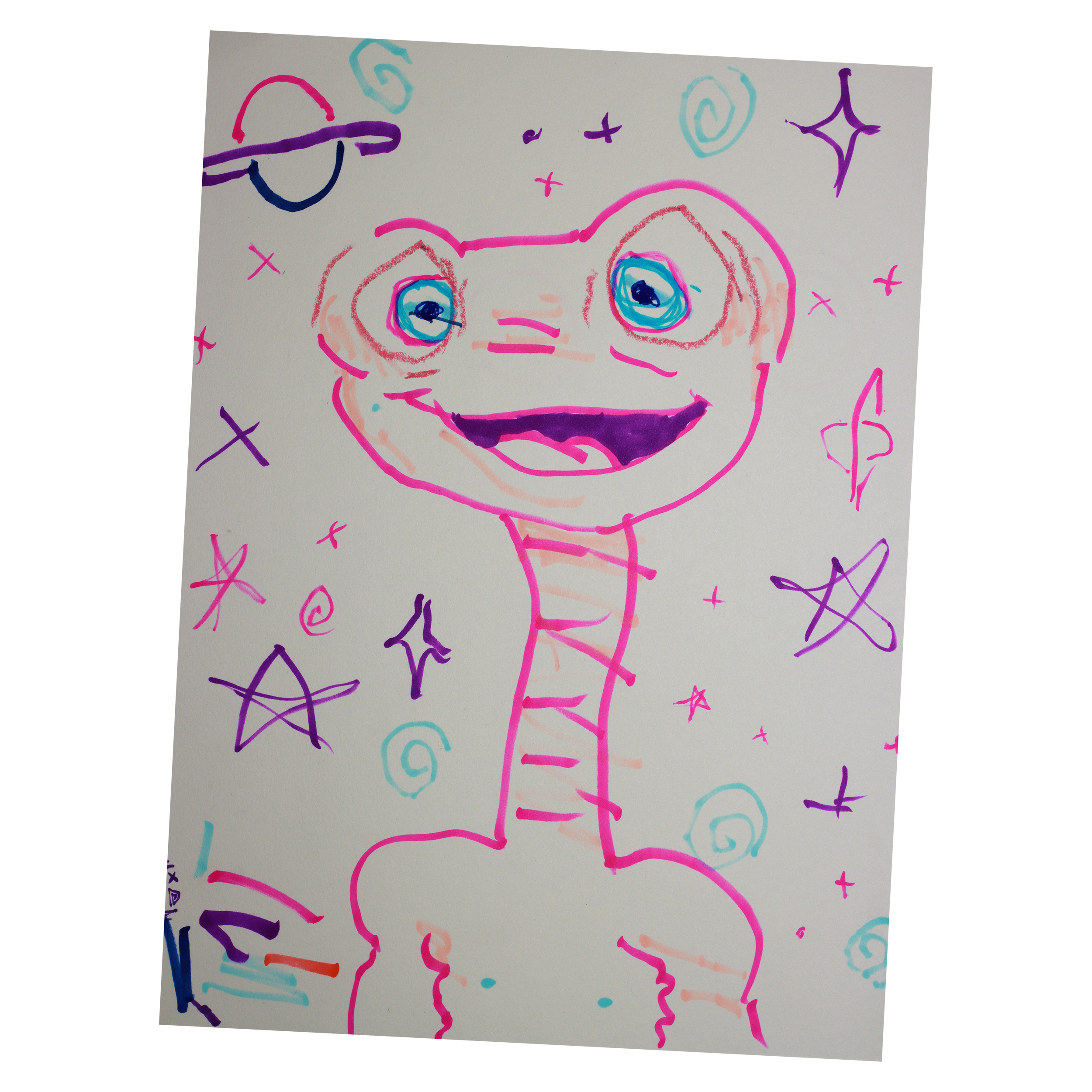
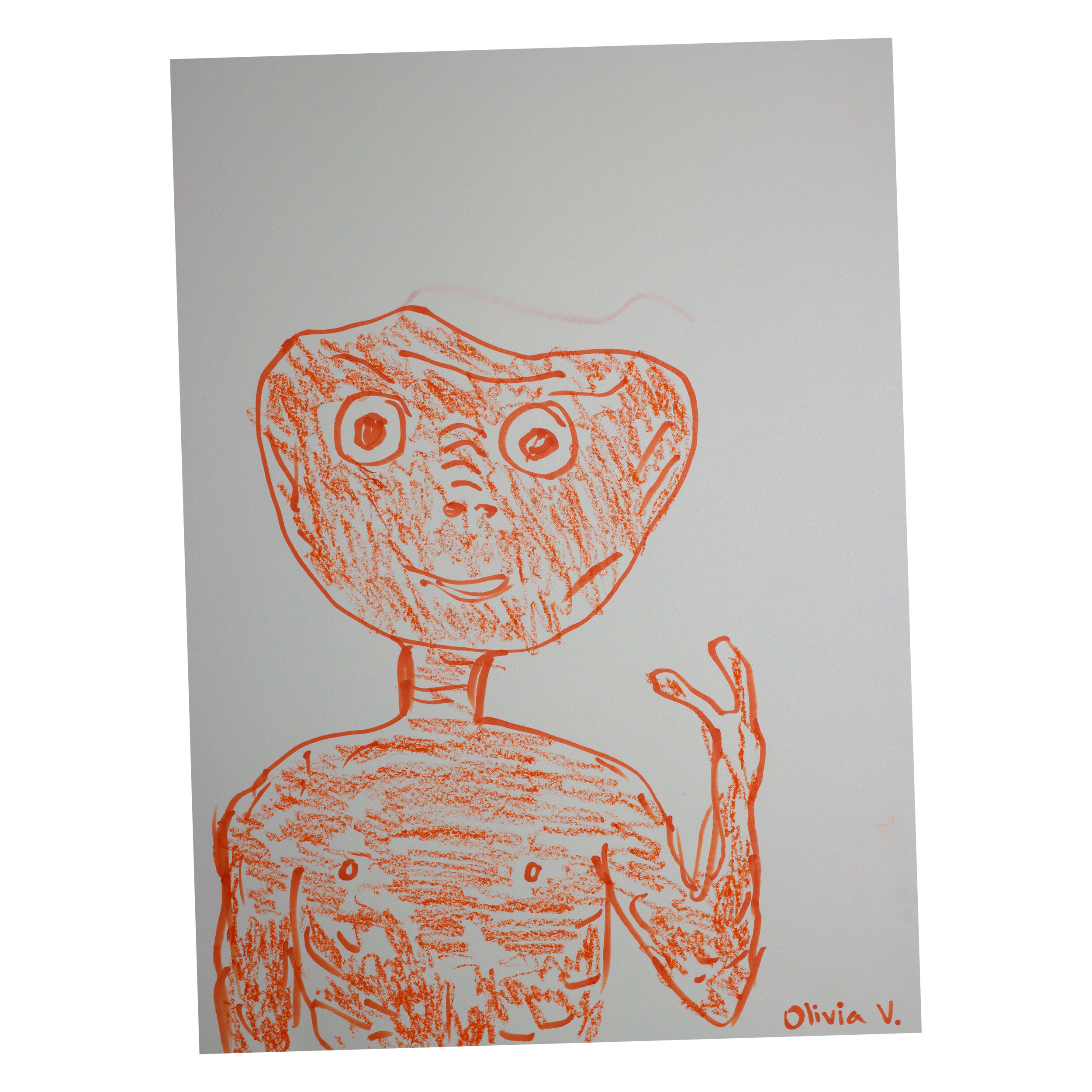
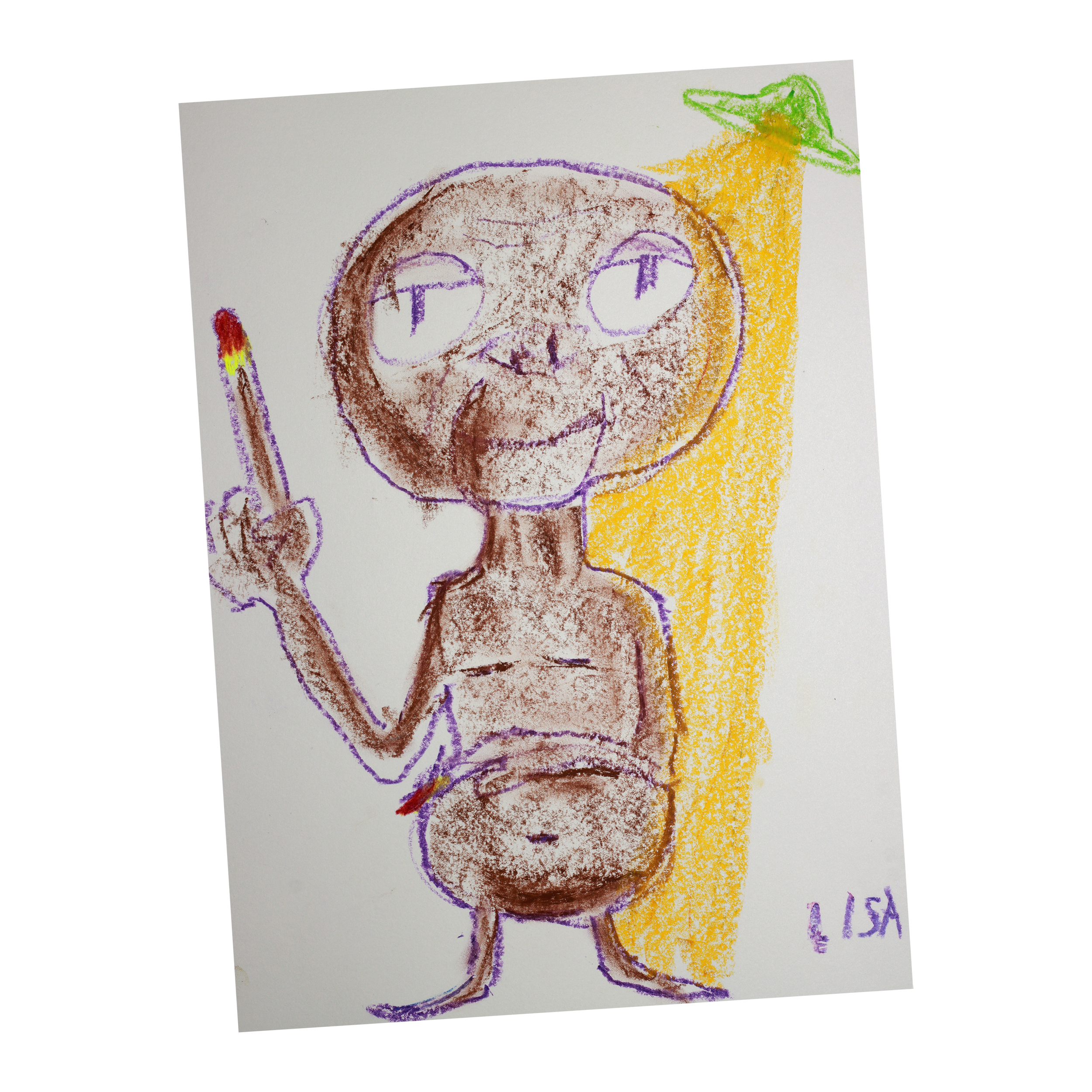
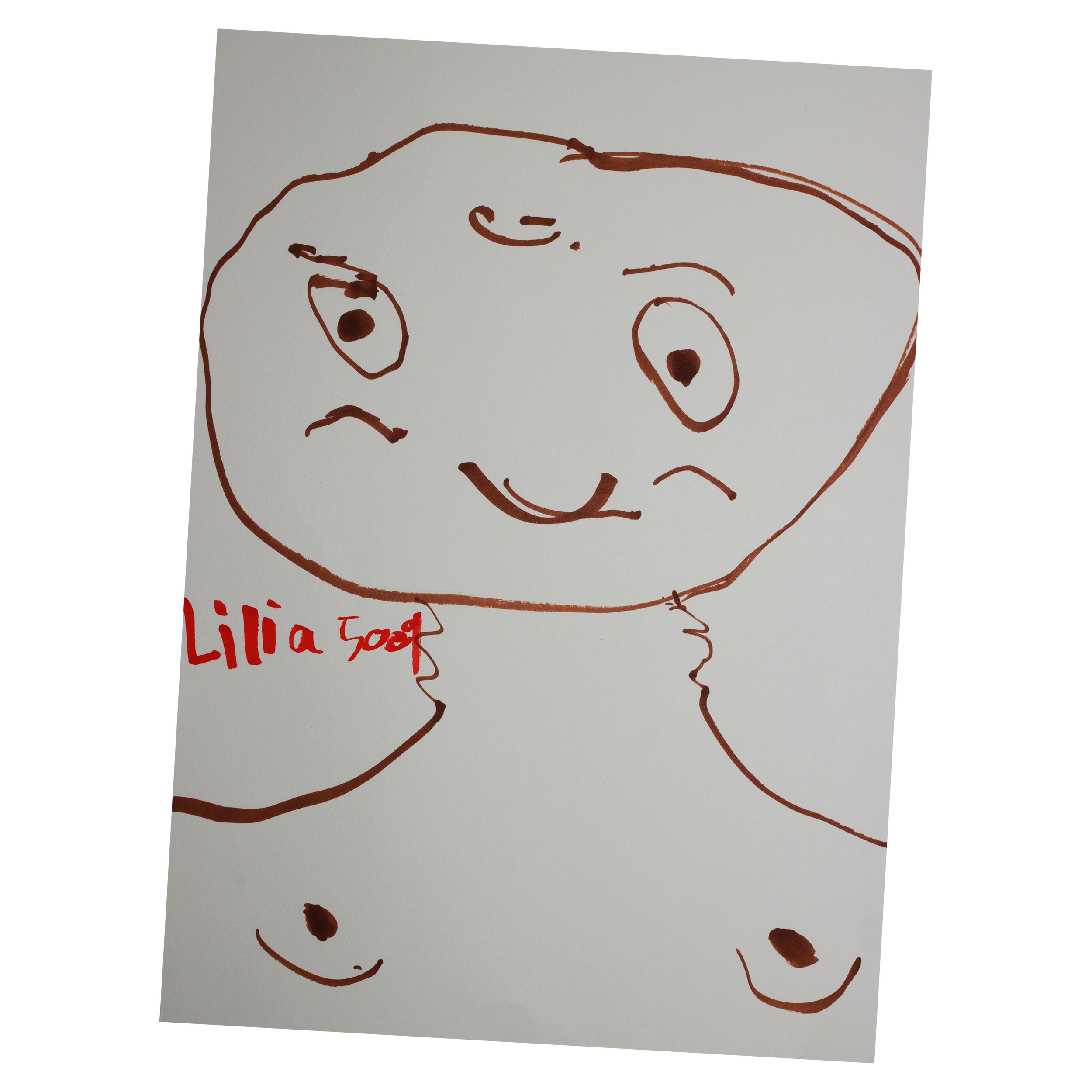
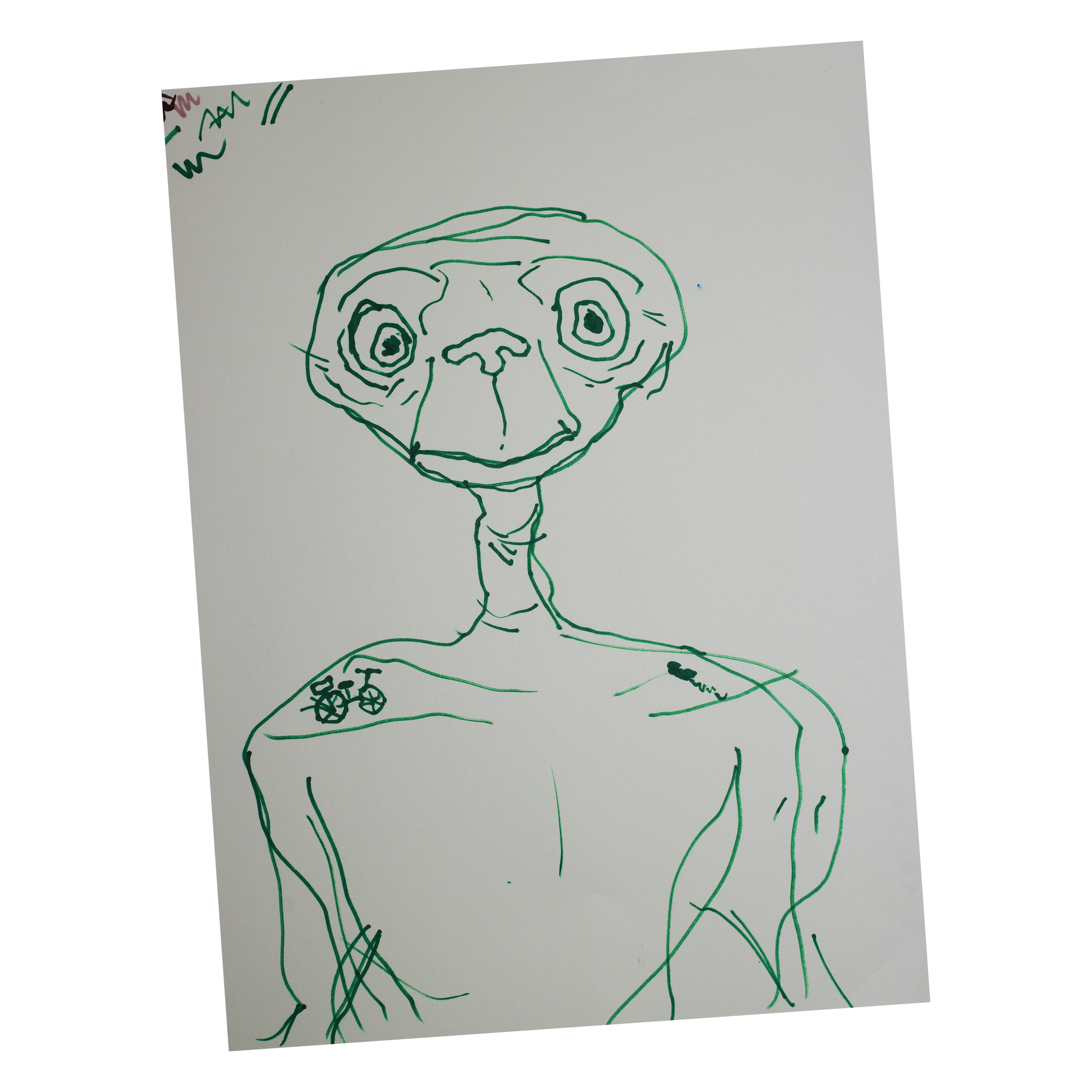
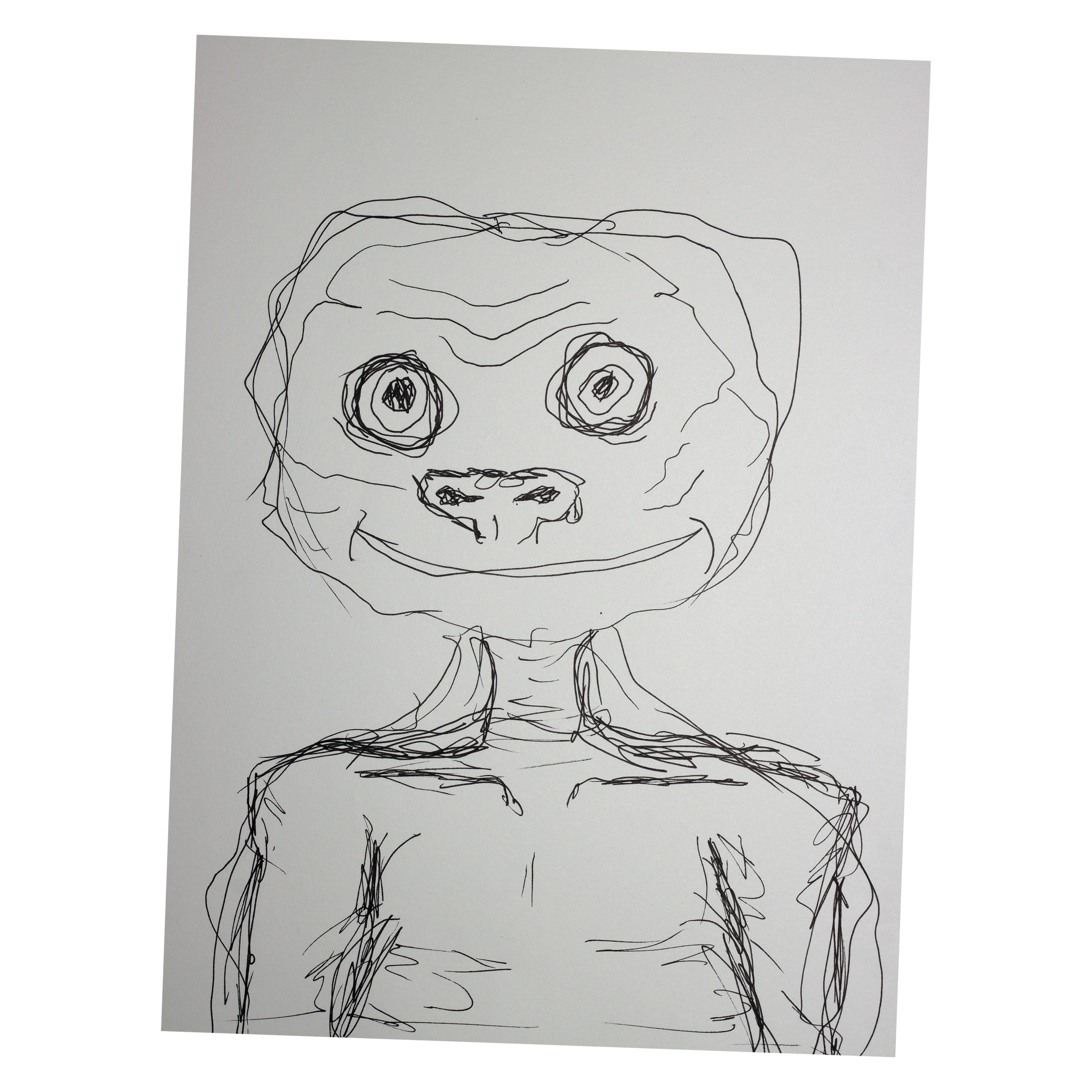
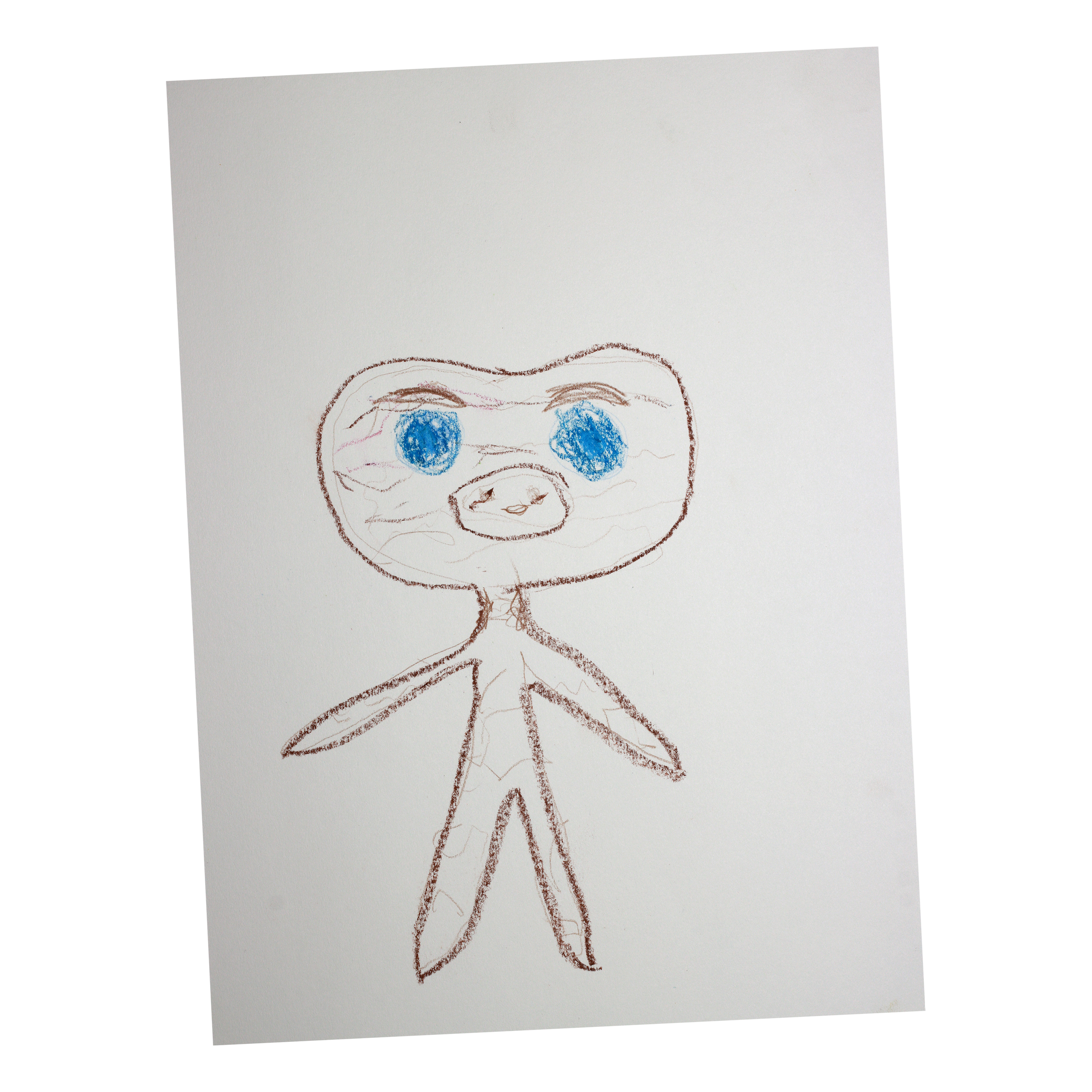
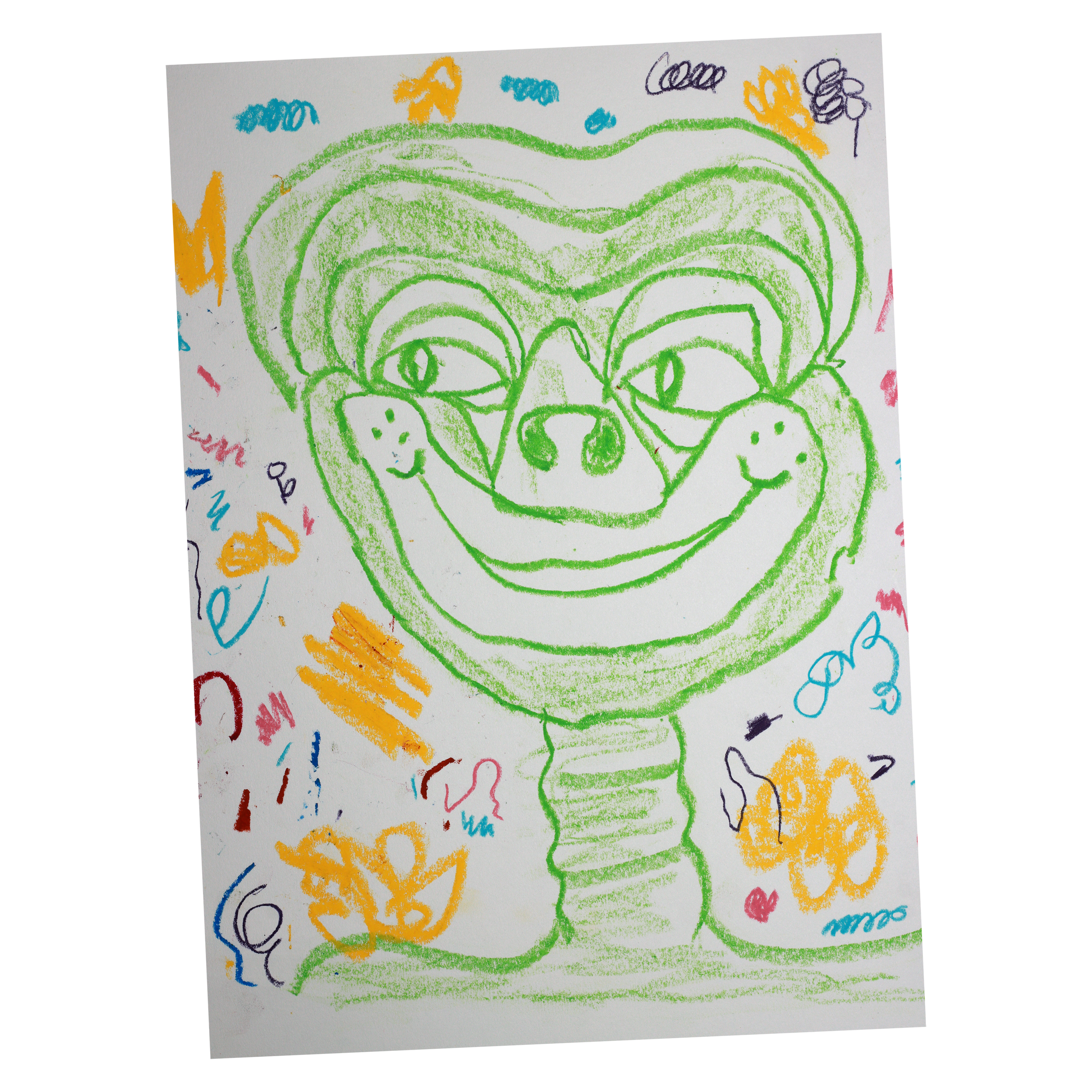
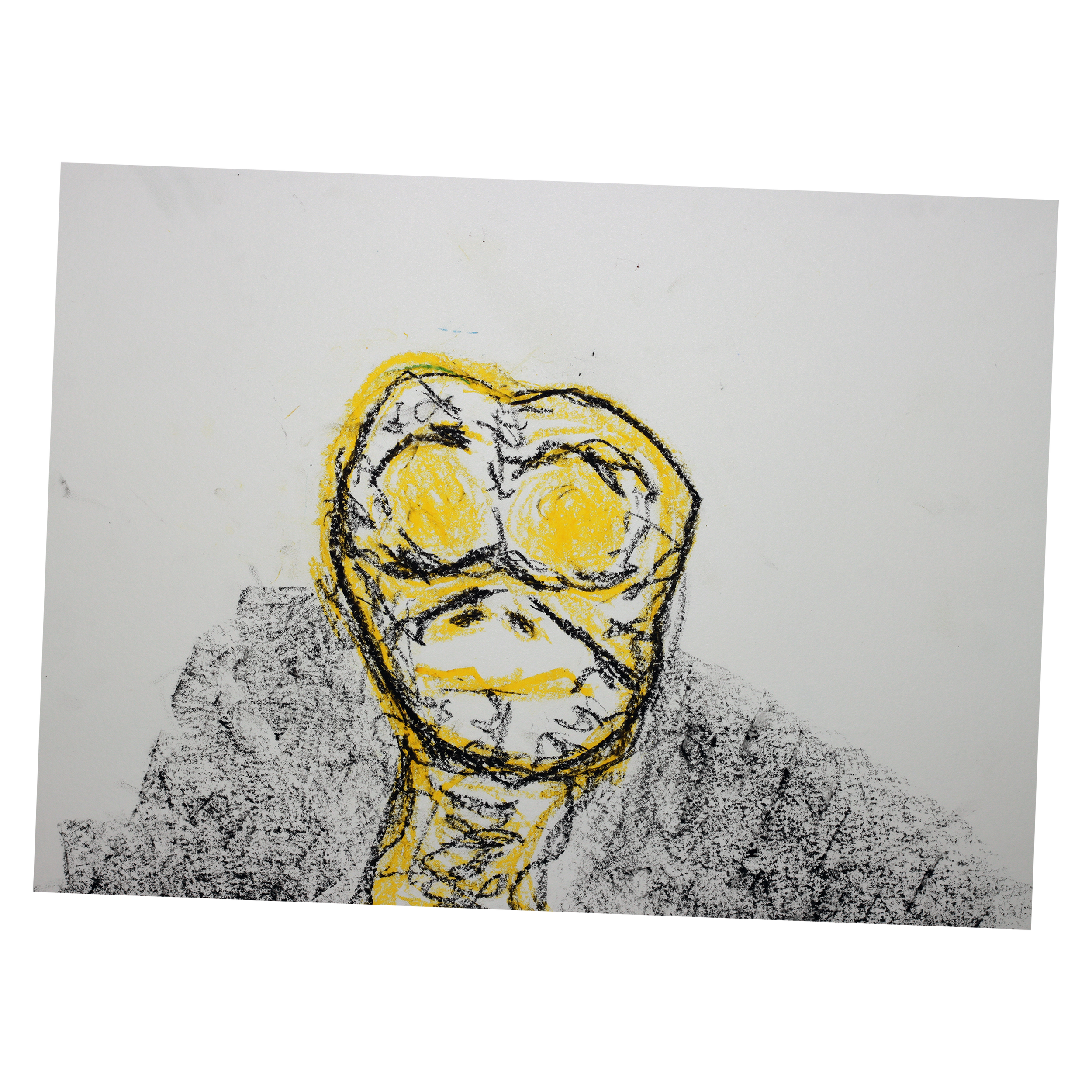
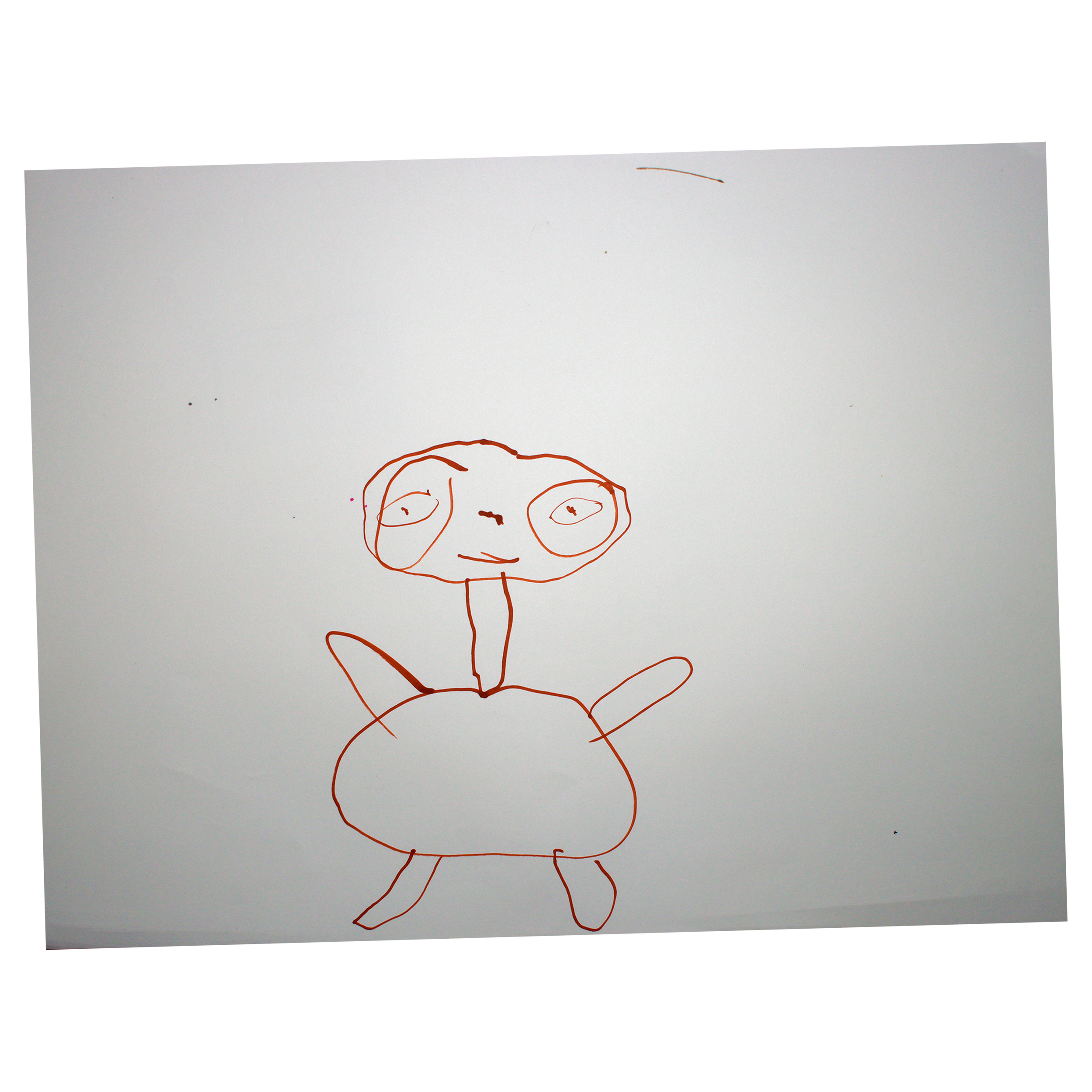
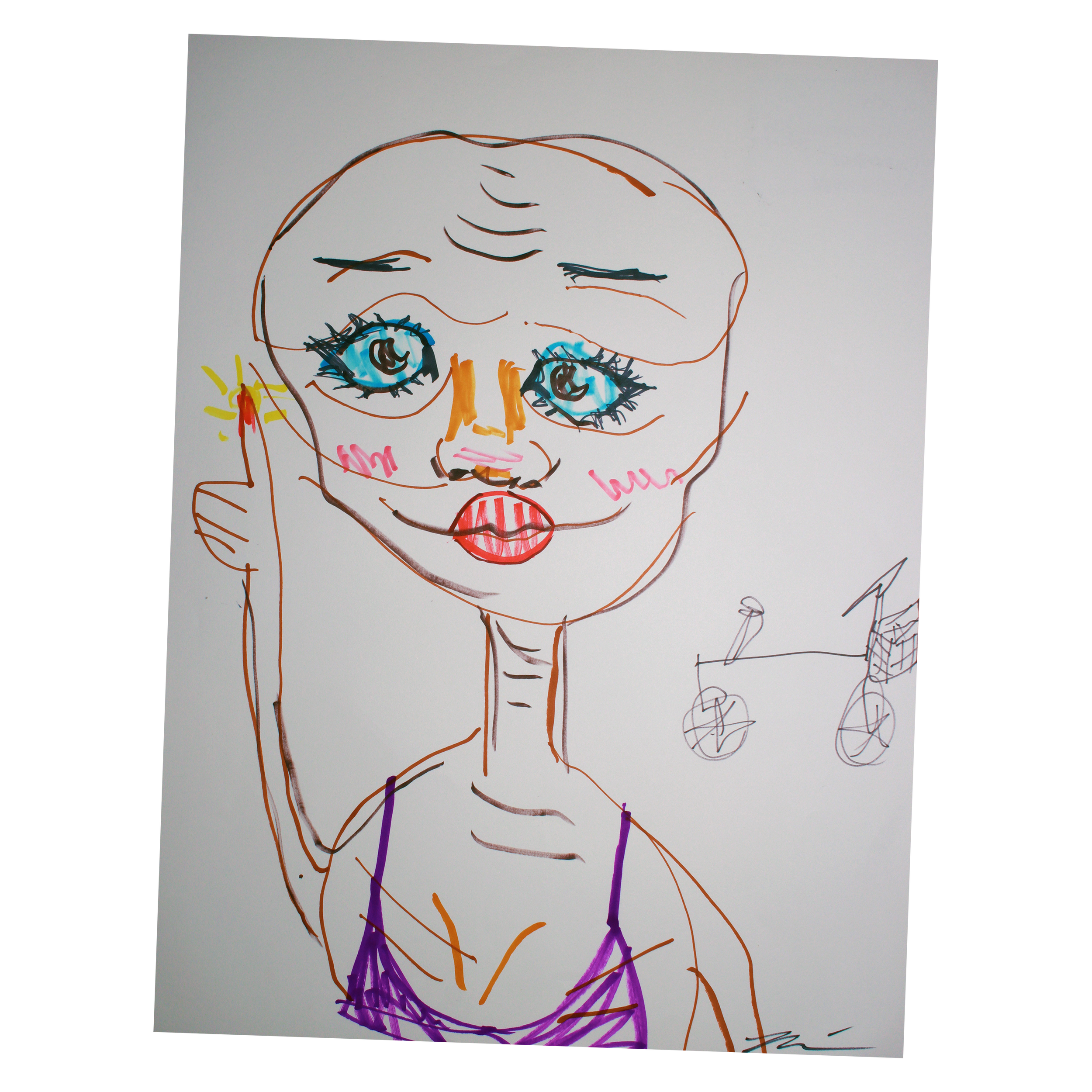
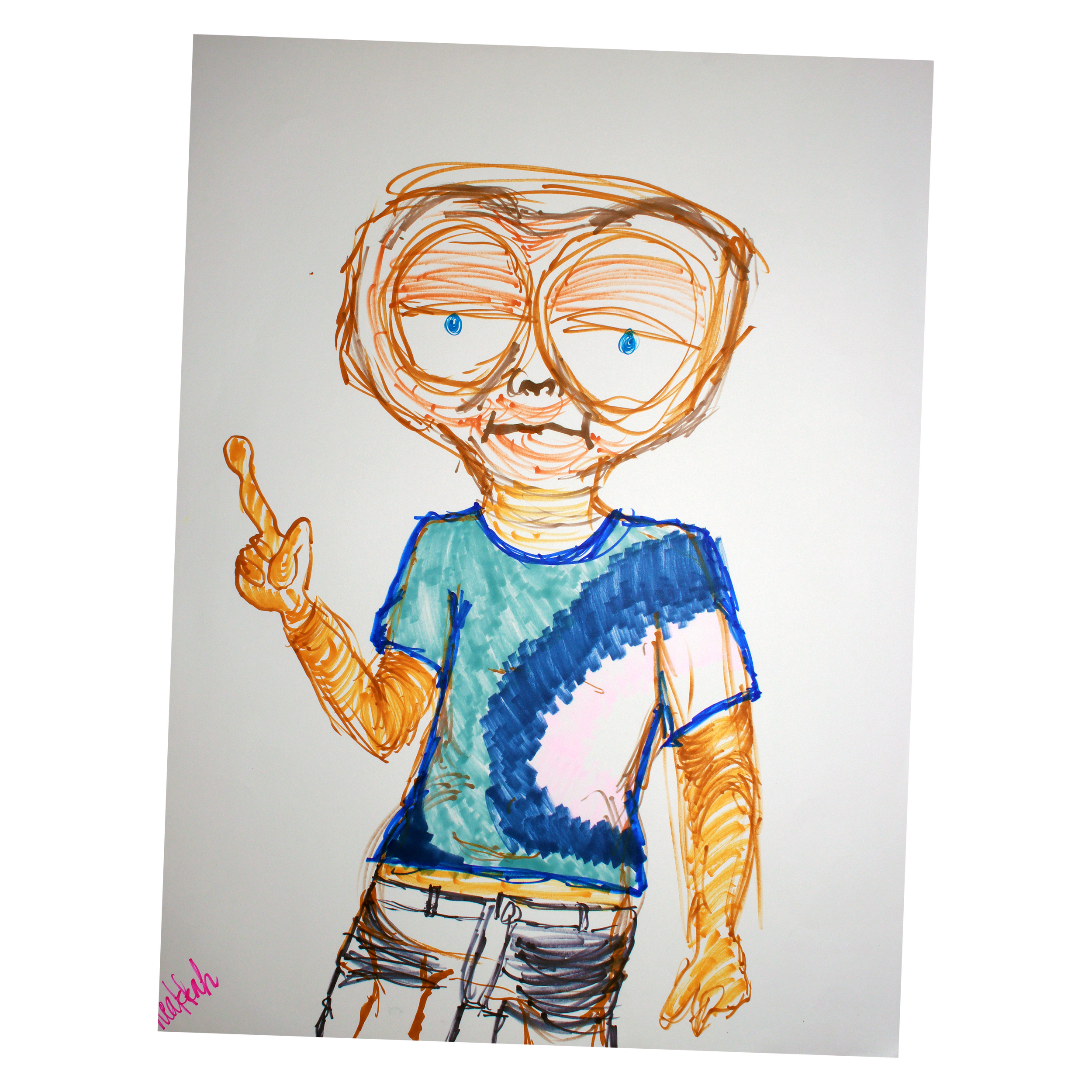
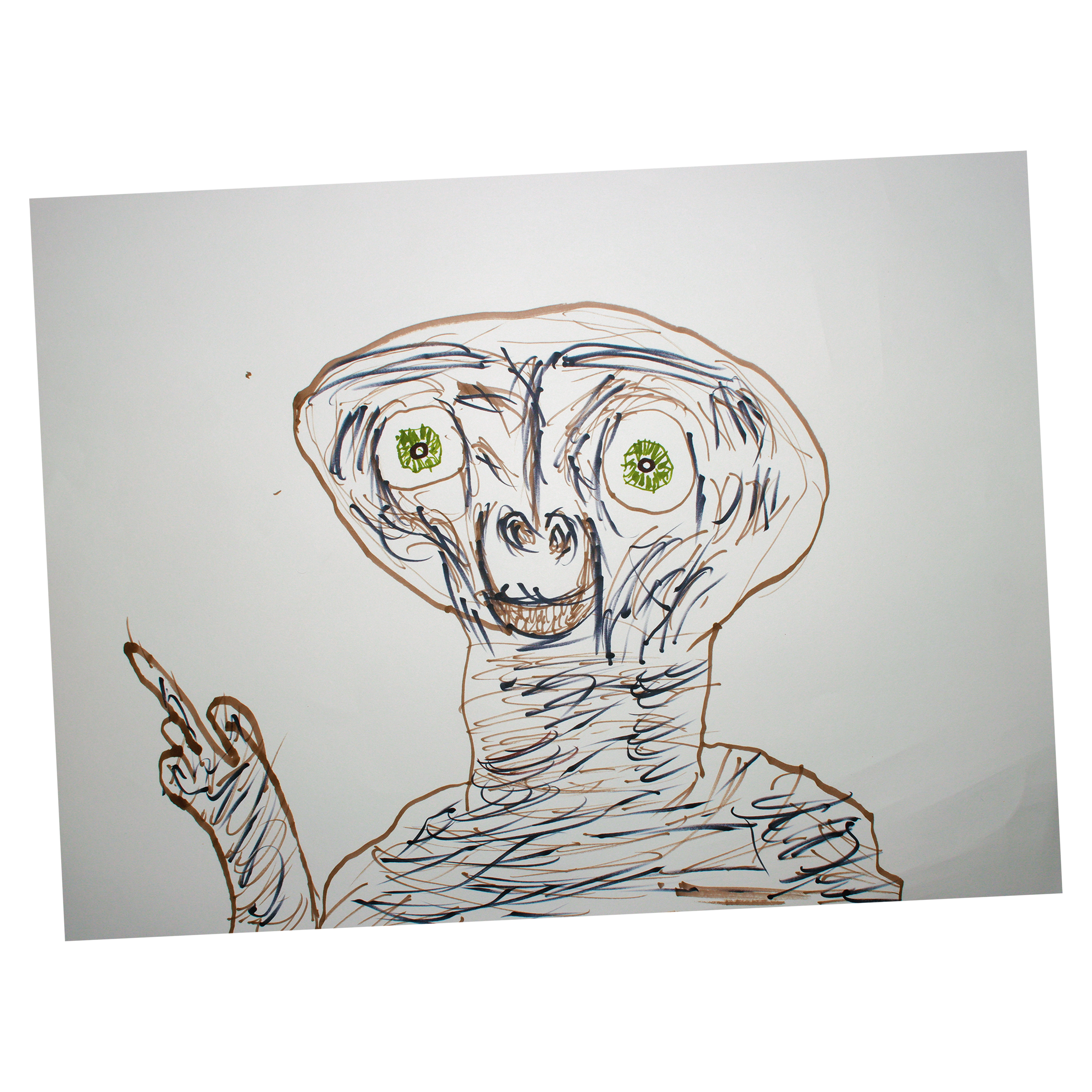
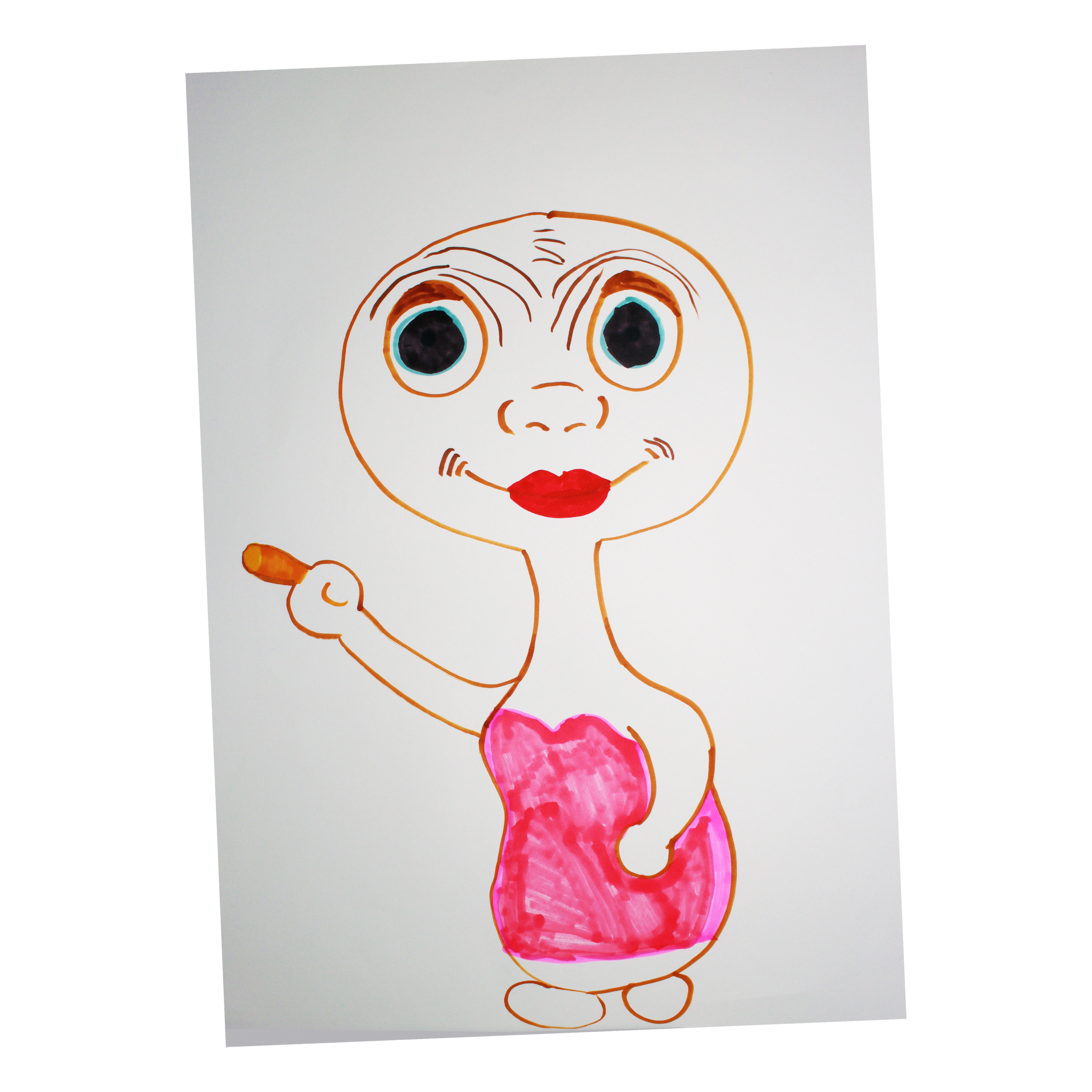
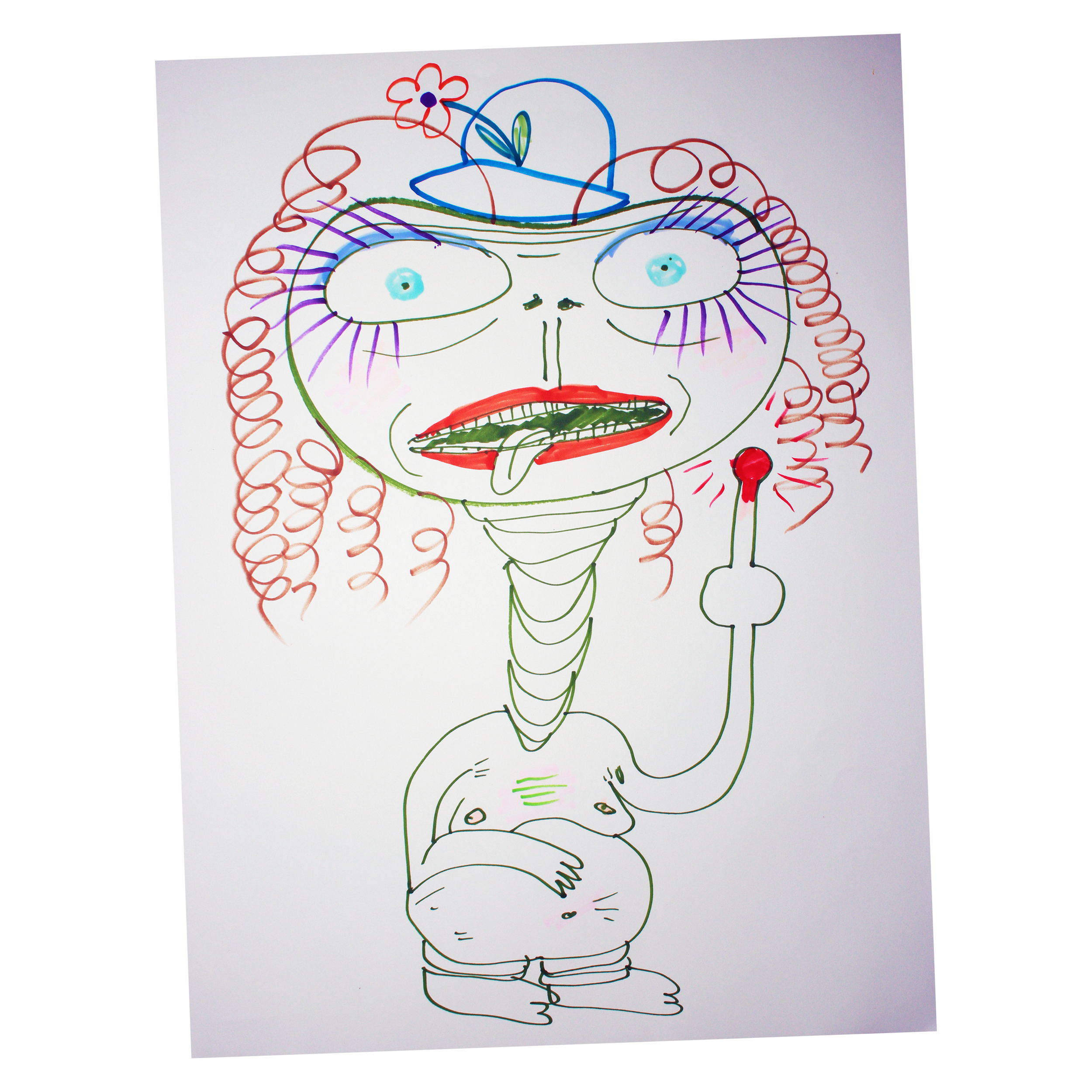
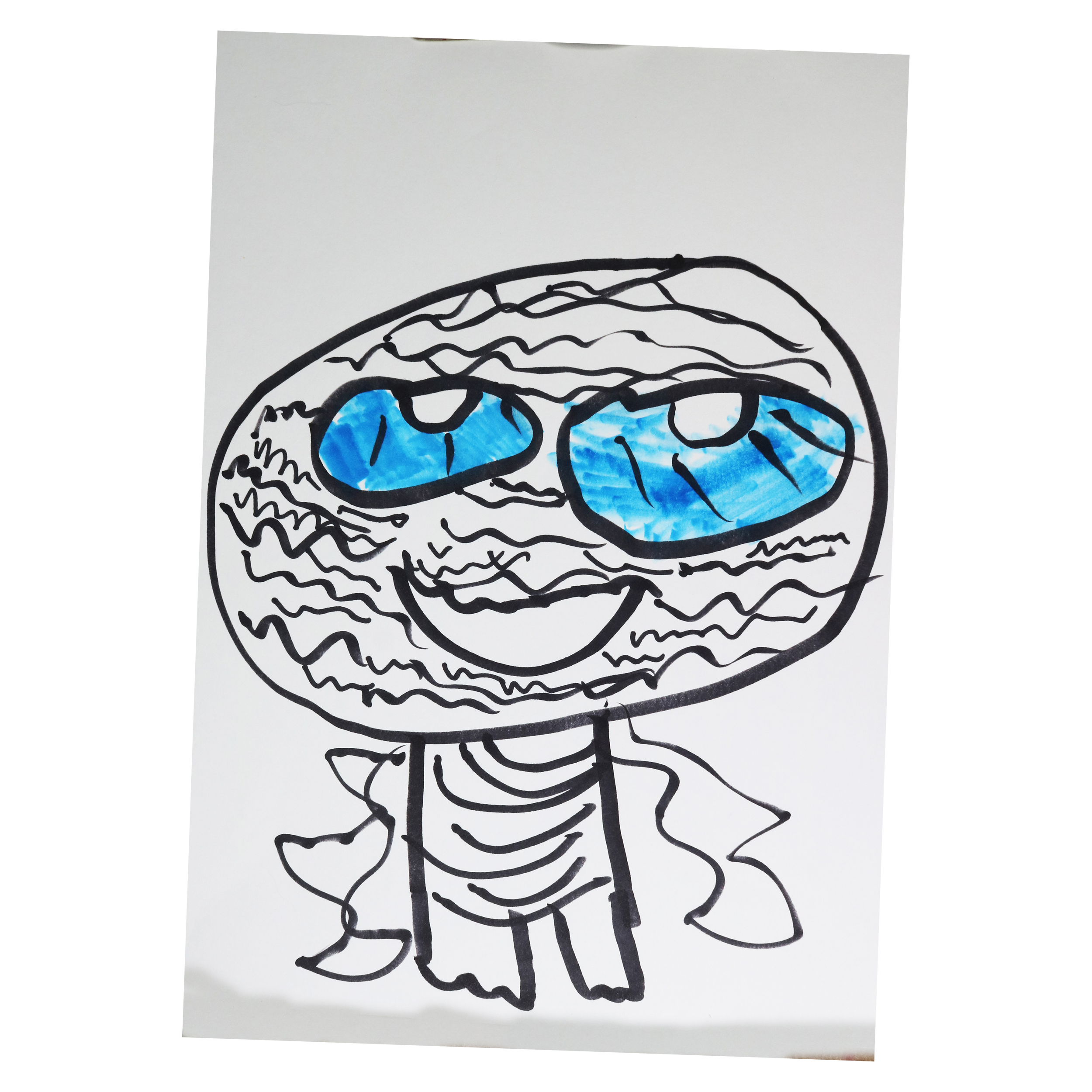
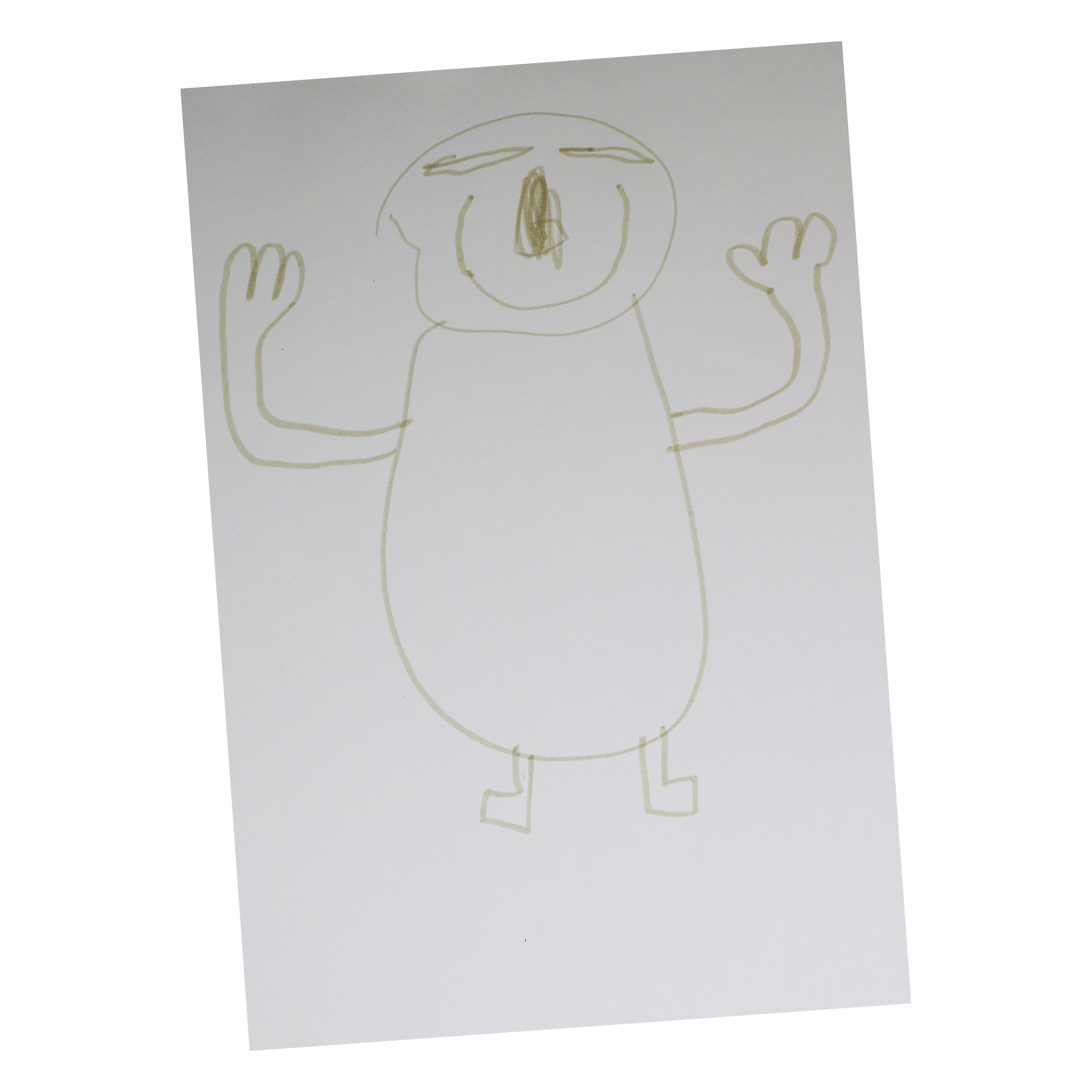
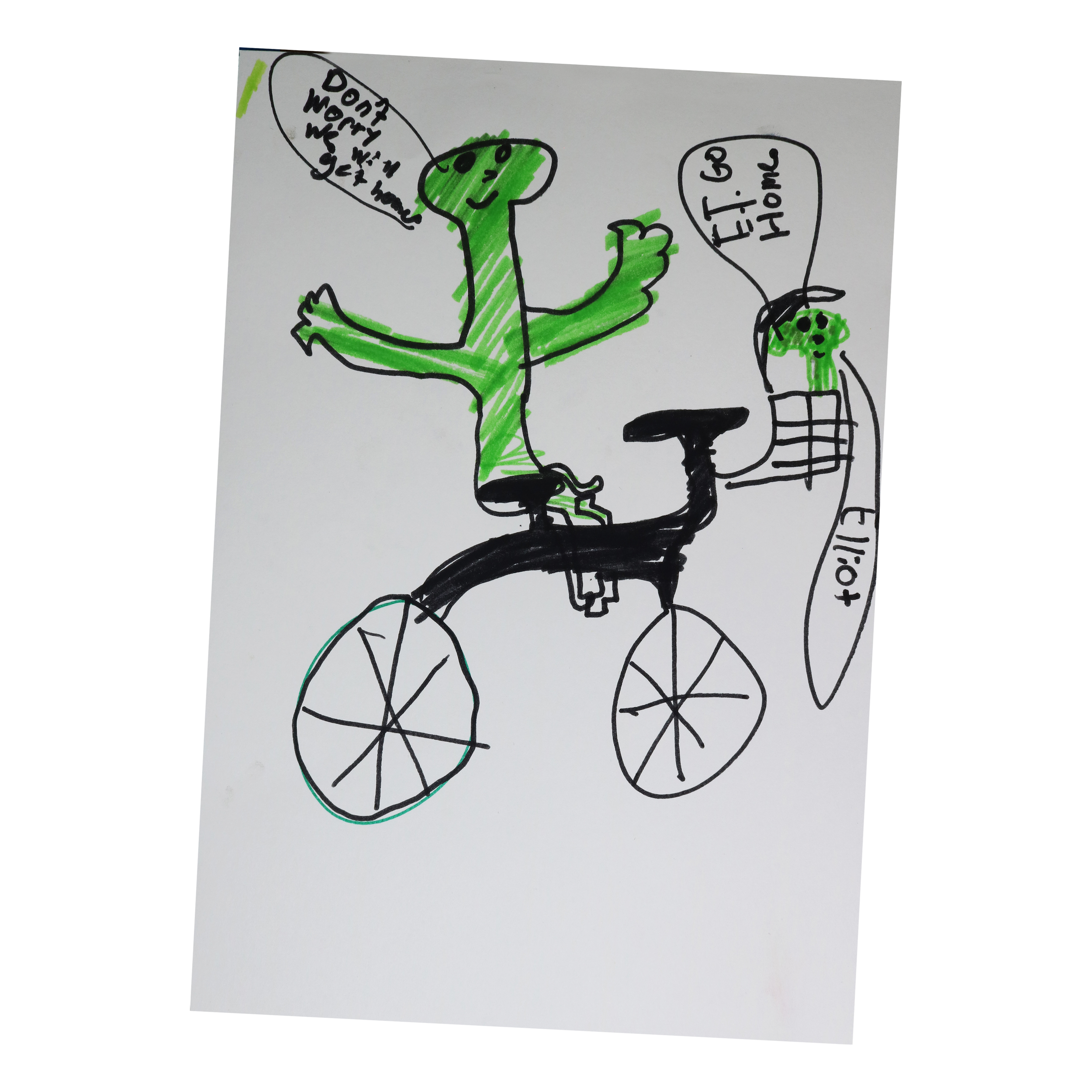
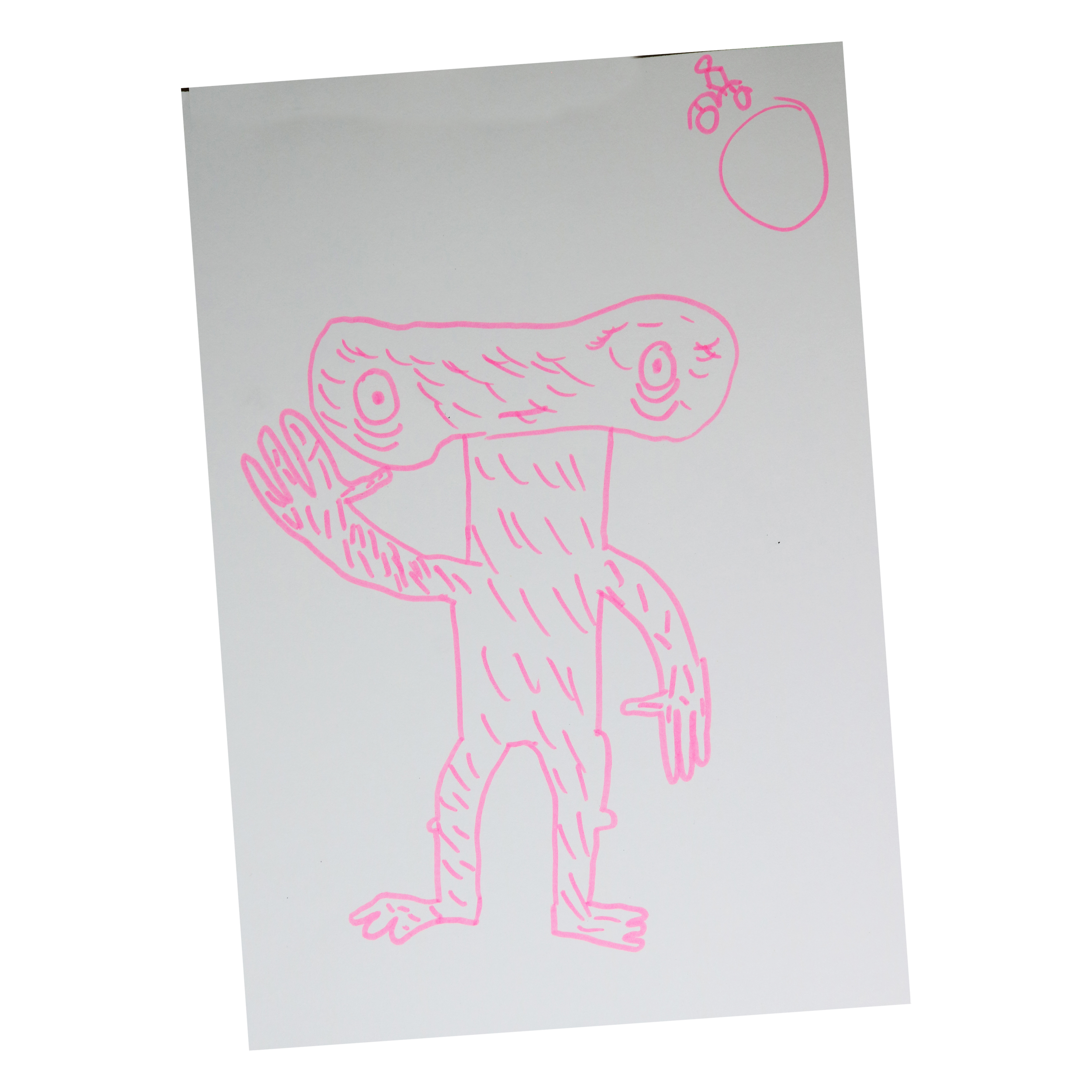
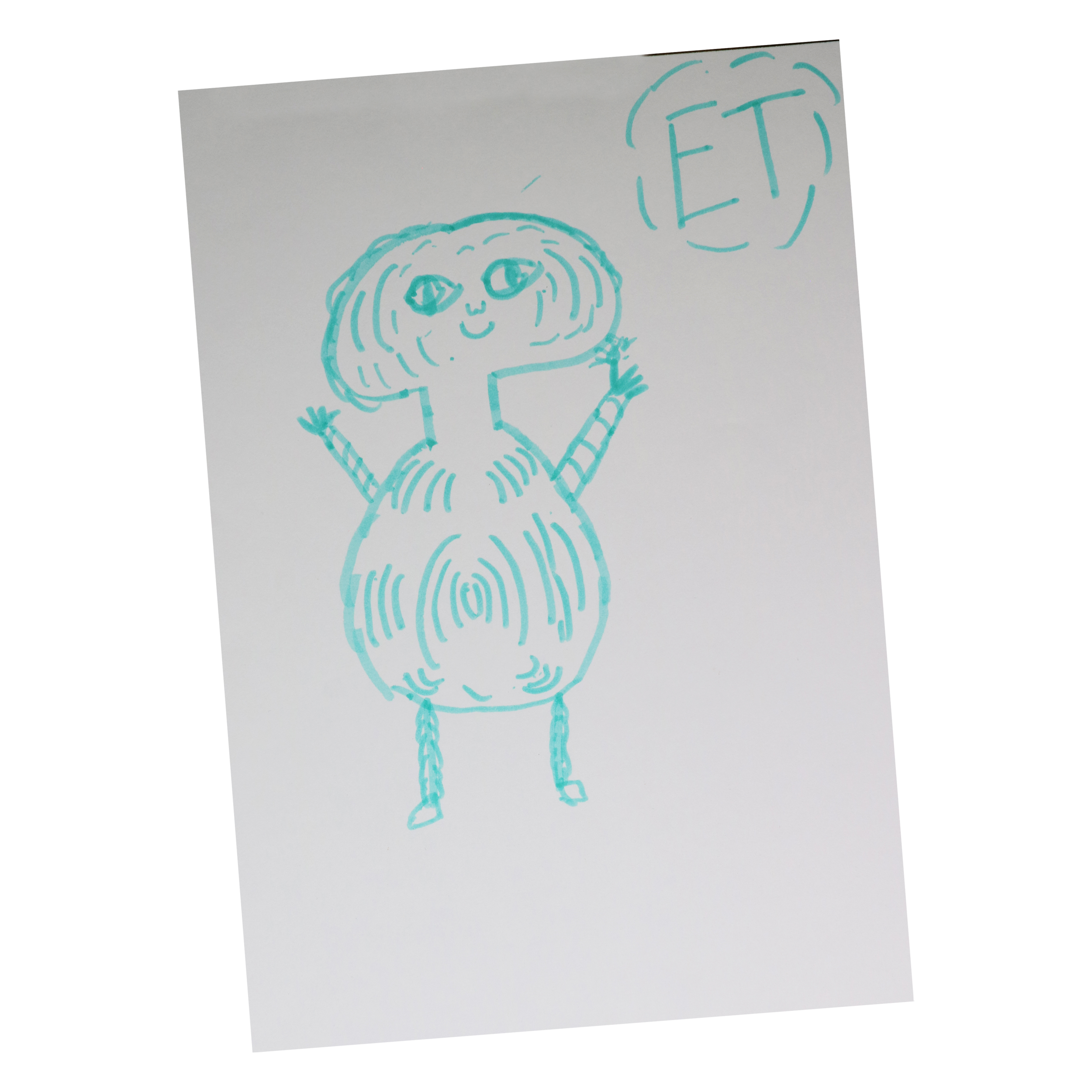
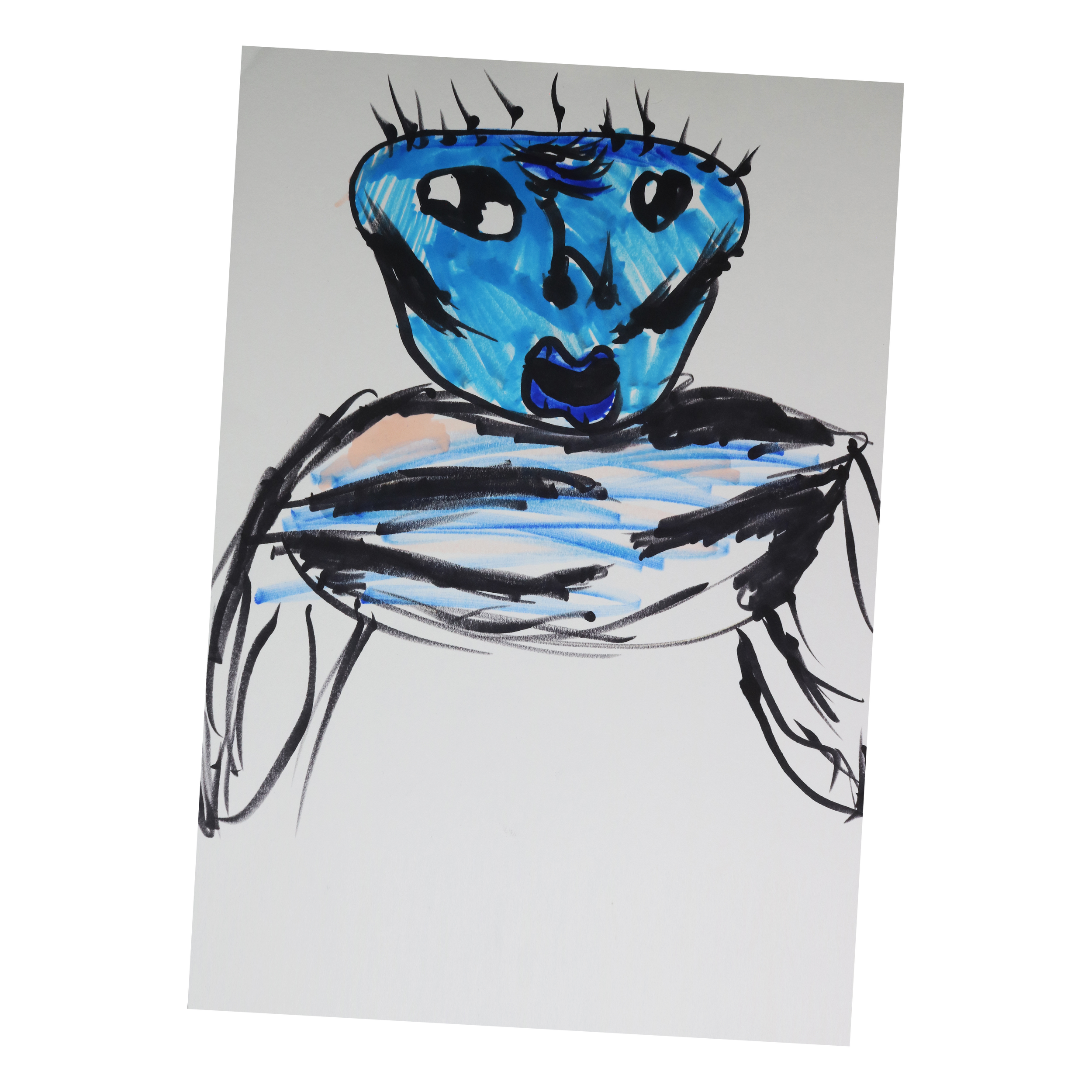
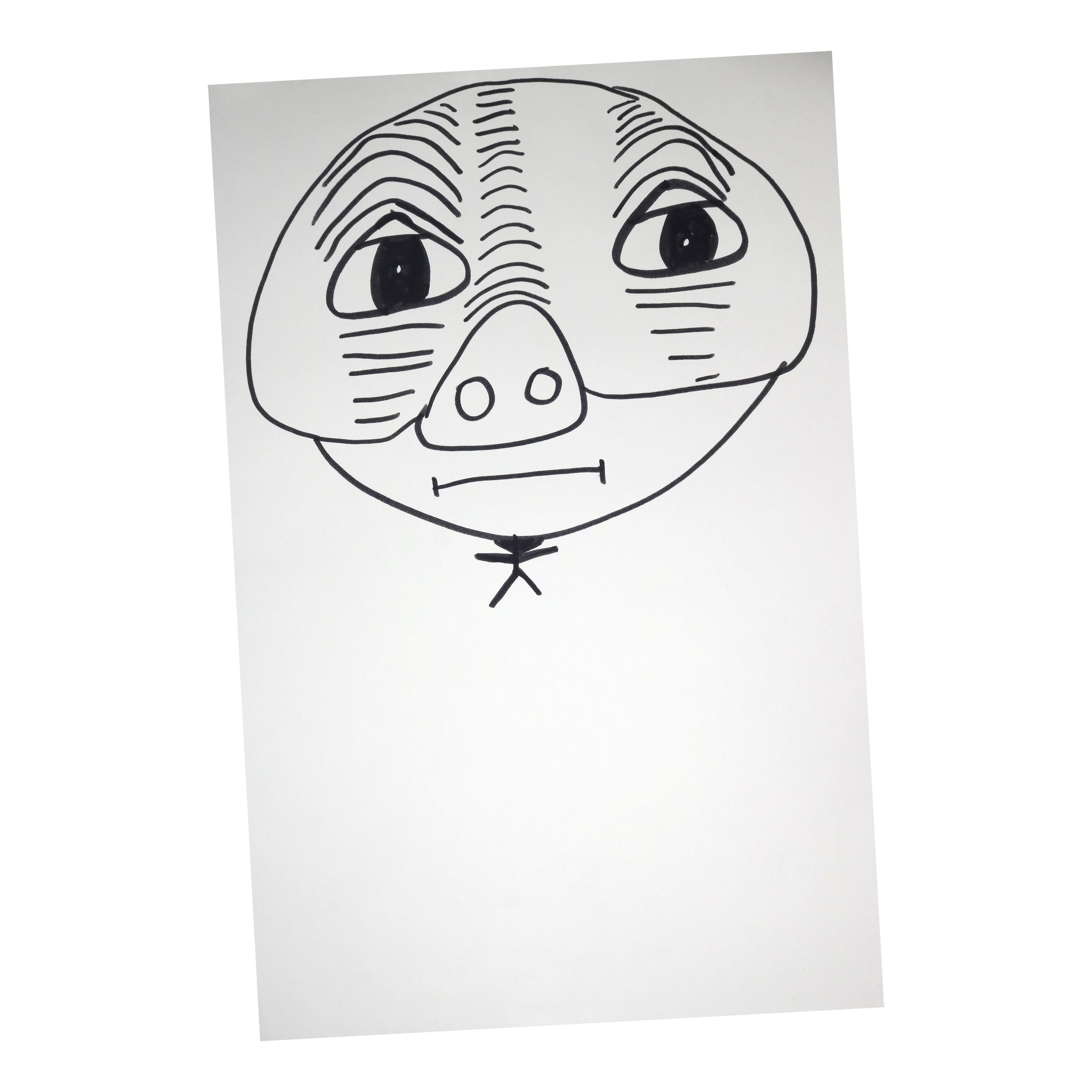
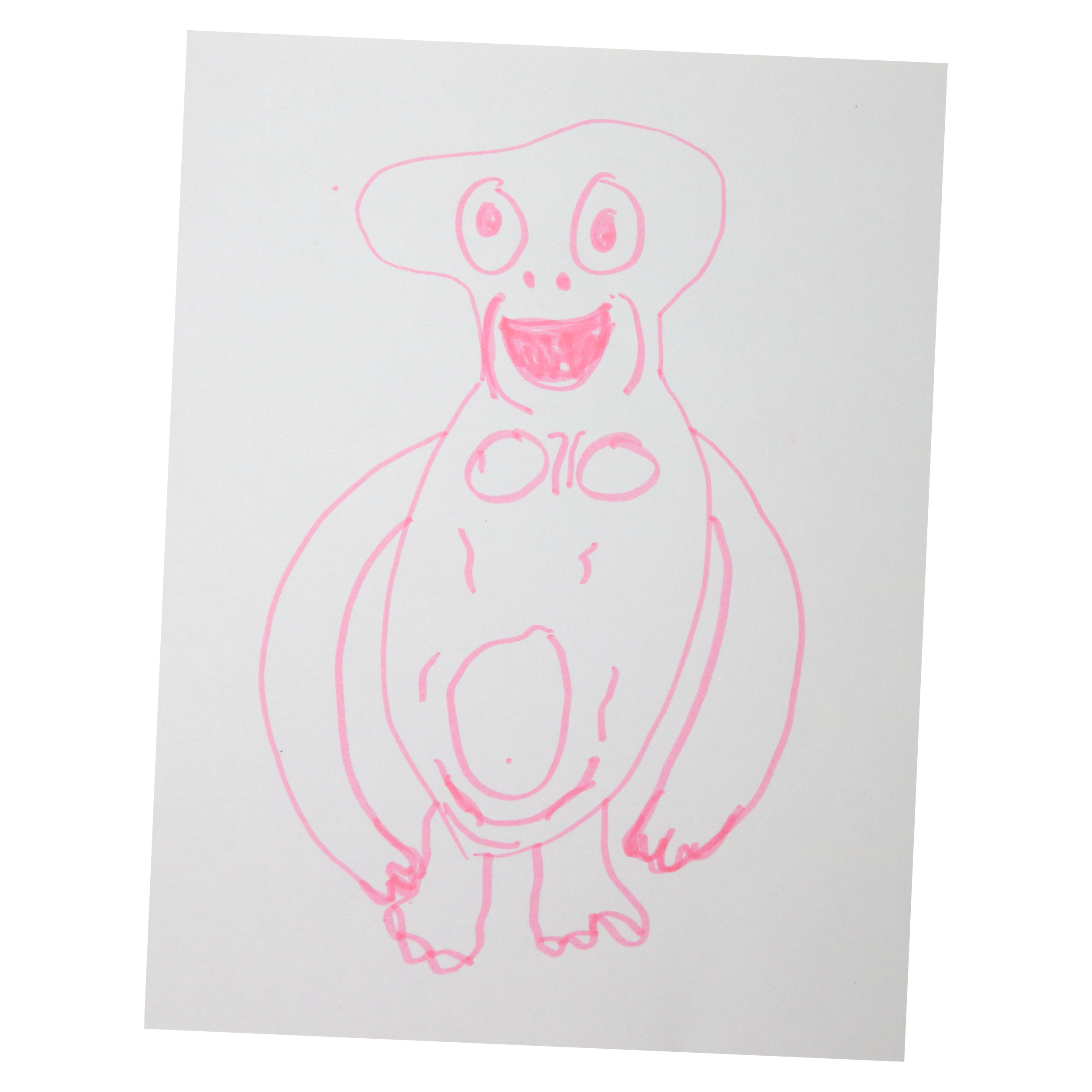
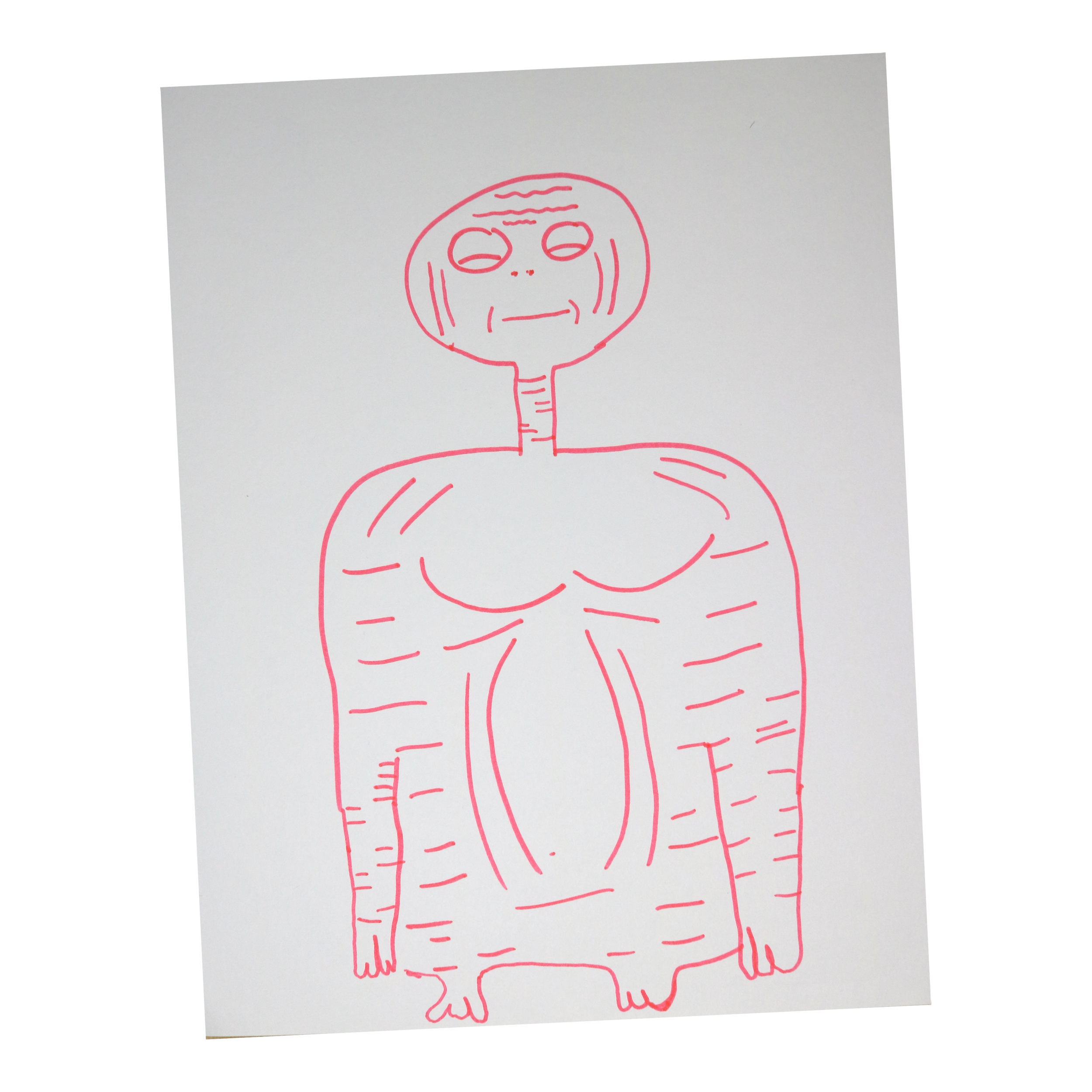
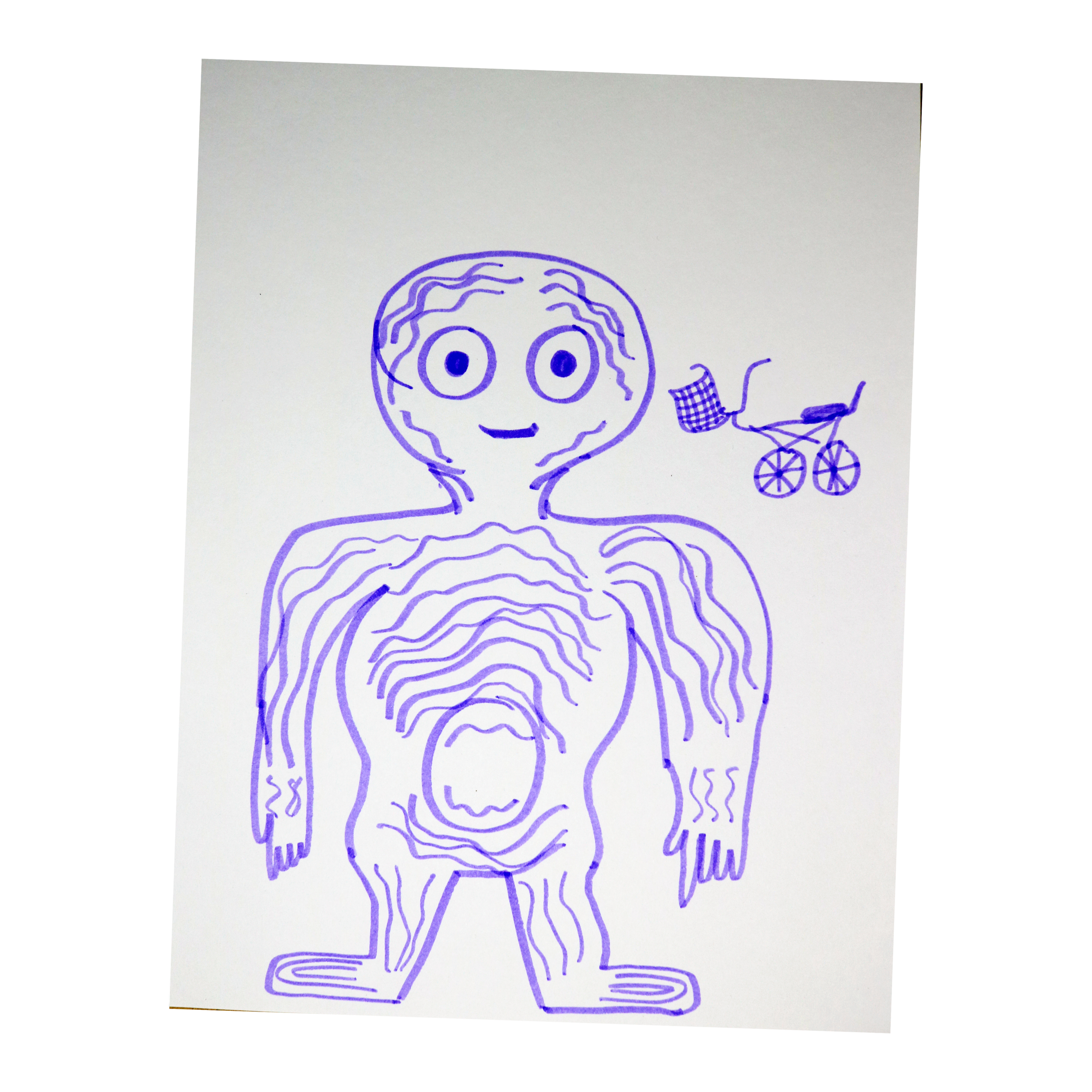
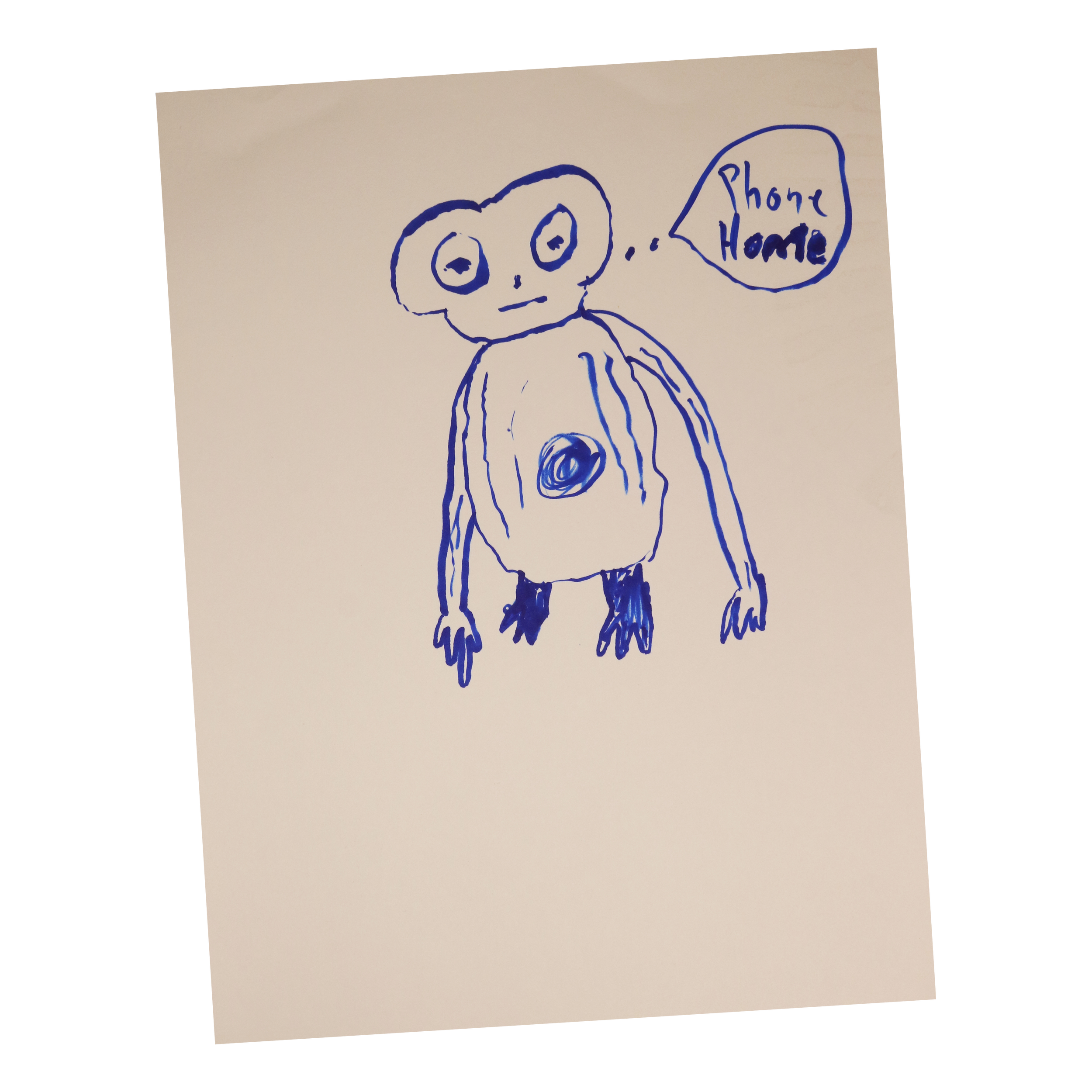
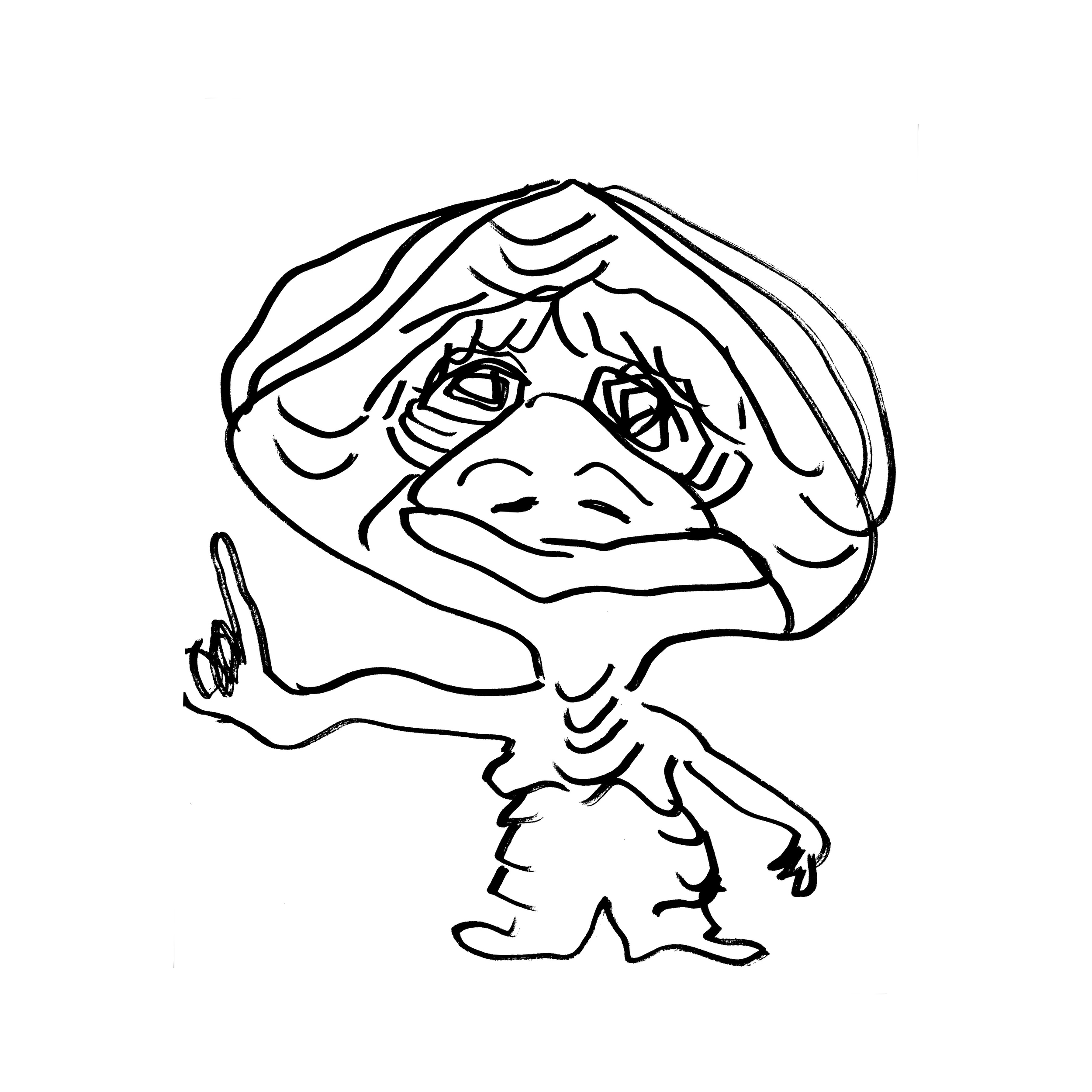
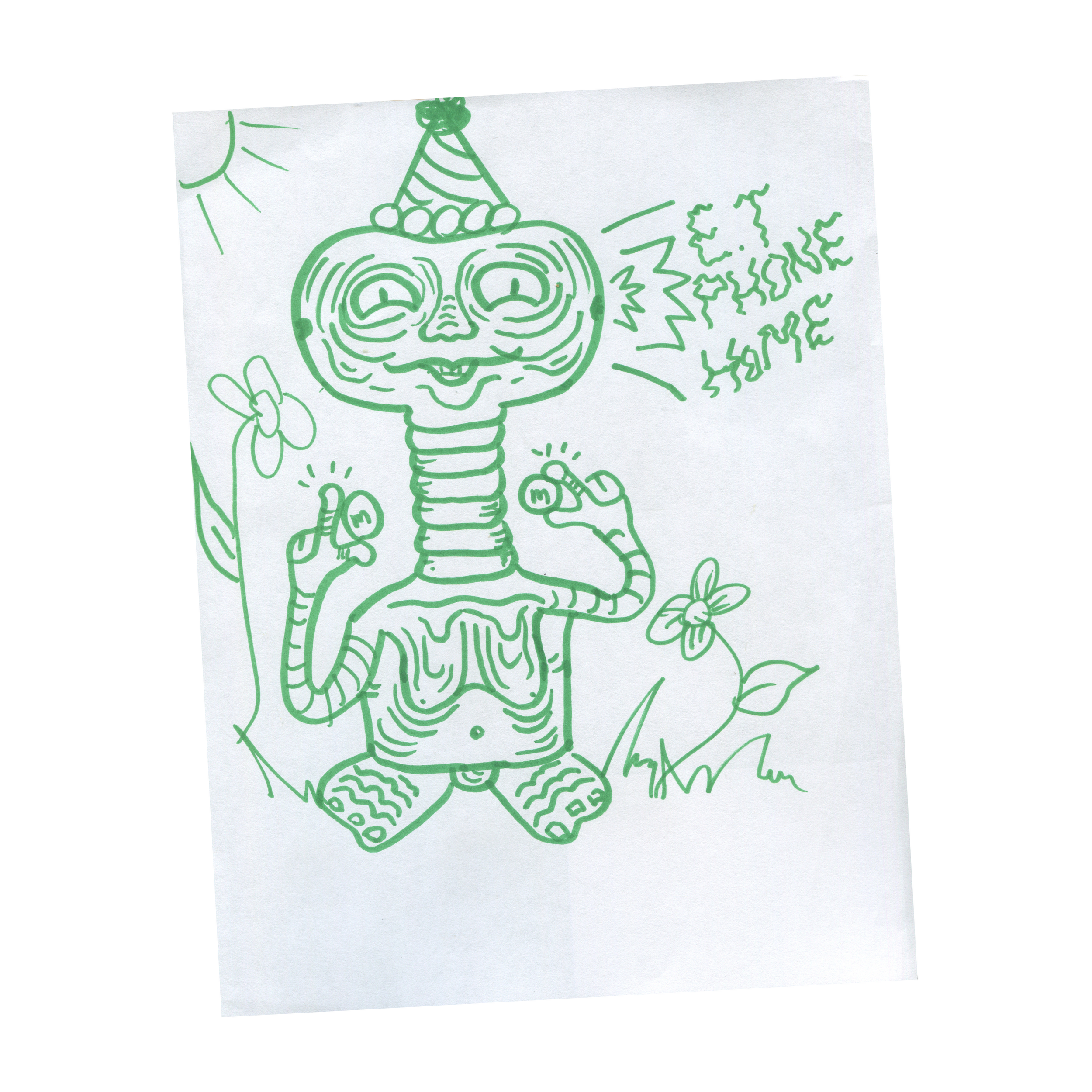
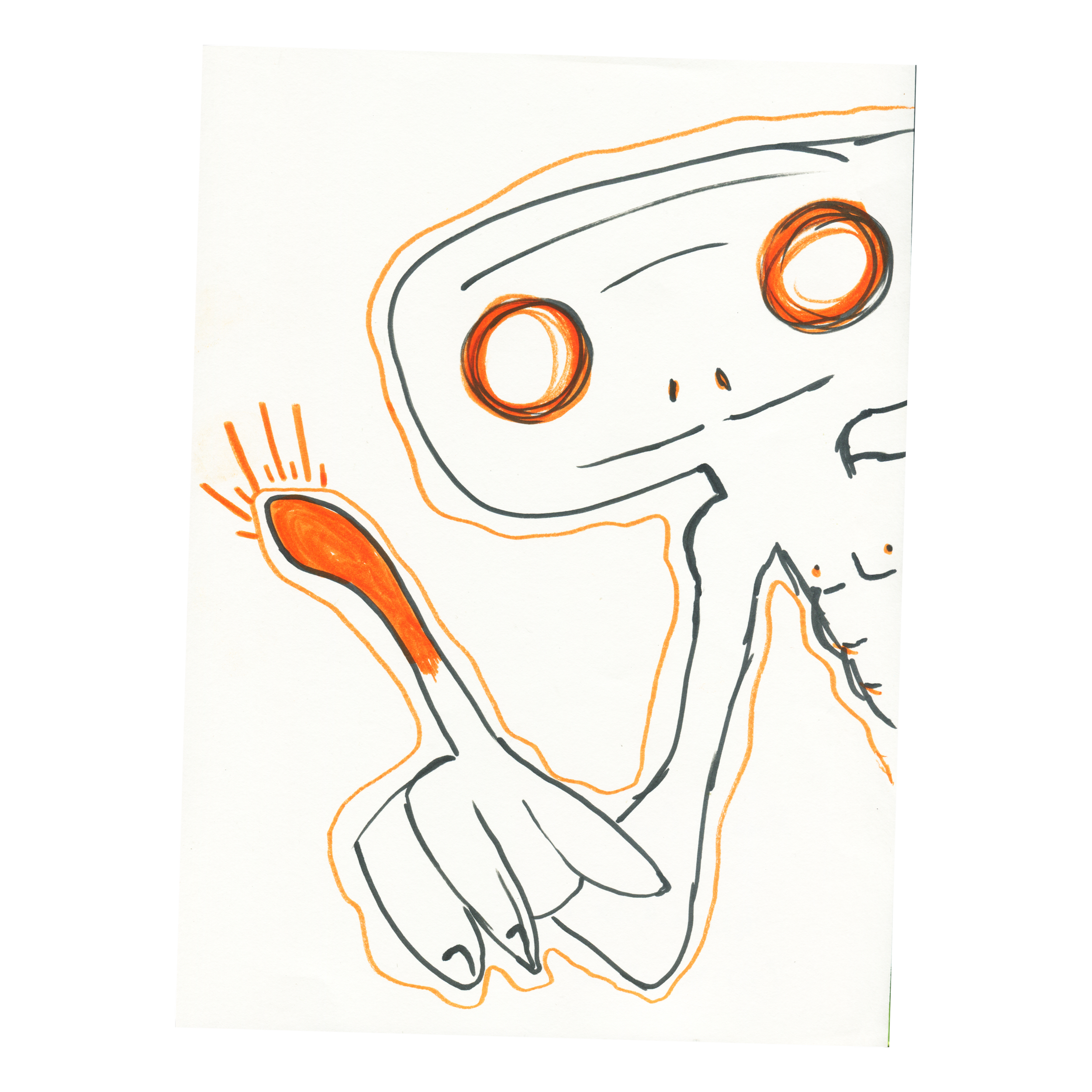
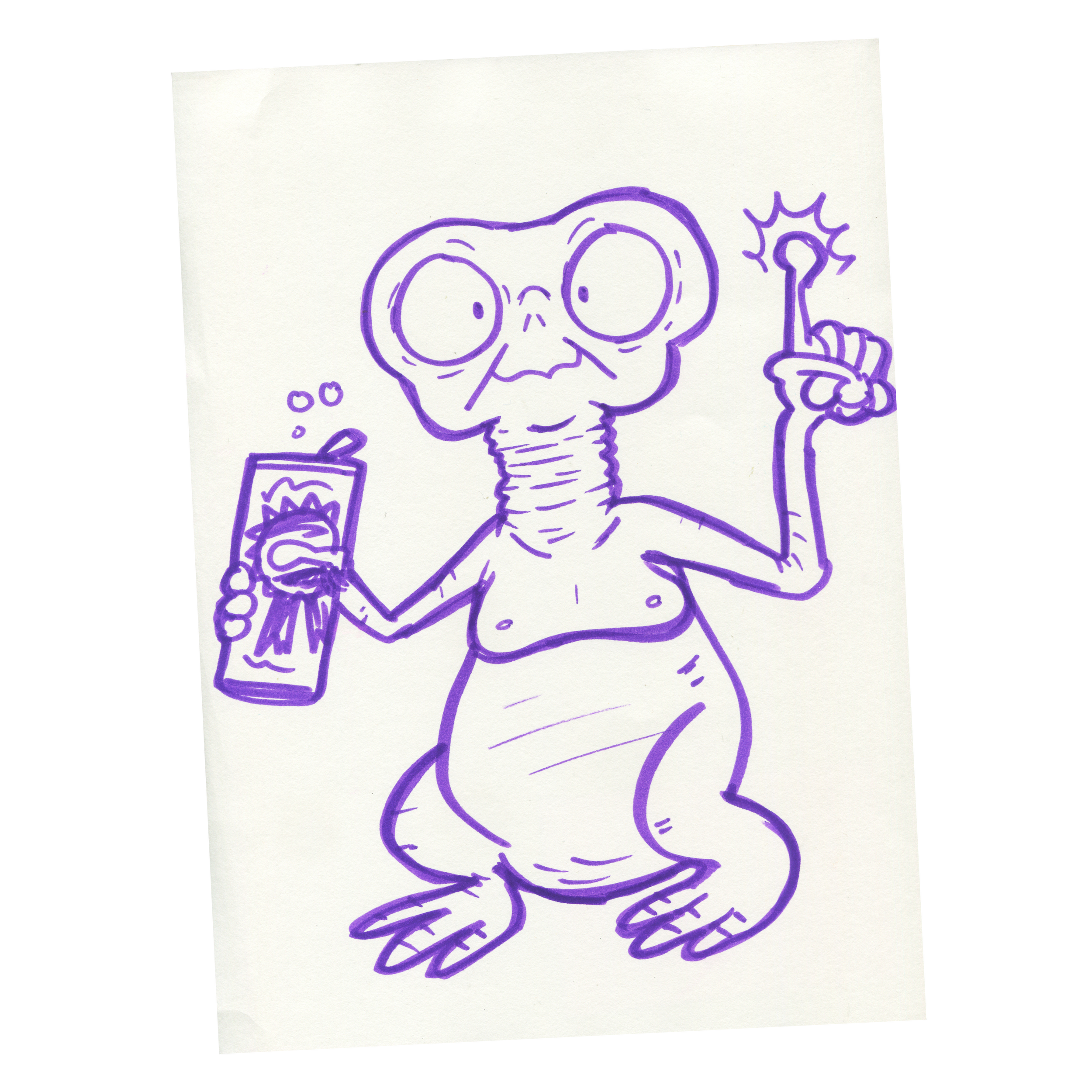
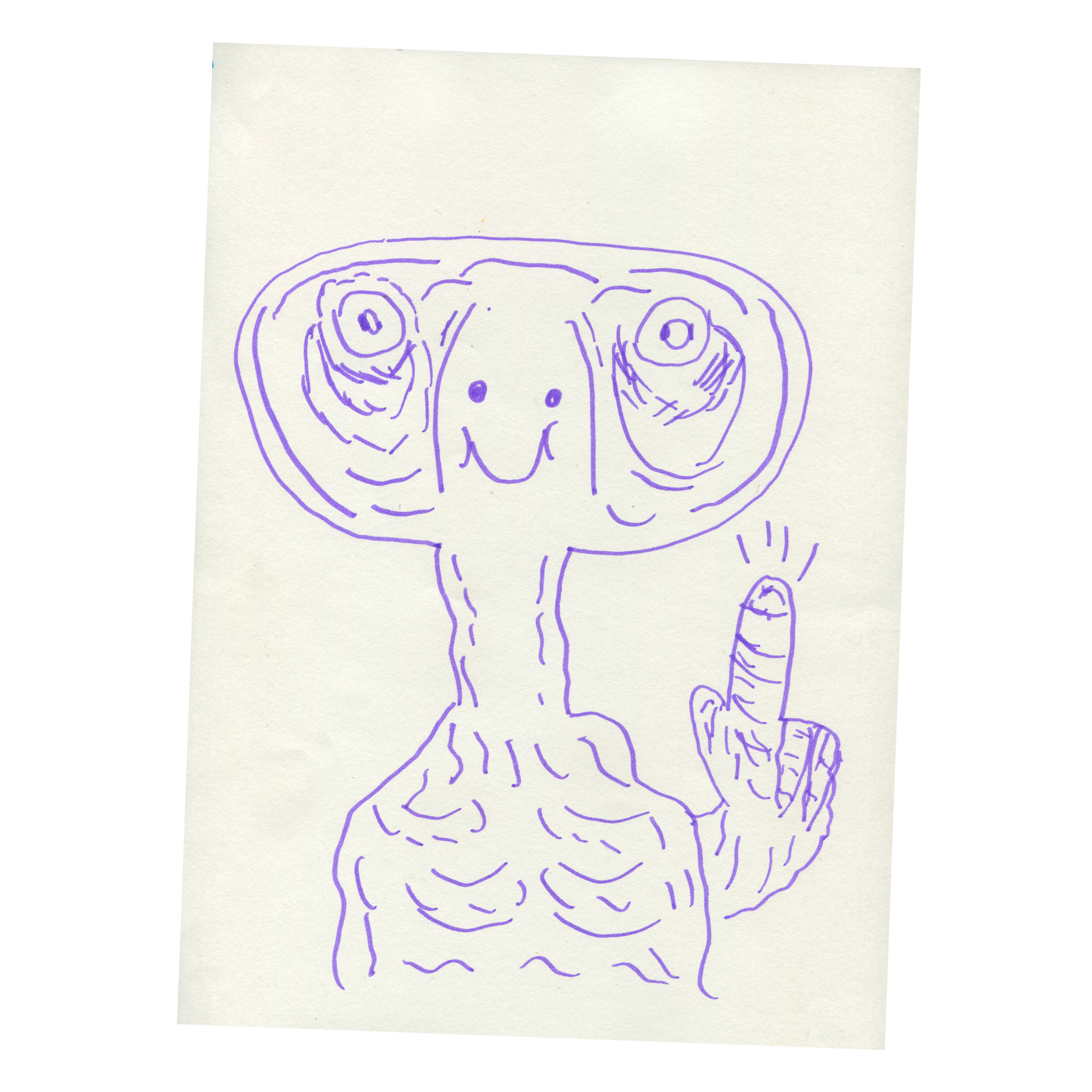
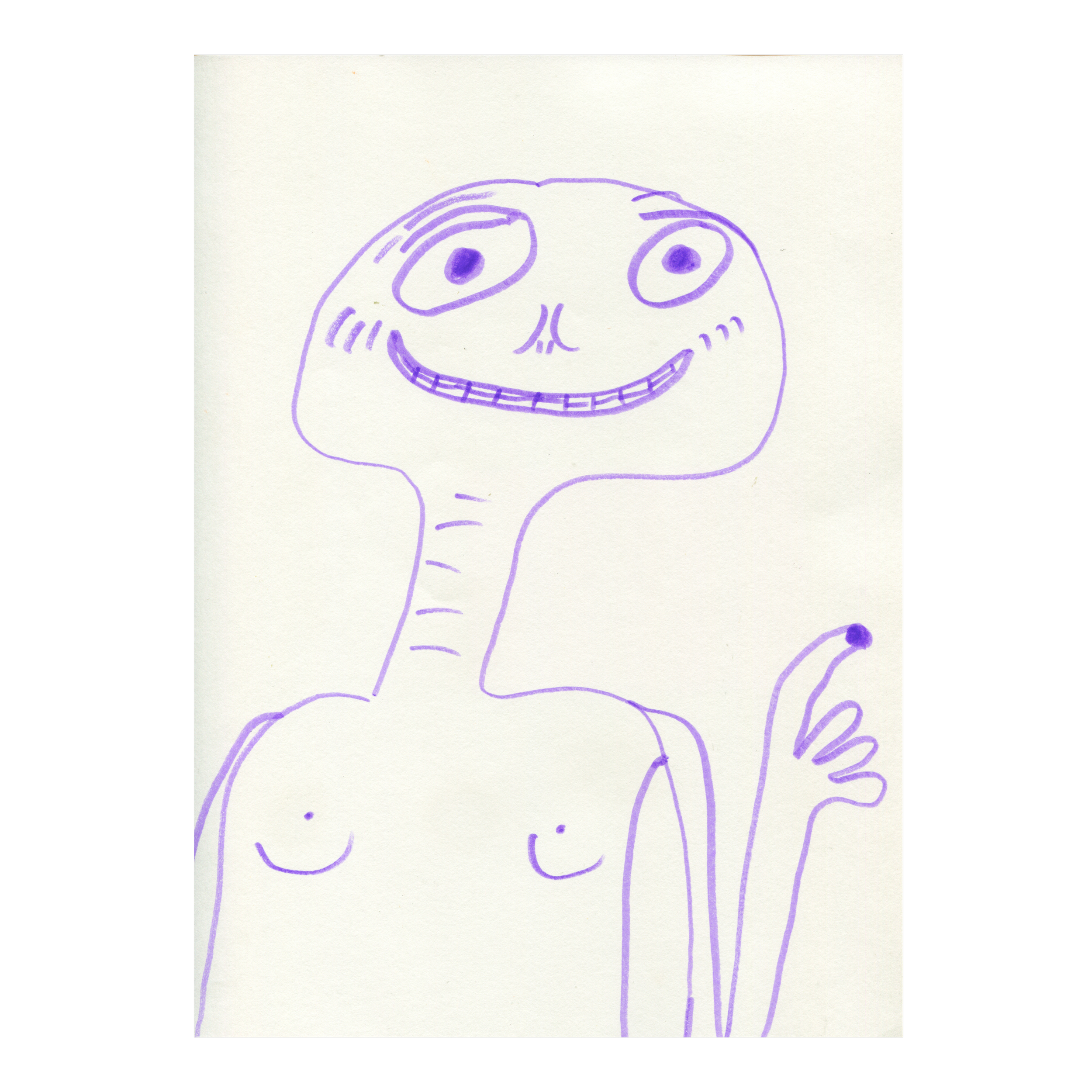
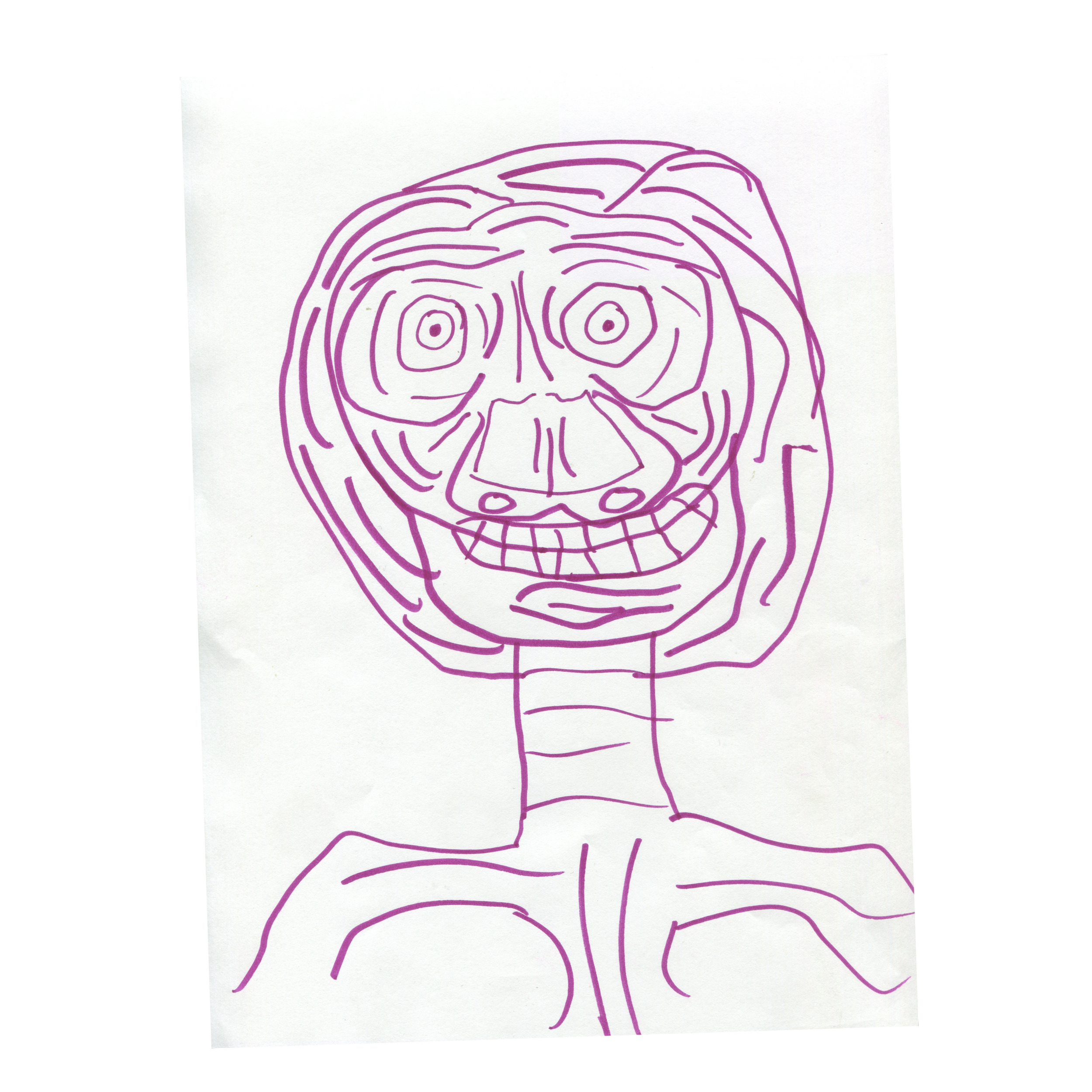
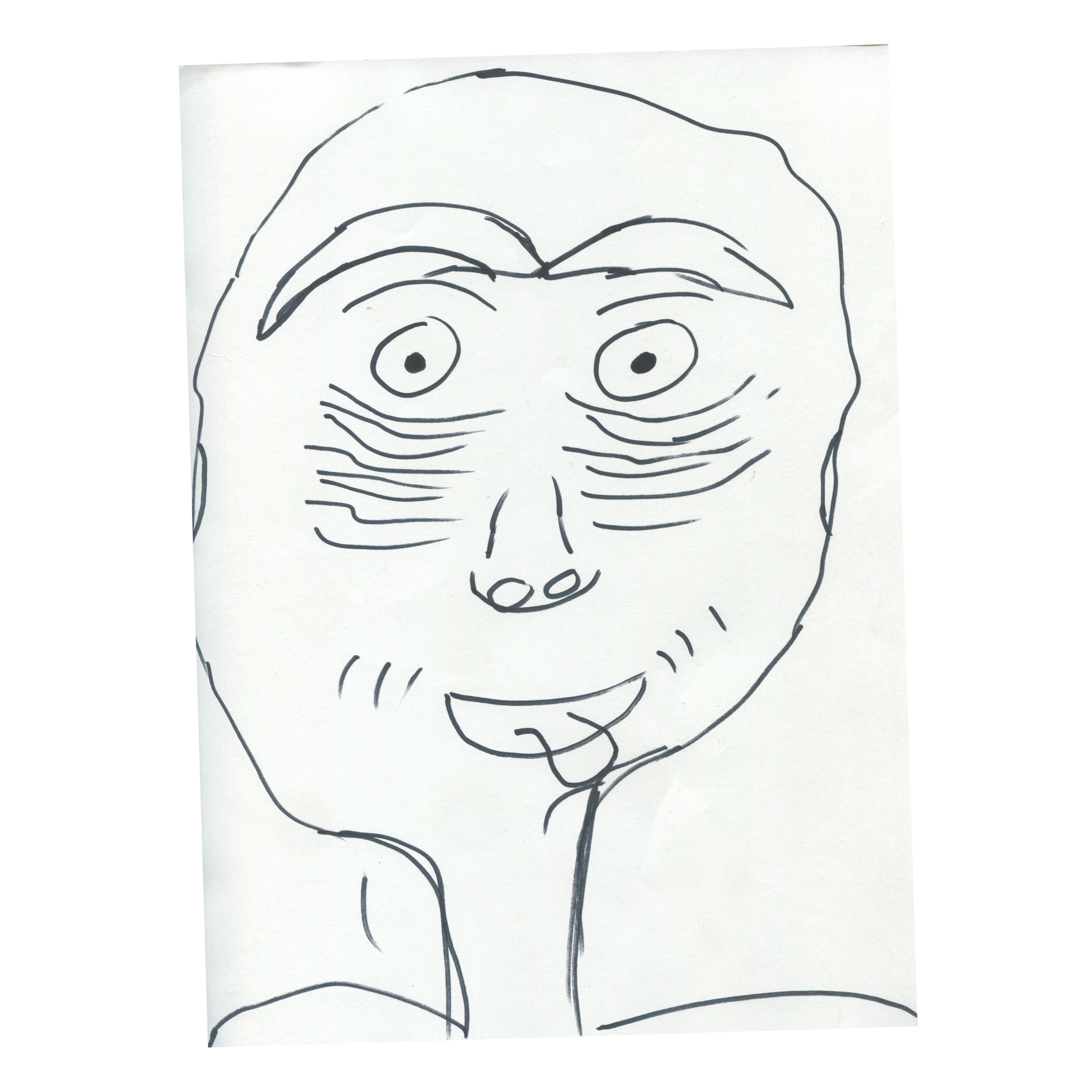
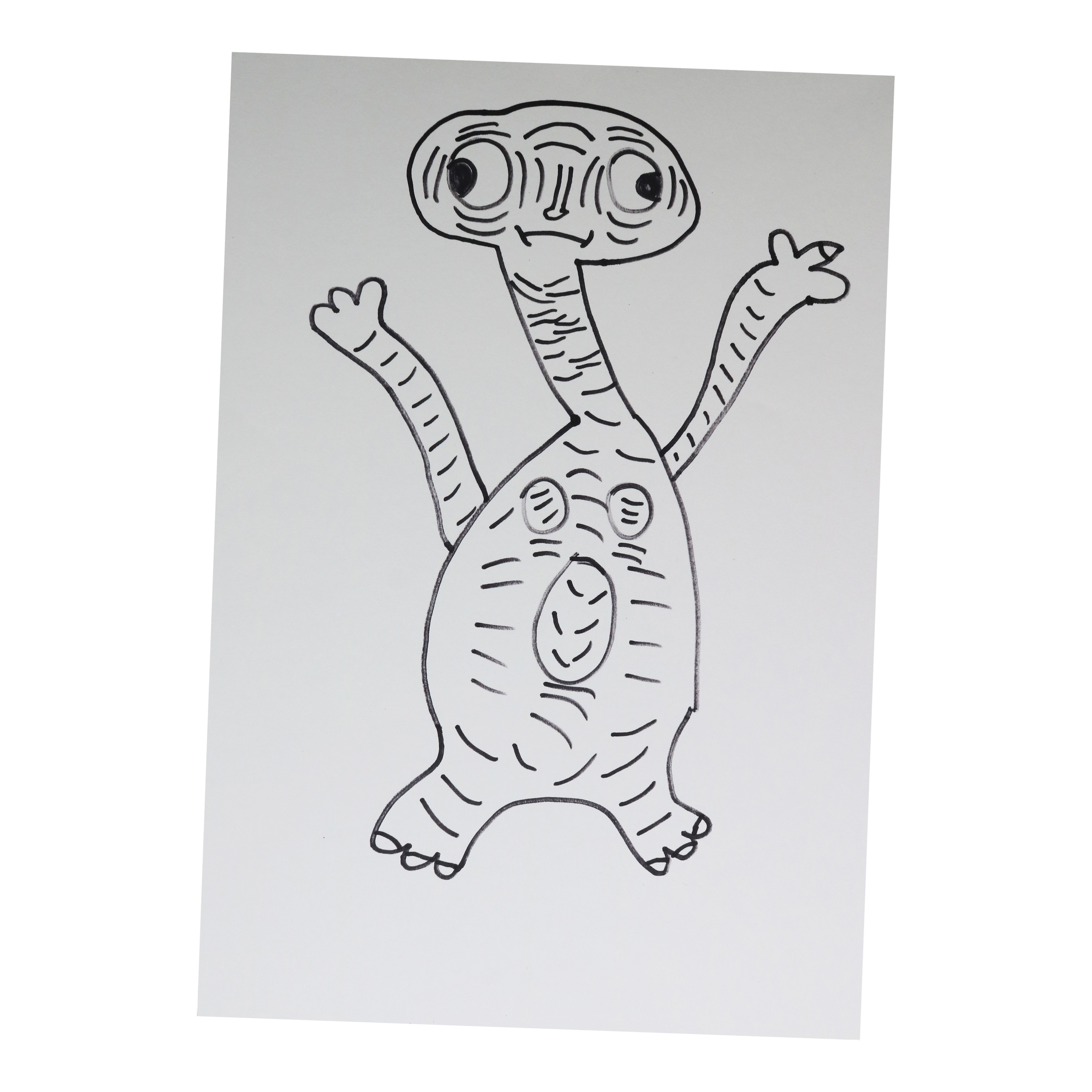
Drawing ET From Memory
An image of E.T. is shown to the group for 10 seconds. After that everyone must draw what they saw from memory. You can do this with anything, but I’ve found this character works particularly well because of ET’s confusing wrinkly appearance.

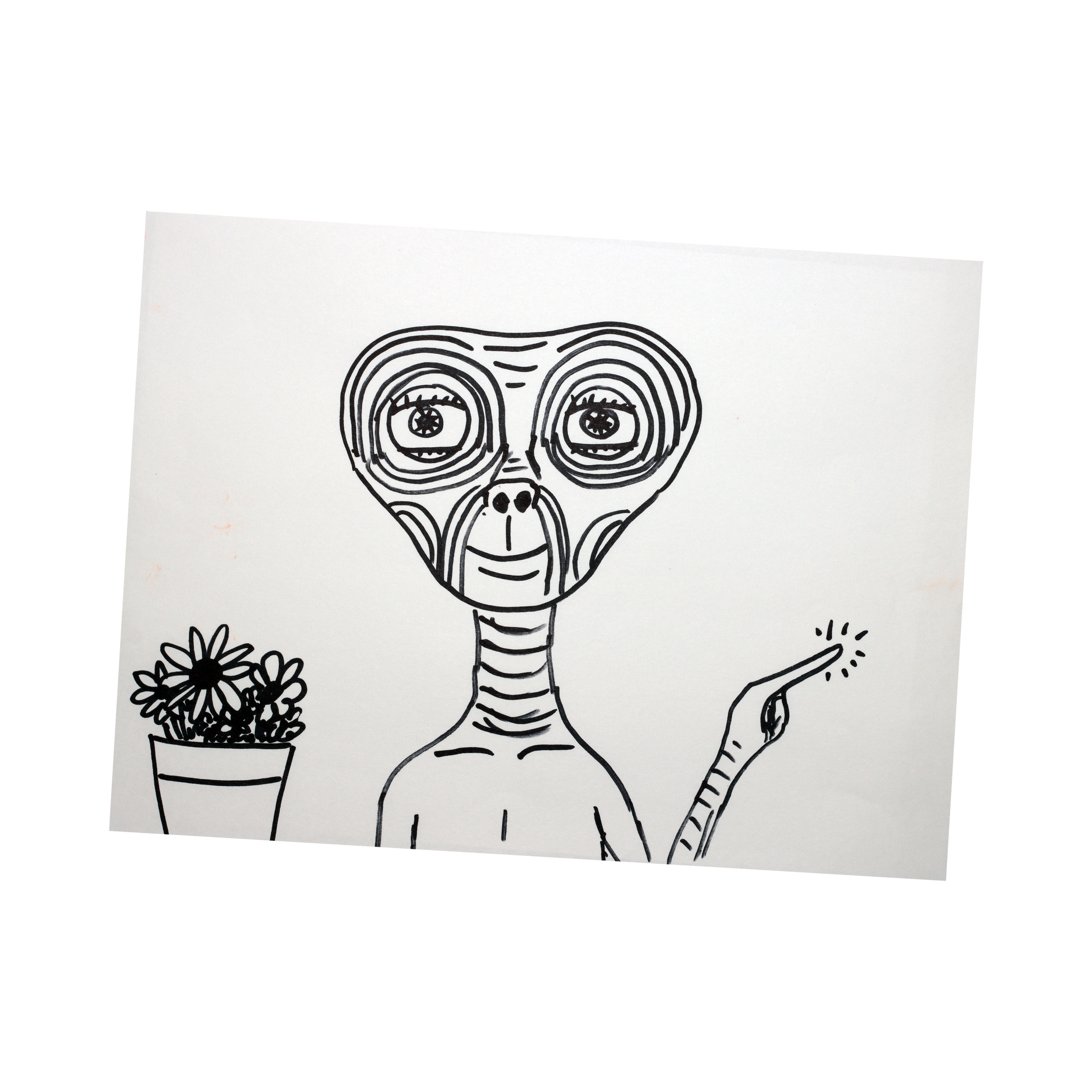
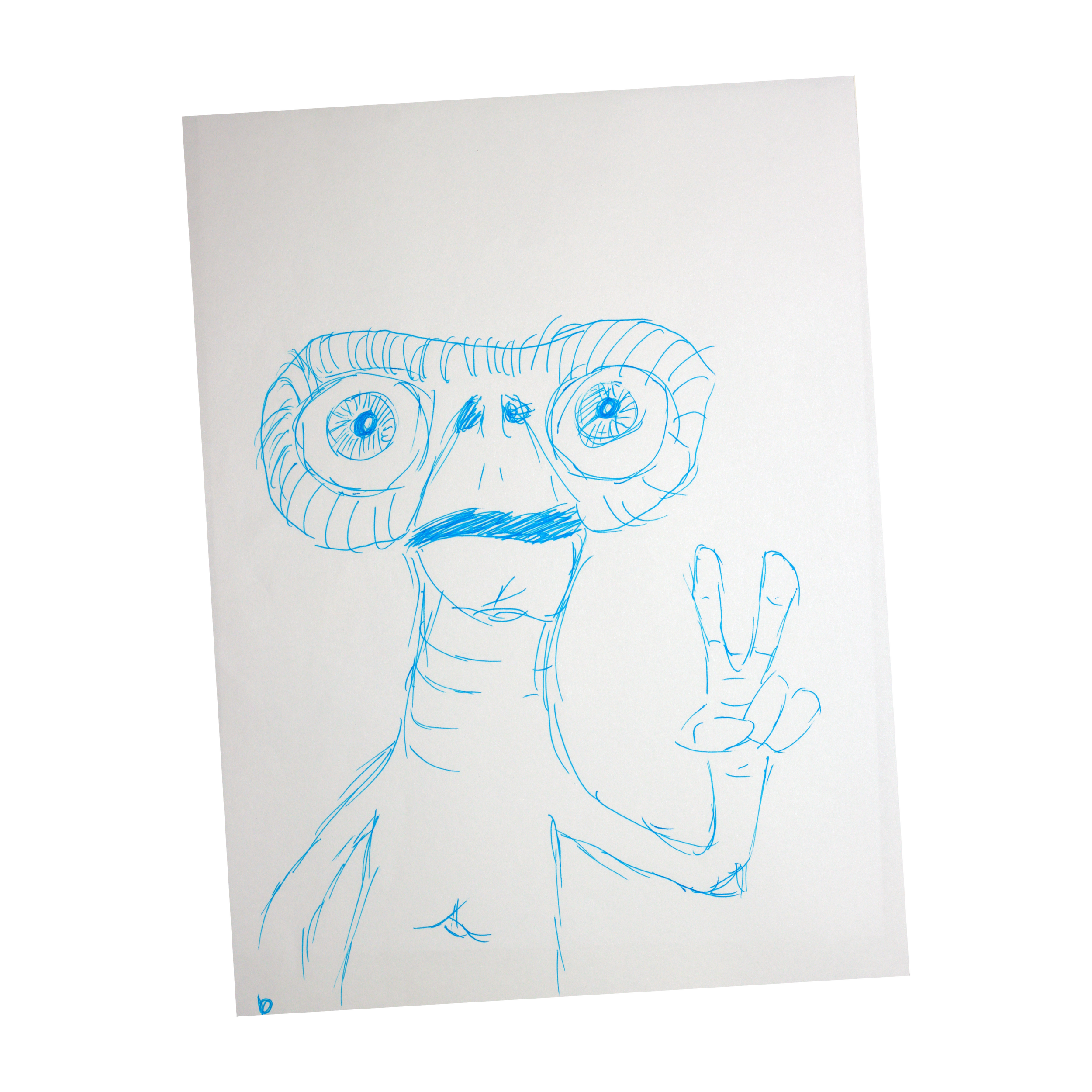
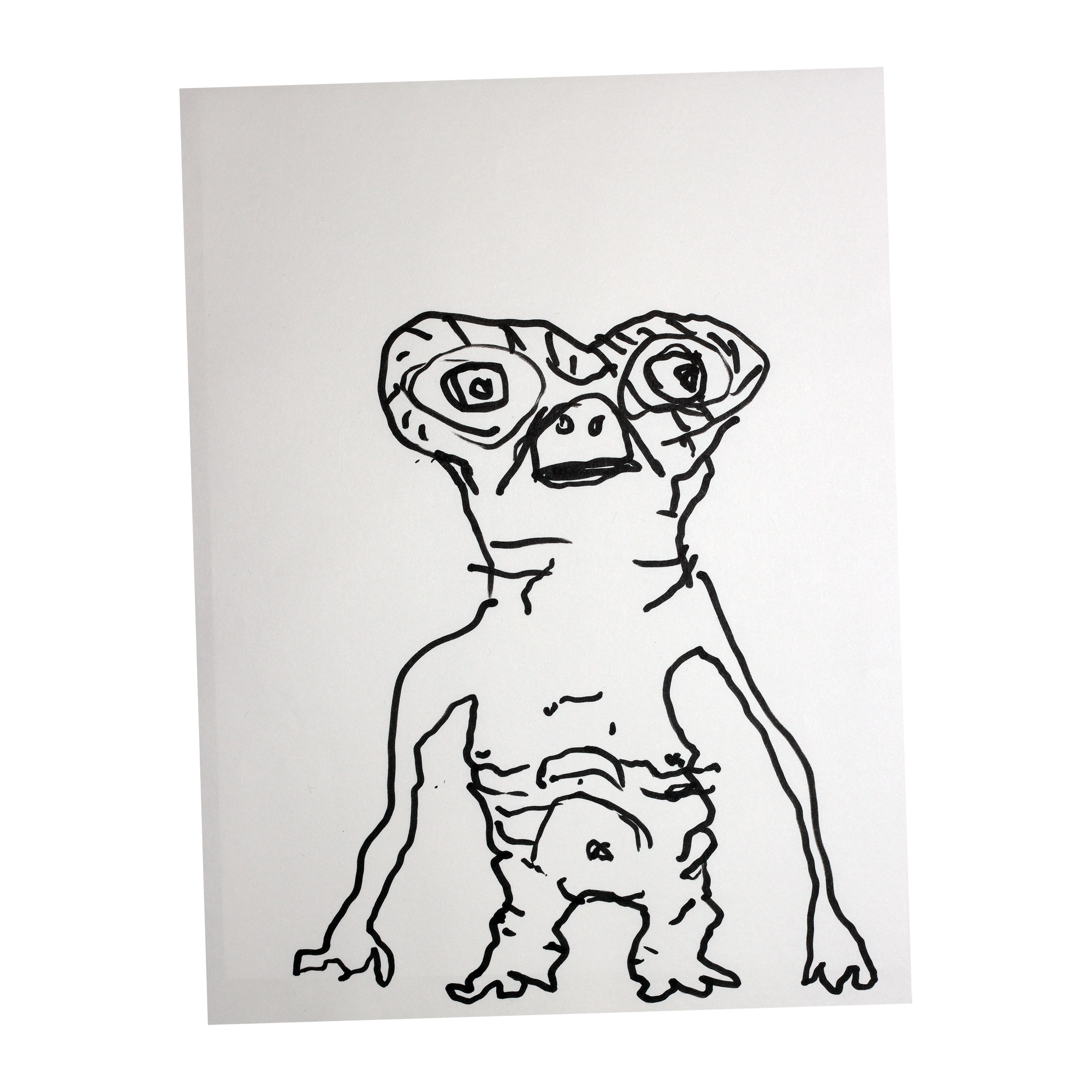
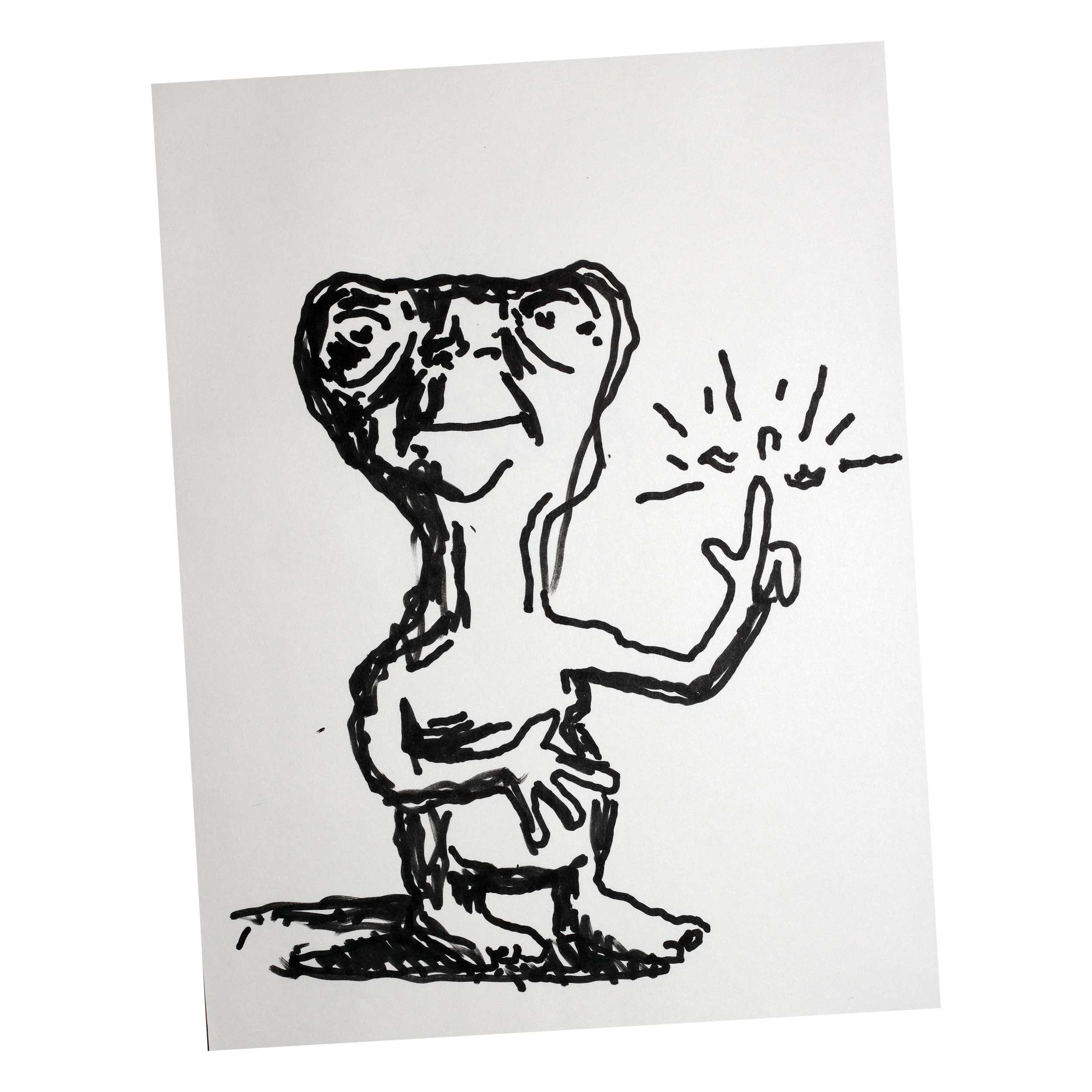
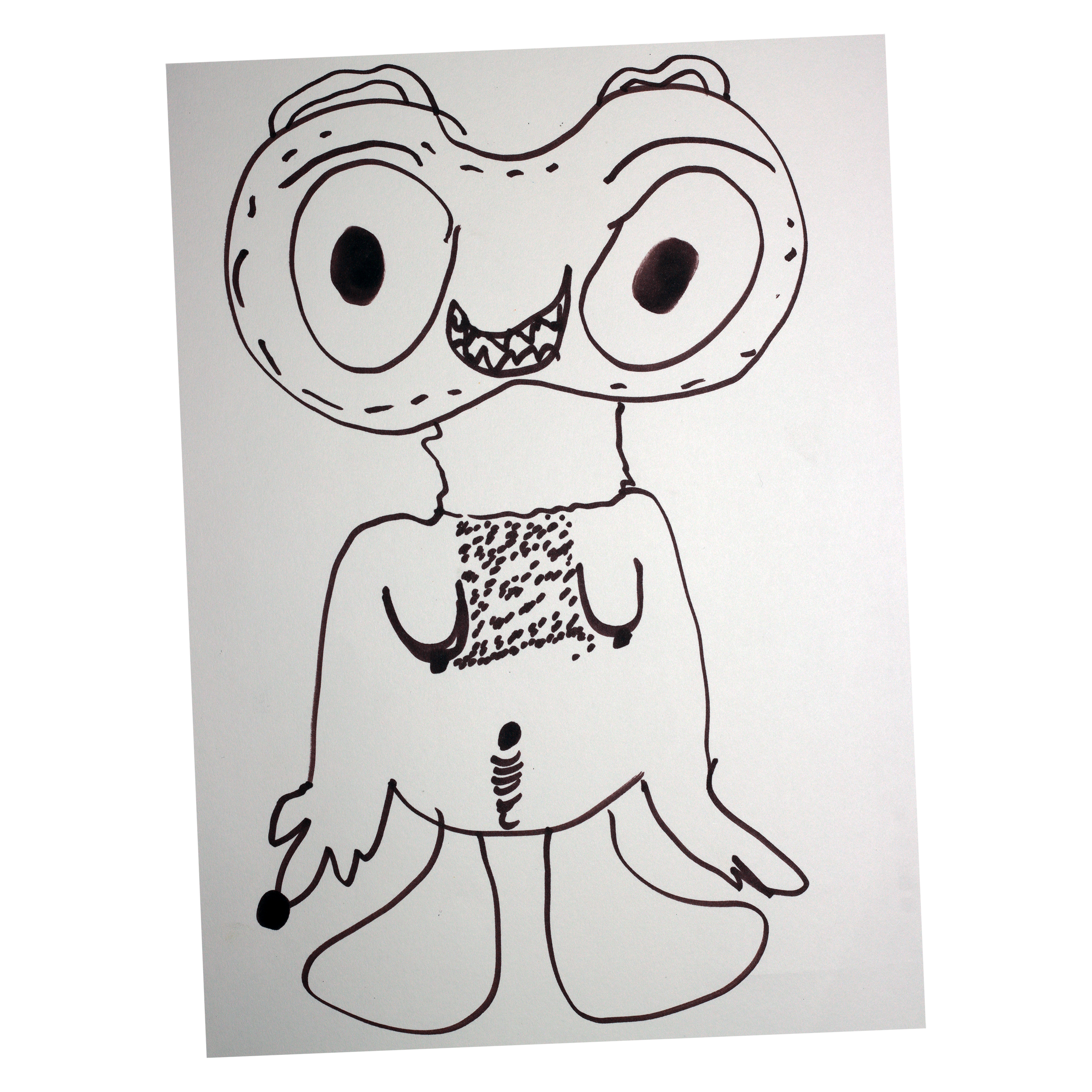
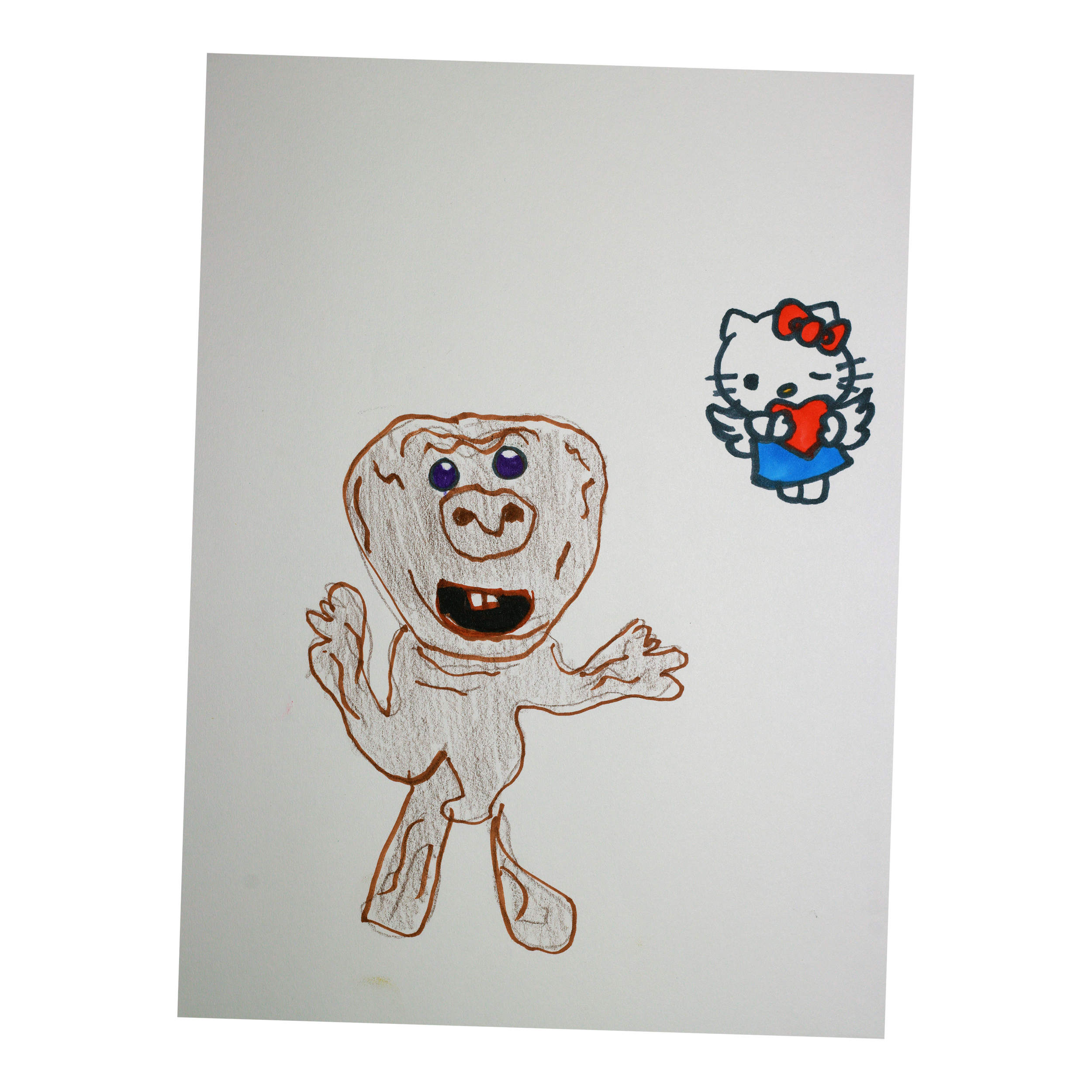
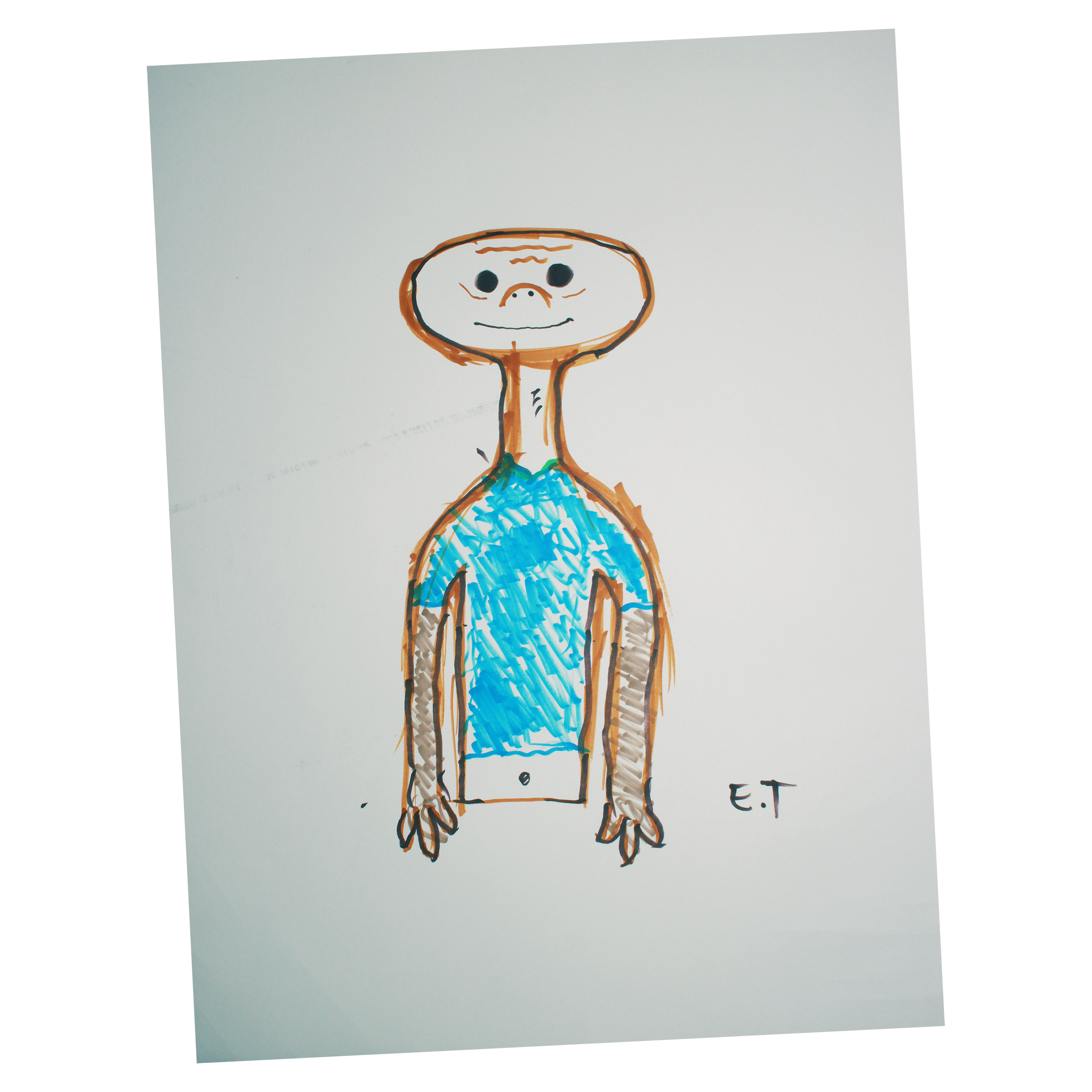
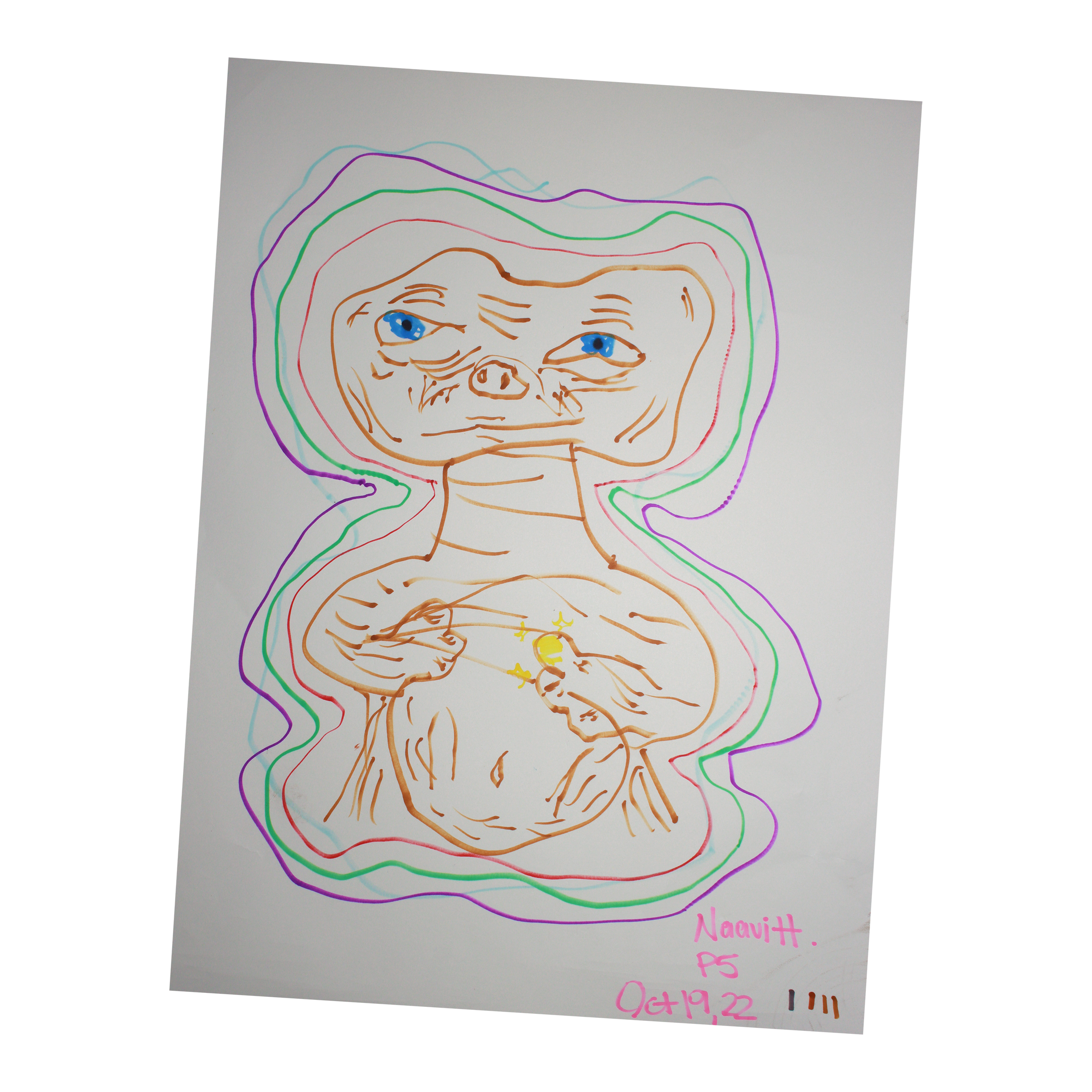

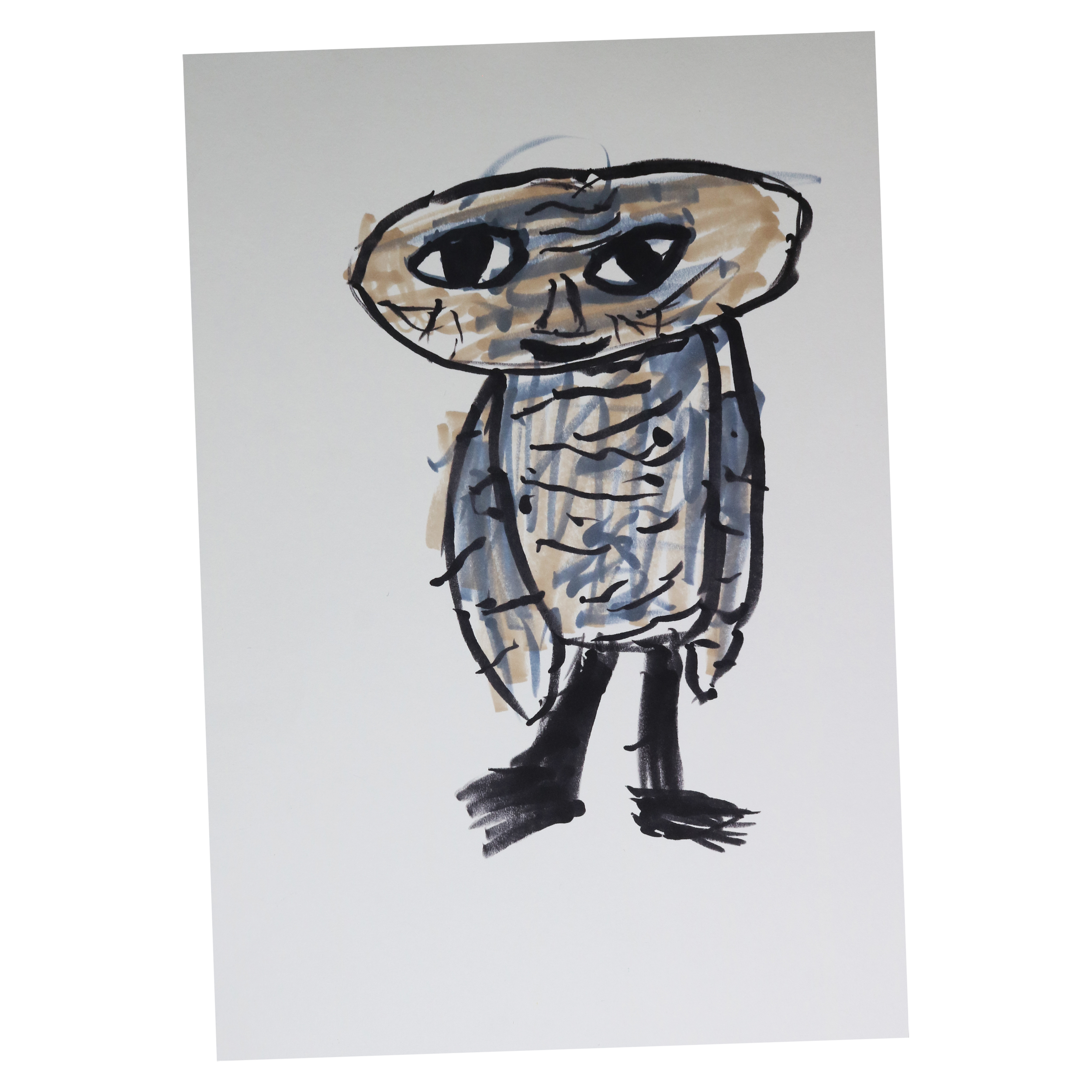
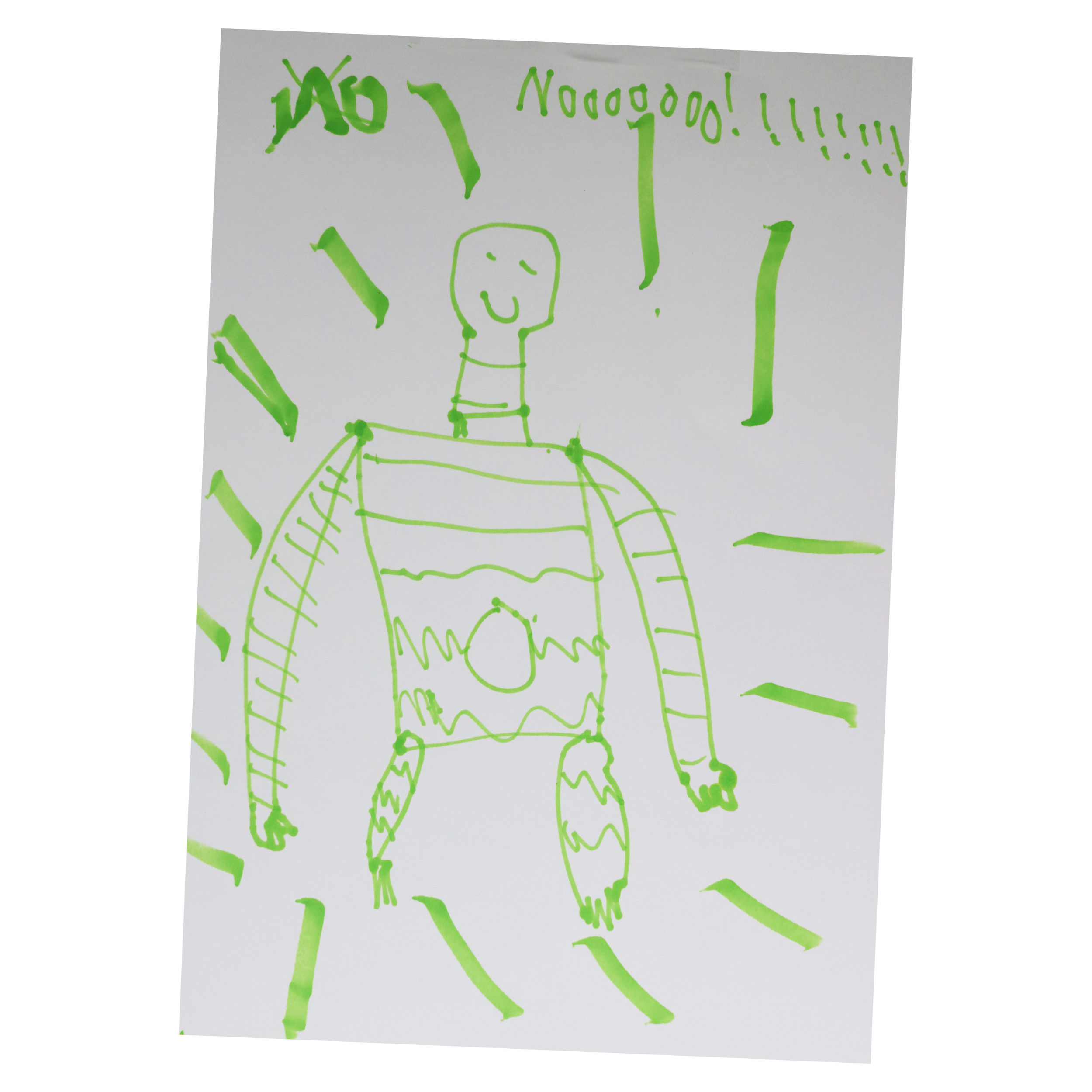
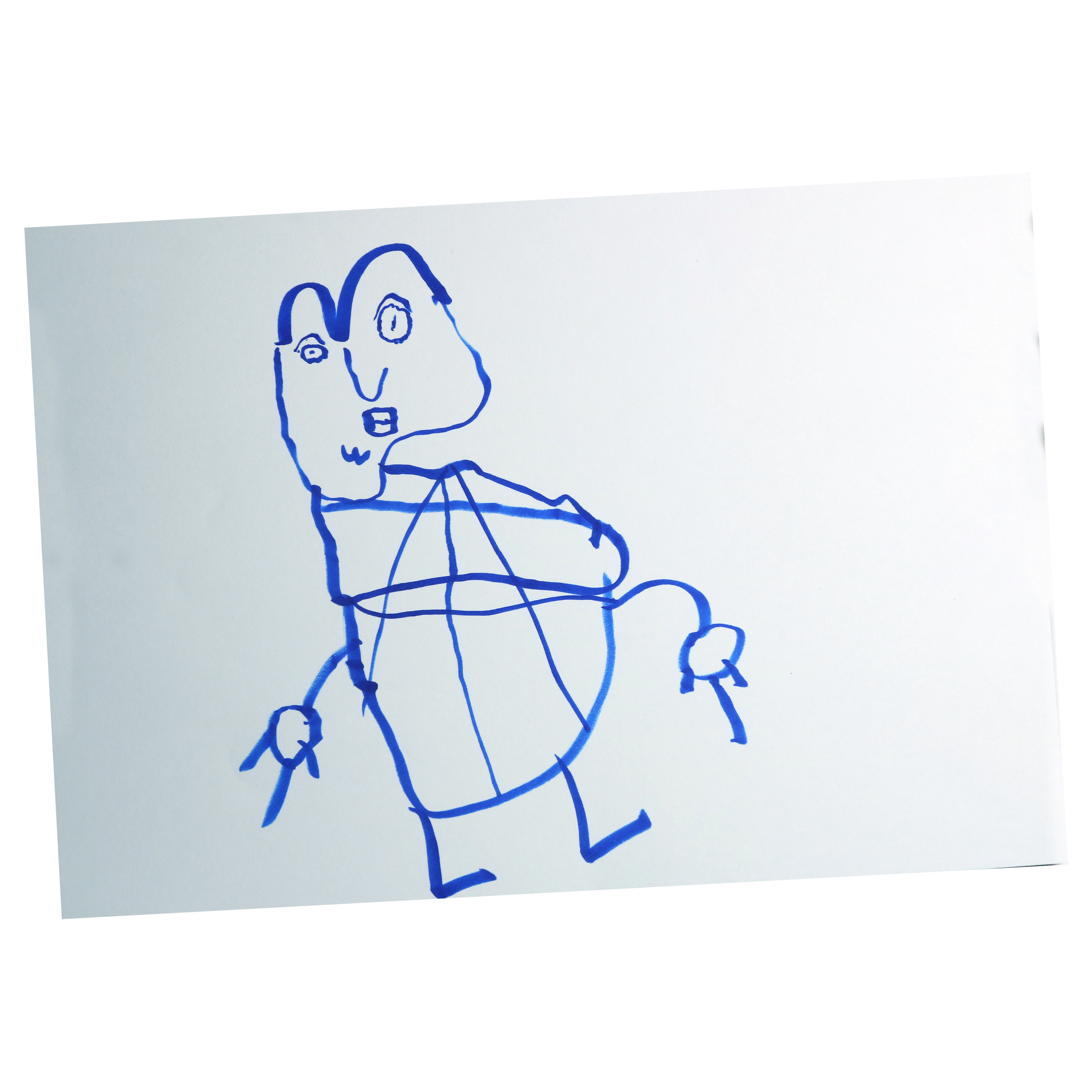
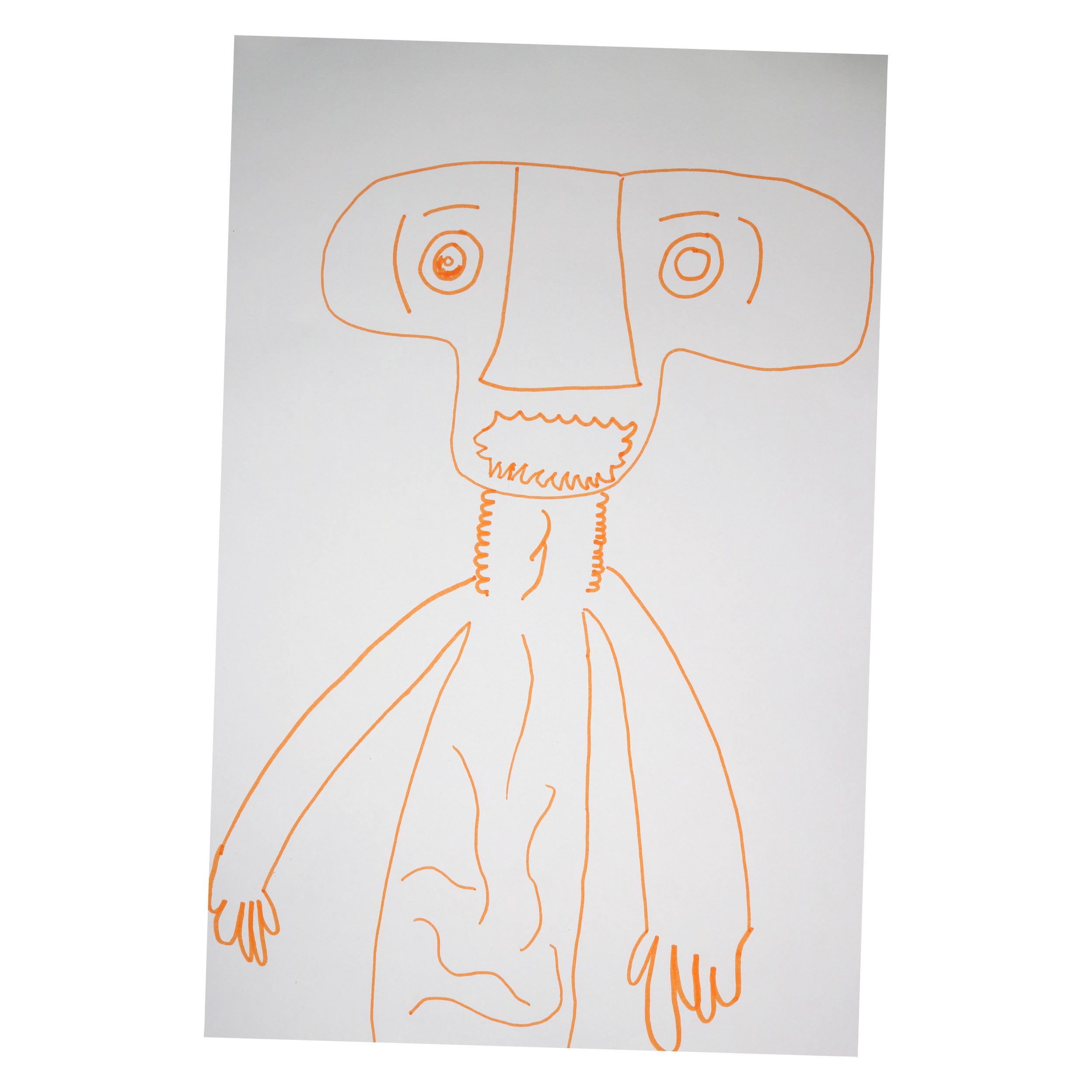

Drawing In The Dark
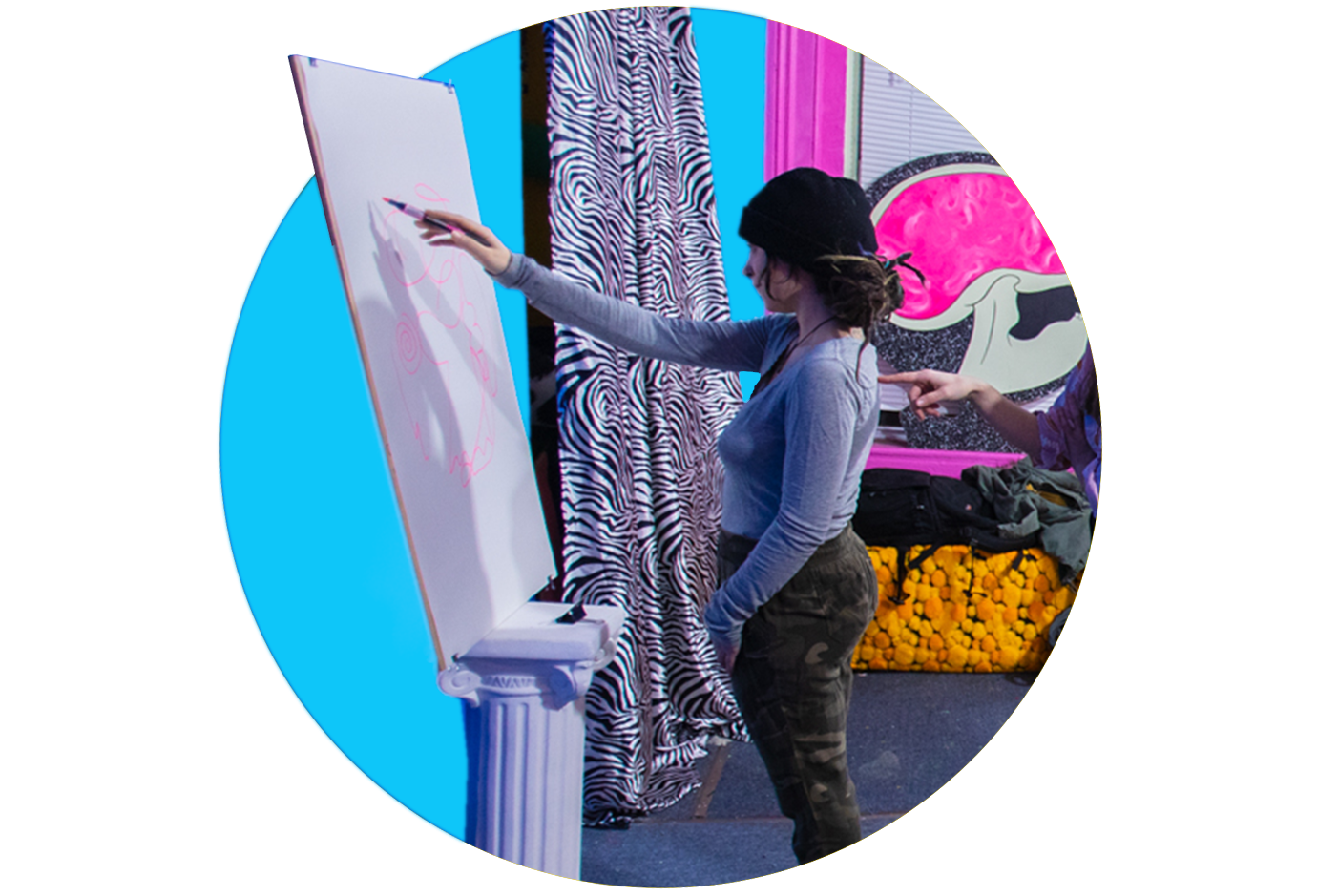
A single volunteer is blindfolded and guided to a pad of paper on an easel. The rest of the group looks at an image (i.e. Arnold Schwarzenegger’s face photoshopped onto a baby’s head) and has to verbally direct the blindfolded person on how to render the drawing using only words that reference direction or shape.
Words like “hand” “eye” “face” are not allowed.
As one would imagine, these drawings come out very chaotic and distorted…and very funny. Sometimes the group collectively learns what kind of vocabulary the blindfolded person requires in order to get the job done. For instance, some people respond very well to directions referencing the face of a clock (i.e. “move your pen in a curve towards 3 o’clock), while others respond better to a hot/cold situation (i.e. “keep going to your left….more...ok stop..). Everyone processes information differently and this activity is a really helpful way to illustrate that point.
Surrogate Drawings
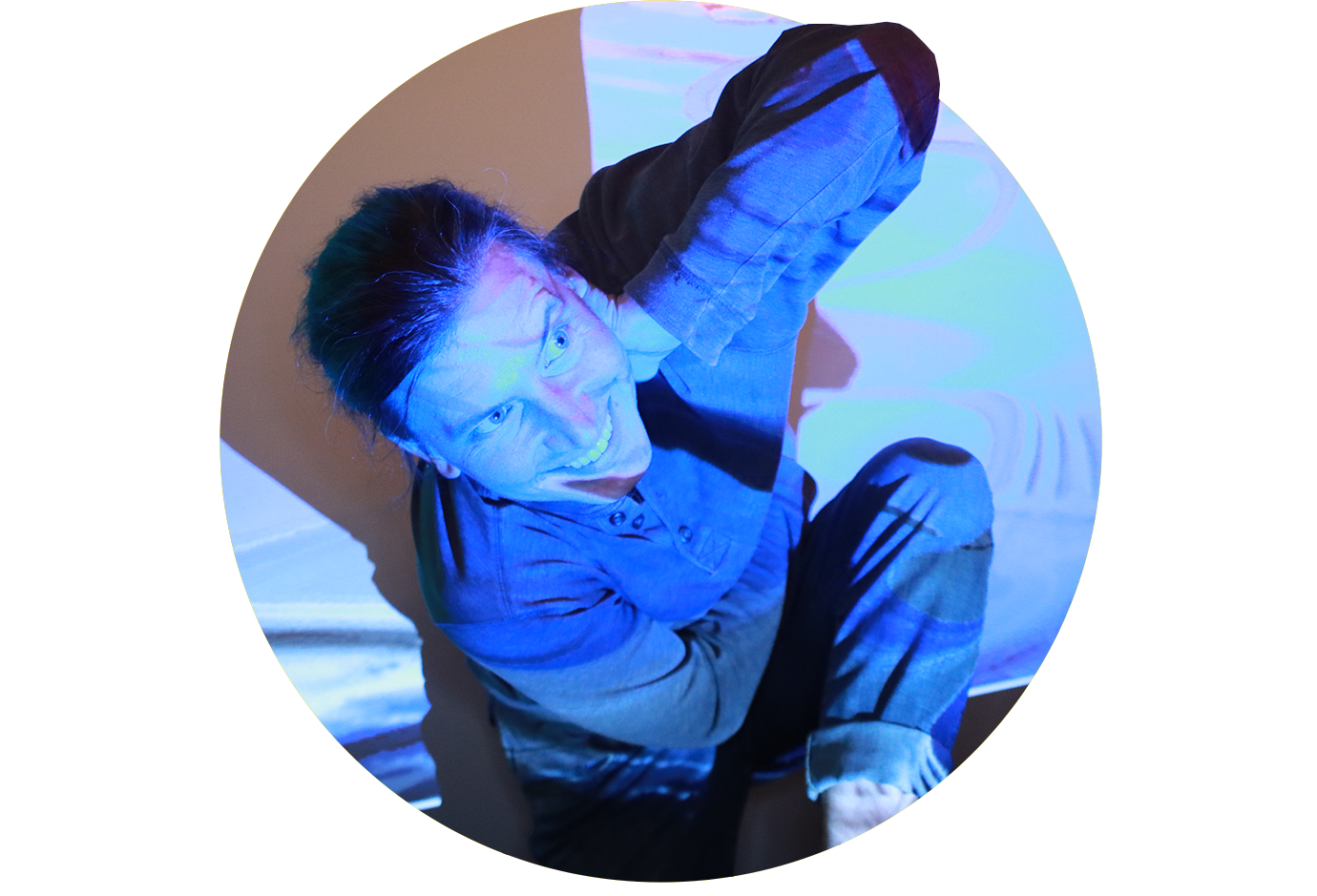
One person stands at an easel with a marker. Another person stands behind them with a pointer stick looking at an image (i.e. Lizard playing a banjo) the person with the pointer attempts to draw an invisible version of the image on the back of the person holding the marker. The person holding the marker attempts to recreate the image from the sensations they are feeling on their back. This is very much like the drawing/sensation version of telephone and can be expanded to involve a chain of people.

A Very Complicated Way To Draw A Portrait
Here’s a video to help explain:

As well as several other activities…